
A faded asset label on a scissor lift or an unreadable inspection tag on lifting gear does more than look untidy. It slows checks, creates doubt during audits, and can put the wrong equipment back into service. That is why a solid equipment labelling guide for worksites matters - not as admin for the sake of it, but as a practical control that supports safety, maintenance and compliance.
On a busy Australian site, labels have to do real work. They need to identify assets quickly, hold critical inspection data, stay legible in UV and grime, and match the conditions they are exposed to every day. If the label fails, the system around it starts to fail as well.
What a worksite labelling system needs to achieve
Good equipment labelling is about more than sticking a barcode on a machine. At site level, it needs to help people identify what an item is, whether it is safe to use, when it was last inspected, and how it fits into your asset register or maintenance program.
That means your labels need to support several outcomes at once. They should make day-to-day operations faster for crews and supervisors, give maintenance teams a reliable identification point, and stand up to scrutiny from auditors, clients and internal compliance teams. In practice, the best systems are the ones that remain clear after months of dust, weather, washdowns and handling.
A label that looks fine in the office can fail quickly in the field. Adhesives can lift on rough surfaces. Print can bleach out in sun. Plastic can crack if it is too brittle for heavy handling. The right approach depends on the equipment, the environment and how the label will be used.
Equipment labelling guide for worksites: start with the asset risk
Not every item on site needs the same label construction. A fire extinguisher label, a hose tag, a trailer VIN plate and a plant asset label all serve different purposes, and they do not face the same wear.
Start by grouping equipment according to risk and function. High-risk and compliance-critical assets usually need the most durable and traceable identification. This includes lifting gear, harnesses, plant, mobile equipment, pressure-related components, fire protection equipment and any item subject to scheduled inspections. If a label failure could lead to a missed inspection, an out-of-service item being used, or confusion over asset identity, treat that as a durability issue, not a cosmetic one.
Lower-risk items may only need simple asset identification, but even then there is a trade-off. A cheaper label can cost more over time if crews cannot scan it, read it, or keep it attached. Replacement labour and record errors add up quickly.
Choose materials for Australian conditions
Australian worksites are hard on tags and labels. UV exposure, heat, salt air, mud, grit, chemicals and pressure cleaning all affect performance. Material selection is where many labelling programs either hold up or fall over.
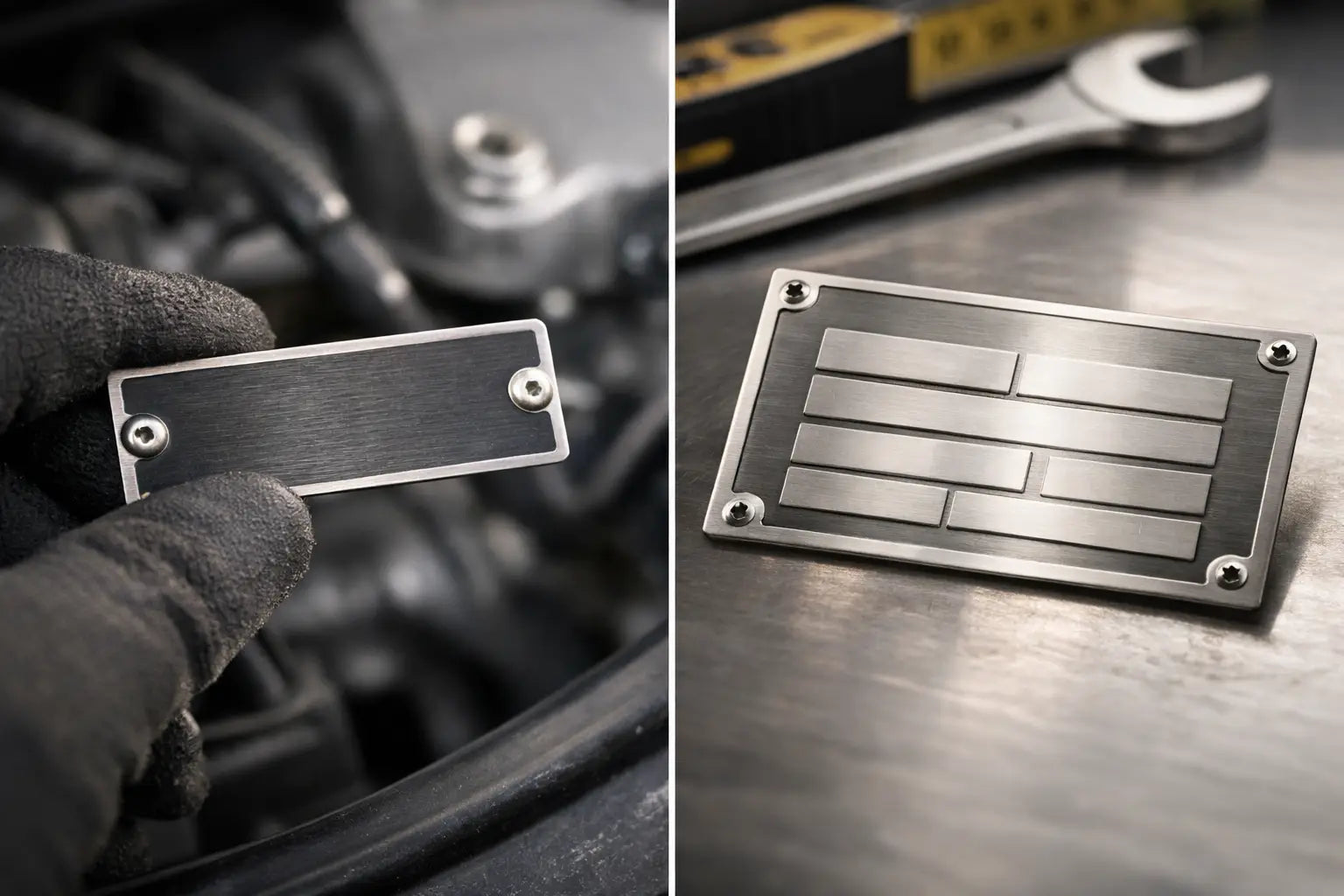
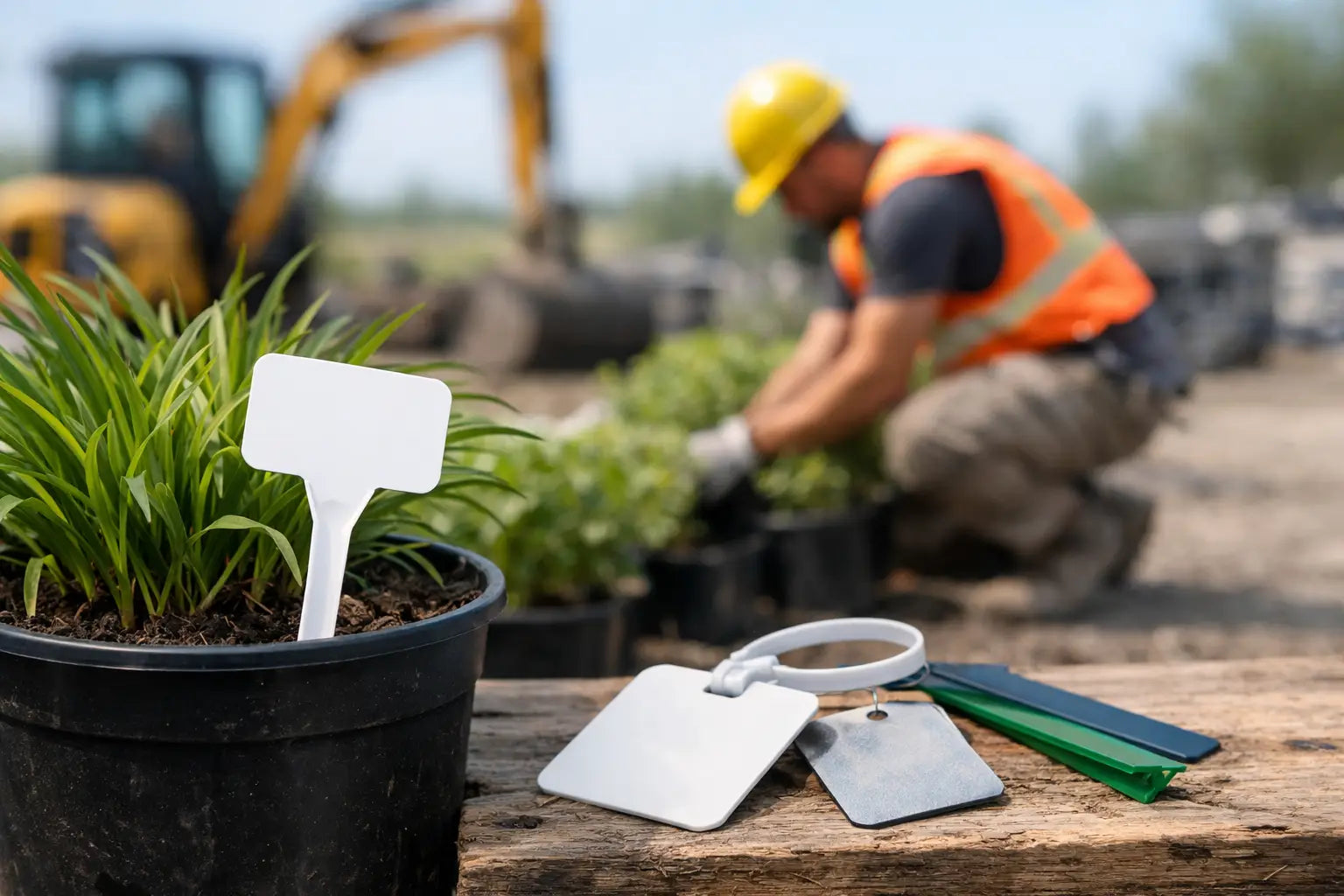
For general asset identification, industrial-grade synthetic labels are often a strong option when you need clean print, barcode compatibility and good outdoor life. For harsh exposure, you may need metal plates, heavy-duty tags or specialised materials that resist tearing, abrasion and chemical contact. Flexible tags can work well on hoses, leads and irregular equipment, while rigid plates may be better on fixed plant or vehicles.
The attachment method matters as much as the face material. Adhesive labels suit smooth, prepared surfaces, but they are not always the best choice on textured, dirty or high-abrasion equipment. In those cases, a mechanically fixed plate or a self-locking tag can provide a better result. If the item is regularly handled, dragged, stacked or washed down, build for that reality from the start.
This is where local supply makes a difference. Products made from Australian materials and built for local conditions are generally a safer choice for buyers who cannot afford premature failure.
What information should be on the label?
A worksite label needs to be clear at a glance. If people have to stop and decode it, the label is not doing its job. The exact data set will vary, but most industrial labels should cover identification, traceability and status.
For asset labels, that usually means an asset number, equipment description, site or business name, and a barcode or QR code if your system uses digital tracking. For inspection or compliance tags, the label may also need last inspection date, next due date, inspector details, rating information or test data. Plates for vehicles, trailers or fixed equipment may have mandatory fields tied to regulatory or operational requirements.
Too much information can be as unhelpful as too little. Small labels with crowded text become unreadable fast, especially once they collect dirt. Prioritise the information that crews and inspectors actually need in the field, then make sure font size, print contrast and layout support fast reading.
Placement matters more than many sites expect
A durable label placed in the wrong spot still fails. Position affects visibility, scan rate, wear and long-term legibility.
Put the label where it can be accessed during normal checks without forcing awkward movement or creating a safety issue. Avoid placing labels on high-contact corners, fold points, impact zones or surfaces that are constantly scraped. On mobile plant, think about mud spray, fuel splash and operator handling points. On rigging gear or harness equipment, avoid locations where the tag is likely to twist, rub through or become hidden during use.
Consistency helps as well. If every grinder, ladder, extinguisher or lifting chain on site is labelled in the same general position, inspections are faster and less prone to error. Crews know where to look, and auditors are not wasting time hunting for identification.
Build labels into your compliance process
The best equipment labelling guide for worksites is one that aligns with your inspection and record-keeping process. Labels should not sit outside the compliance system. They should support it directly.
That means matching label types to inspection frequency, replacement triggers and record ownership. If your maintenance team is responsible for plant inspections, they should have a straightforward way to replace damaged labels without creating duplicate asset records. If procurement brings in new equipment, there should be a standard for when and how labels are applied before the item reaches service.
It also helps to define what makes a label unserviceable. If text is partly worn, barcode scan quality is poor, or the tag is still attached but no longer legible, the asset should be relabelled promptly. Waiting until it completely falls off is usually where traceability gaps begin.
Standardise where you can, customise where you should
Standardisation saves time. It makes ordering easier, keeps site presentation consistent, and reduces confusion across multiple departments or locations. A common format for asset numbers, colour coding and label layout can improve control quickly.
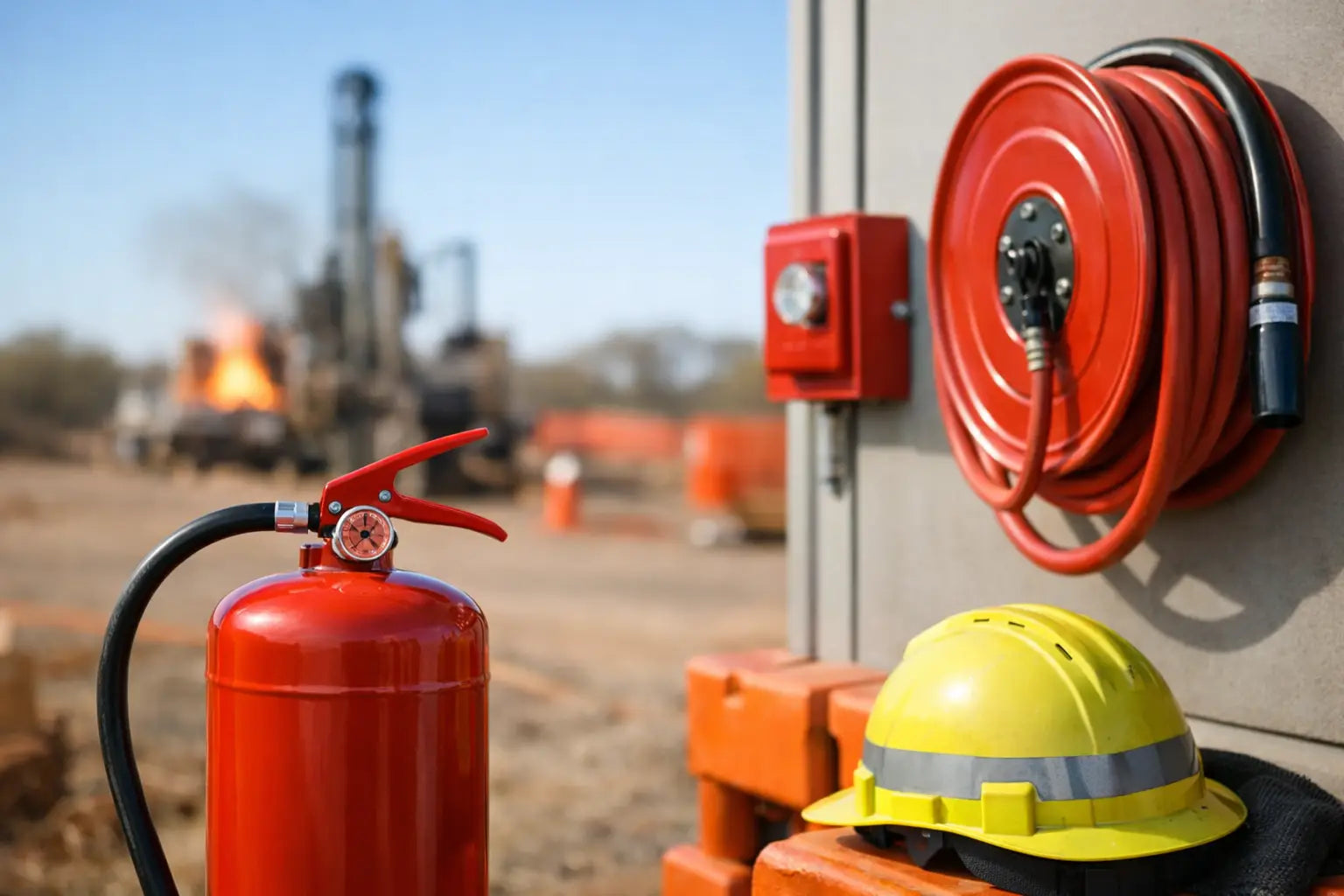
But there are limits. A one-size-fits-all label rarely works across every worksite application. Equipment with compliance obligations, unusual mounting surfaces or severe exposure often needs a custom size, attachment method or print format. That is especially true for specialised tags such as lifting and rigging tags, harness tags, hose labels, fire equipment tags and metal compliance plates.
The right balance is to standardise the system, not force the same product onto every asset. Practical buyers usually get better results when they keep numbering and visual conventions consistent, while choosing tag or label construction by application.
Common labelling mistakes on worksites
Most worksite labelling problems are predictable. The first is choosing by unit price alone. Cheap labels can look competitive on a quote, then fail under sun, abrasion or washdowns and create repeat purchasing, rework and compliance headaches.
The second is poor surface prep. Even a quality adhesive label will struggle if applied over dust, oil or flaking paint. The third is overcomplicating the design. Tiny text, low contrast and cluttered fields make field use harder than it needs to be.
Another common issue is delayed replacement. Once labels begin to fail, sites often tolerate partial legibility for too long. That creates the exact uncertainty labels are meant to remove. If the identification is important, make replacement part of normal maintenance discipline.
Buying labels that hold up on site
When sourcing worksite labels, ask practical questions. What conditions will they face? How long do they need to last? Are they exposed to UV, chemicals, handling or pressure washing? Do they need variable data, sequential numbering, barcodes or custom branding? Are you ordering for one site, or rolling out across a fleet or national operation?
A dependable supplier should be able to match product type to application, not just sell standard stock. That includes support on materials, print methods, attachment options and custom sizing. For many Australian buyers, fast turnaround also matters because replacement tags and urgent project orders rarely arrive at a convenient time.
Prime Tags Australia works with this kind of requirement every day - where the label is not a nice extra, but part of keeping equipment identifiable, serviceable and audit-ready.
The simplest way to improve worksite labelling is to treat it like any other operational control. Specify it properly, match it to the environment, and replace it before failure creates risk. When labels stay readable and attached, everything around them runs cleaner.