
A label that looked fine in the workshop can be unreadable within weeks once it hits a hard site. The question is not just why do asset labels fail, but why they fail so often in places where identification is critical for maintenance, audits, inspections and compliance. When a barcode will not scan, a serial number fades out, or the adhesive lifts at the corners, the problem quickly moves from minor annoyance to operational risk.
For Australian worksites, asset label failure is usually not caused by one dramatic issue. It is more often the result of a mismatch between the label and the real environment. Heat, UV, cleaning chemicals, rough handling, poor surface prep and the wrong material combination all play a part. If you want labels that stay legible and attached, you need to look at the full application, not just the artwork.
Why do asset labels fail in real conditions?
Asset labels fail when they are asked to do more than they were designed for. A standard office-grade label might hold up in a plant room cabinet, but it will struggle on outdoor equipment, mobile plant, tools, switchboards, trailers or machinery exposed to weather, abrasion and cleaning cycles.
There are two practical requirements every asset label has to meet. It must remain attached, and it must remain readable. If either one fails, the label has failed. That sounds obvious, but many buyers focus heavily on print detail or unit price and not enough on service life under actual site conditions.
The main causes tend to come back to material selection, adhesive performance, print durability and installation method. In some cases, the label itself is fine but the substrate it is applied to is dirty, textured, oily or powder-coated in a way that reduces adhesion. In other cases, the adhesive grabs well at first, then degrades after exposure to sun, moisture or solvents.
UV exposure is one of the biggest reasons asset labels fail
In Australia, UV is not a side issue. It is often the deciding factor. Labels used outdoors or even in partially exposed areas can fade fast if the face stock, overlaminate or print method is not built for strong sunlight. Black text may turn grey, coloured branding may wash out, and barcodes can lose the contrast needed for reliable scanning.
This is where cheap labels often fall short. They may look acceptable on delivery, but appearance on day one is not the benchmark. The real test is whether the data is still clear after months of sun, dust and heat. If the asset number cannot be read from normal working distance, or the barcode fails in routine inspections, the label is no longer doing its job.
UV damage is not always dramatic either. It can be gradual enough that labels pass casual visual checks until an audit or maintenance event exposes the problem. By then, relabelling becomes a time and labour cost that should have been avoided at the start.
Adhesive failure usually starts before the label goes on
When labels peel, bubble or lift at the edges, the adhesive gets blamed first. Sometimes that is fair. Sometimes it is not. Surface condition has a major effect on performance, especially on industrial assets.
Dust, grease, release agents, moisture and oxidation all interfere with adhesion. So does applying a label to a rough, low-energy or heavily textured surface without matching the adhesive to that substrate. Powder-coated equipment, painted steel, polyethylene cases and weathered plastics do not all behave the same way.
Temperature matters as well. Applying labels in a cold workshop or onto hot equipment can affect how the adhesive wets out and bonds. Even a quality industrial label can underperform if it is applied too quickly, onto an unprepared surface, or before the coating on the asset has properly cured.
This is one of the main trade-offs buyers need to consider. A more aggressive adhesive may improve hold on difficult surfaces, but it can also make later removal harder. If assets are reclassified, serviced or replaced regularly, that may matter. The right choice depends on whether permanence or removability is the priority.
Abrasion and handling wear out labels faster than expected
A surprising number of labels fail simply because they are placed where equipment gets dragged, knocked, washed down or handled every day. Tool fleets, plant assets, mobile equipment and transport items all create mechanical wear that basic labels cannot tolerate for long.
Fork tines, chain contact, glove friction, pressure washing and stacked storage can all wear through printed information. Even if the label remains attached, a scuffed surface can make serial numbers or QR codes unreadable. In practical terms, that is still failure.
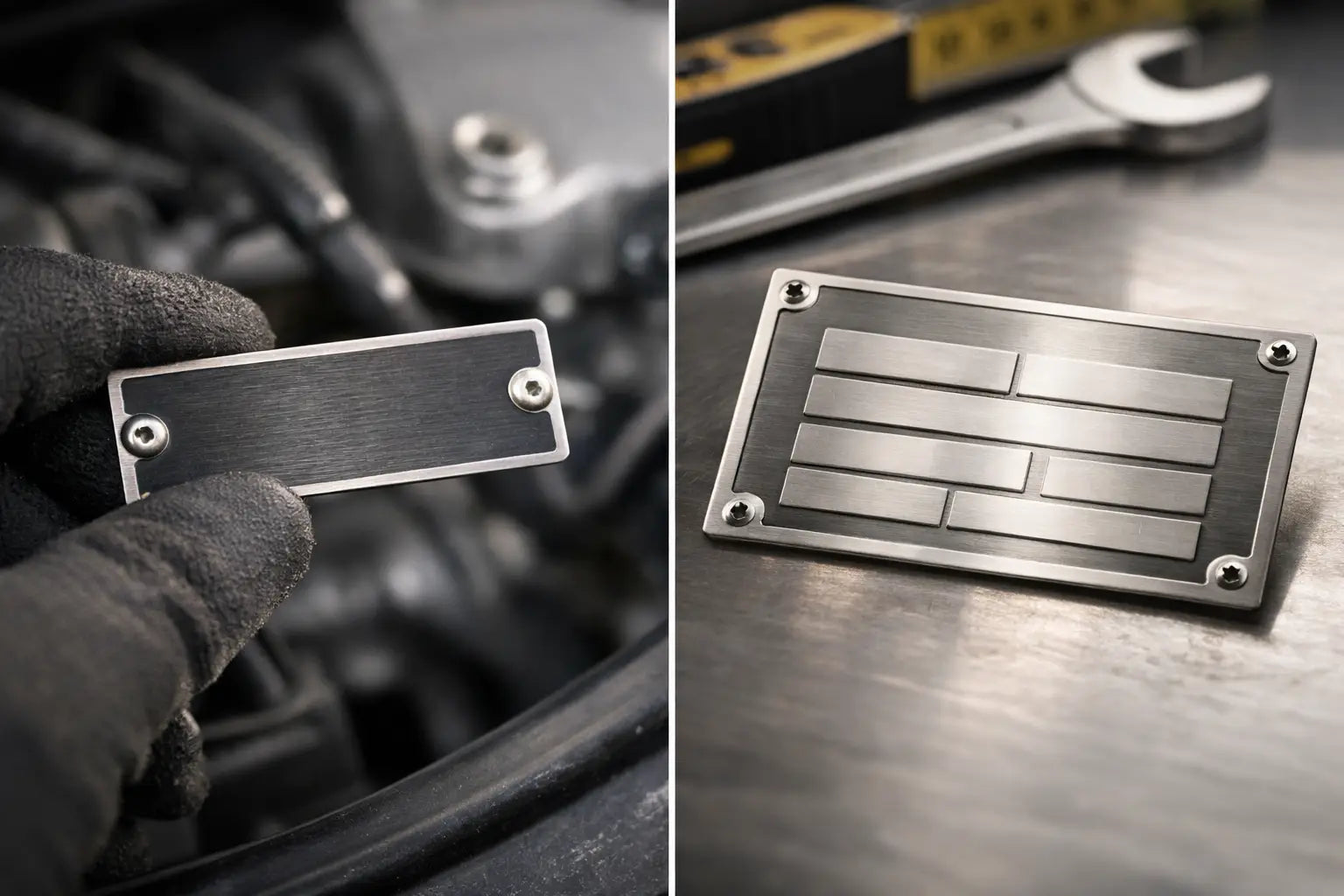
Placement matters here. A label mounted on the most visible face of an asset may also be on the highest-contact face. Sometimes moving the label slightly, recessing it where possible, or changing from a flexible film label to a metal asset plate is the better long-term answer. There is no single rule for every asset class, which is why application details matter.
Chemicals and cleaning processes break down label materials
Many industrial labels are exposed to more than dust and weather. Degreasers, solvents, disinfectants, fuel splash, hydraulic fluid and routine washdowns all affect different materials in different ways. A label that handles UV well may still fail if the face stock softens under chemical exposure or the print layer is not properly protected.
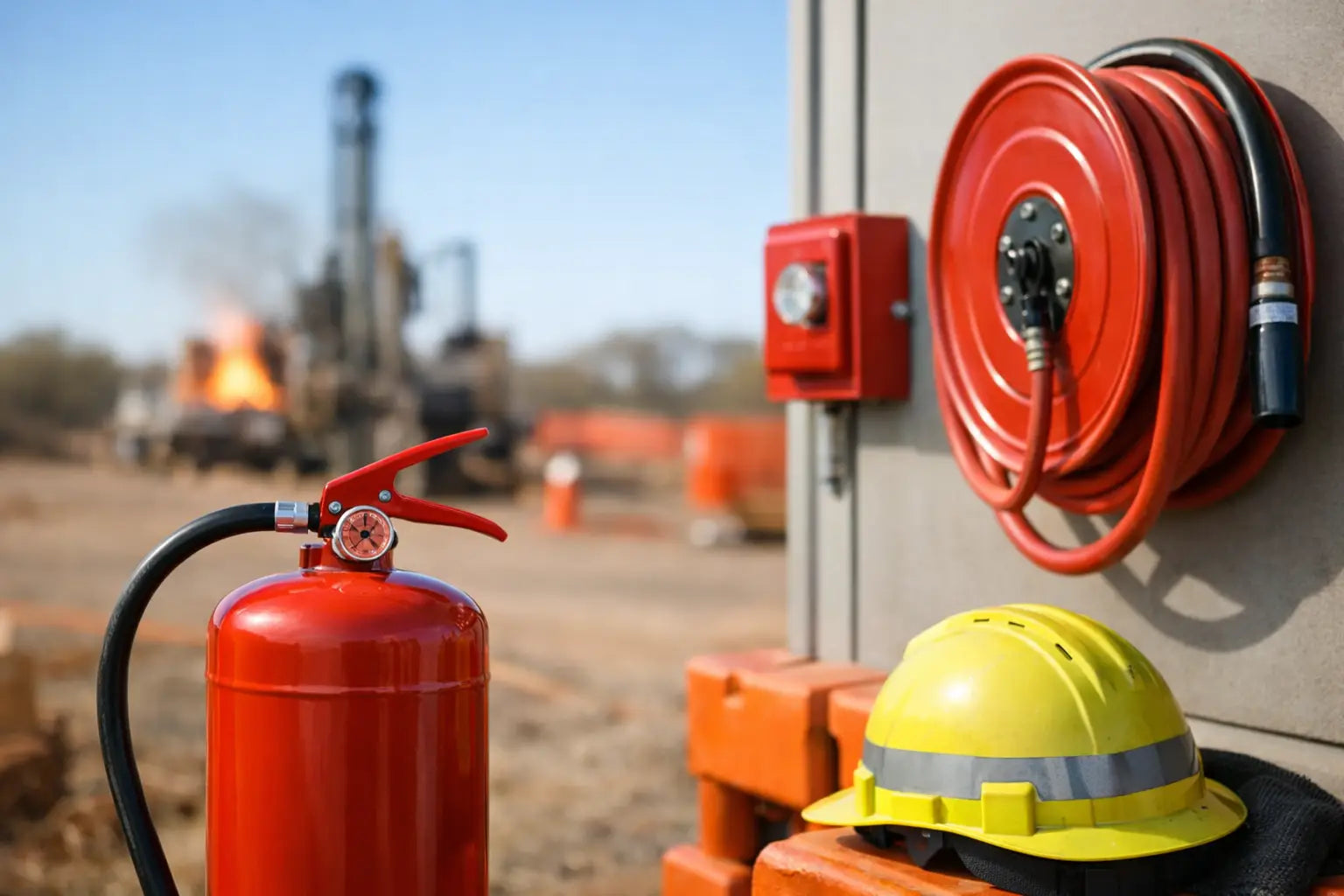
This is especially relevant in manufacturing, food processing support areas, transport, mining workshops and fire equipment servicing. If labels are cleaned as part of maintenance, they need to be specified for that reality. Otherwise the cleaning process itself can strip print, cloud the surface or attack the adhesive edge.
The hard part is that buyers do not always know the full chemical exposure profile at quote stage. That is why good label selection starts with the use case, not just dimensions and copy. Asking how the asset is cleaned, where it is stored and what it comes into contact with is not overkill. It is the difference between short-term fit and proper service life.
Poor print and conversion choices create avoidable failures
Not every label problem comes from the environment. Some failures are built in during production. If the print method is not suited to the application, or the laminate and adhesive are poorly matched, the label can start losing performance long before the material itself should fail.
Low-quality printing can reduce barcode readability from the start. Weak contrast, poor edge definition and inconsistent variable data all create scan issues. Likewise, if the label is cut badly or supplied on a format that curls, the installer may struggle to apply it cleanly. Edge lift, trapped air and early peel can follow.
Customisation also needs to be controlled properly. Sequential numbering, barcodes, QR codes and asset fields have to stay legible and consistent across the run. For compliance-focused buyers, cosmetic quality is not the point. Functional accuracy is. A label with the wrong spacing, weak print density or inconsistent material behaviour creates downstream problems that cost more than the original saving.
The wrong label type is still a common buying mistake
Sometimes the answer to why do asset labels fail is simple: the wrong product was chosen. A flexible polyester asset label is not the same as a metal plate. A tamper-evident label is not the same as a high-abrasion machinery label. A barcode label for indoor inventory is not the same as an outdoor asset identification label on mobile plant.
That sounds straightforward, yet many failures start with an assumption that one label can cover every asset in the fleet. In practice, mixed environments often need mixed solutions. Indoor switchboards, outdoor pumps, portable tools and vehicle-mounted assets may all require different constructions.
This is where working with a supplier that understands industrial applications makes a difference. Prime Tags Australia, for example, focuses on labels and plates built for harsh local conditions rather than generic one-size-fits-all stock. That matters when the environment is doing most of the testing.
How to stop asset labels failing early
The fix is not complicated, but it does require discipline. Start with the real exposure conditions: UV, weather, abrasion, chemicals, cleaning and handling. Then match the face material, print method, adhesive and finish to that environment.
Surface prep should be treated as part of the job, not an afterthought. If the substrate is dirty, damp or unstable, even a quality label can fail. Application temperature, pressure and cure time also matter more than many teams expect.
It is also worth reviewing label placement before locking in artwork. The best label in the wrong location still has a short life. And when exposure is extreme, a metal asset plate or more heavy-duty identification method may be the smarter option.
Asset labels are small components, but they carry a lot of operational weight. If they need to support maintenance records, proof of inspection, traceability or compliance, failure is not just cosmetic. Choosing for the site, not the sample sheet, is what keeps identification working when conditions turn rough.