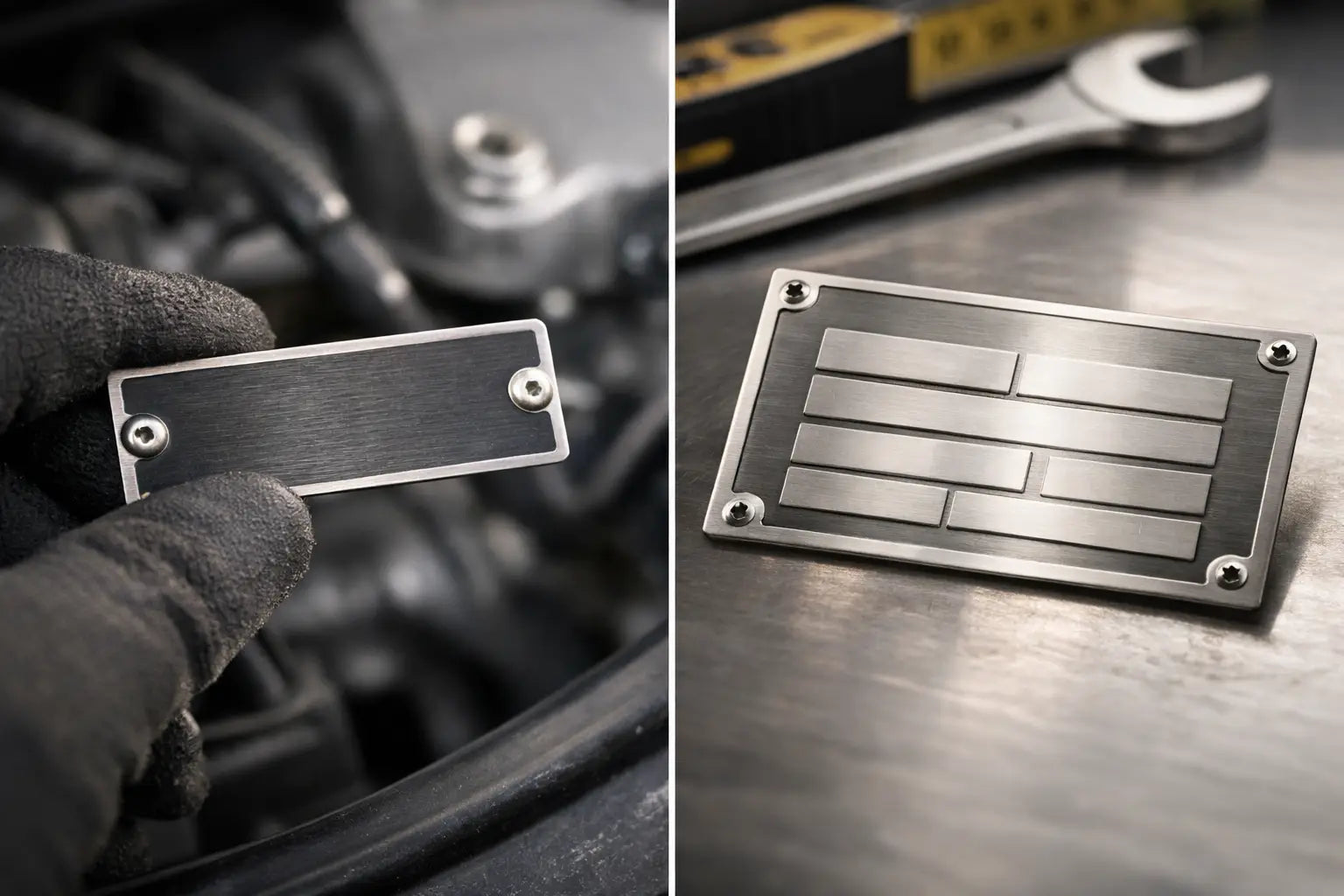

Ordering the wrong plate usually looks fine on a screen. The trouble starts later - when the text is too small to read on site, the fixing method does not suit the surface, or the material fails under UV, washdowns or grit. If you are working out how to order custom compliance plates, the safest approach is to start with the application, not just the artwork.
Compliance plates are not decorative labels. They carry critical identification, ratings, serial data, approval details and traceability information that need to stay legible in real operating conditions. For site equipment, vehicles, trailers, plant and specialised assemblies, the plate has to suit both the compliance requirement and the environment it will live in.
How to order custom compliance plates without rework
The quickest way to get a compliant result is to define the job clearly before you ask for pricing or production. That means knowing what the plate needs to say, where it will be fitted, how long it needs to last, and what kind of wear it will face. A plate for a workshop-controlled indoor asset is a different product from one going onto mobile plant, transport equipment or machinery exposed to sun, chemicals and pressure cleaning.
Start with the actual use case. Is this for a vehicle compliance plate, a trailer VIN plate, an asset identification plate, a machine rating plate or a plant identification plate? Each one can have different data fields, size limits and mounting constraints. If there is a standard, regulation, engineering drawing or internal specification involved, have that ready at the start. It saves time and avoids redesigns once production is underway.
Get the plate data right first
Most delays happen because the data is incomplete, inconsistent or still changing. Before ordering, confirm the exact text, numbering format and any mandatory fields. That may include serial numbers, VINs, model references, manufacturing dates, load limits, pressure ratings, company details, approval marks or inspection references.
If the plates will be sequentially numbered or carry variable data, say so upfront. This affects artwork setup, proofing and production. It also matters for traceability. In many industrial settings, one wrong digit is not a minor error - it creates confusion in maintenance records, audits and asset management systems.
Artwork should also be checked for readability, not just correctness. Small plates with too much information are a common problem. If the data must fit into a limited area, the supplier may need to adjust the layout, font size or orientation to keep it legible once installed.
Choose a material that suits the environment
Material selection is where practical buying beats cheap buying. A plate that looks acceptable on day one can become unreadable fast if it is made from the wrong stock for the job. Australian conditions are hard on identification products. UV, heat, rain, salt, dust, abrasion and chemical exposure all shorten service life when the material is not matched properly.
Metal compliance plates are often the right call where long-term durability, rigidity and a professional finish matter. They suit demanding industrial applications and fixed identification points where the plate needs to stay stable and readable over time. Depending on the job, you may also need to consider thickness, finish and resistance to corrosion.
Adhesive-backed options can work well in the right setting, but they are not the answer for every surface or environment. If the substrate is rough, oily, curved, regularly cleaned or exposed to heat, a mechanical fixing method may be more reliable. For some applications, holes, rivets or screws will make more sense than adhesive alone. It depends on what the plate is going onto and how it will be treated in service.
What to prepare before you request a quote
A good supplier can help shape the right plate, but the process moves faster when you provide the core job details early. In most cases, you should be ready with the dimensions, material preference if known, artwork or data content, quantity, numbering requirements, fixing method and delivery timing.
If you do not know the exact size yet, provide the available fixing area or a photo of the mounting location. That is often enough to recommend a practical size and layout. Photos help even more when there are curved surfaces, clearance issues or unusual mounting conditions.
For repeat orders, reference previous jobs if the plate needs to match an existing format. For new builds or changeovers, note whether this is a one-off run, a pilot batch or an ongoing supply item. Quantity affects unit cost, but it can also affect the smartest production method. A short run with variable data may need a different approach from a large-volume standard plate order.
Approvals, standards and internal sign-off
If the plate content is tied to a regulatory requirement or engineering approval, get those checks done before production starts. A supplier can manufacture to your specification, but they should not be expected to guess legal wording or certify information they have not issued.
This matters especially for vehicle and trailer applications, plant data plates and any plate carrying technical ratings. Confirm who owns the wording, who approves the final proof and whether any logos, authority references or registration details need permission to use.
Internally, nominate one decision-maker for proof approval. Too many reviewers can drag out a simple job and increase the chance of conflicting changes. A single clear sign-off point keeps the process clean and reduces the risk of ordering the wrong version.
How to avoid the common ordering mistakes
The biggest mistake is treating a compliance plate like a generic sticker. A plate is a functional identification product, and the small details matter. The wrong hole positions, incorrect adhesive, poor contrast or unsuitable material can turn into a replacement job much sooner than expected.
Another common issue is ordering only for today’s need. If the same plate format will be needed again, it is worth setting it up properly from the start. Standardised layouts, fixed data fields and controlled numbering formats make future orders faster and more accurate.
Lead time assumptions also catch buyers out. Custom work is not the same as picking a shelf item. Proofing, approval, material selection and variable data setup all take time. If the plates are tied to a shutdown, fleet handover, equipment delivery or audit deadline, raise that early. A capable supplier can often work to tight timeframes, but only if the information is ready.
Why samples and proofs matter
For a compliance-critical order, a proof is not just a formality. It is your chance to confirm layout, spelling, field order, dimensions and fit before full production. If there is any doubt about readability or mounting, ask to verify those details before the run goes ahead.
Samples can also help when you are choosing between materials or finishes. On paper, two options may look similar. In service, one may clearly suit your site better. For industrial buyers, that kind of check is worth doing when the plates will be exposed to tough handling or long service life expectations.
A supplier such as Prime Tags will generally be most useful when brought in early with clear application details. That allows the plate to be specified properly for durability, compliance and turnaround, instead of simply being priced as a commodity item.
How to order custom compliance plates for ongoing site use
If you need plates regularly, the best ordering process is one that removes repeat admin. That means locking in artwork templates, approved dimensions, material specs and data rules so your team is not starting from scratch every time. For procurement and maintenance teams, this is where custom supply becomes more efficient than patching together one-off jobs.
It also helps to think beyond the plate itself. Consider how it will be installed, who will fit it, and whether the site needs spares for damage or replacement. A strong ordering setup supports ongoing compliance because the product can be reordered quickly and consistently when plant changes, assets are added or identification is damaged in service.
Good compliance plate ordering is not about buying the cheapest square of metal. It is about getting a plate that reads clearly, lasts where it is fitted, and supports the records and approvals behind it. If you start with the application, confirm the data and choose materials for Australian conditions, the ordering process becomes a lot more straightforward.