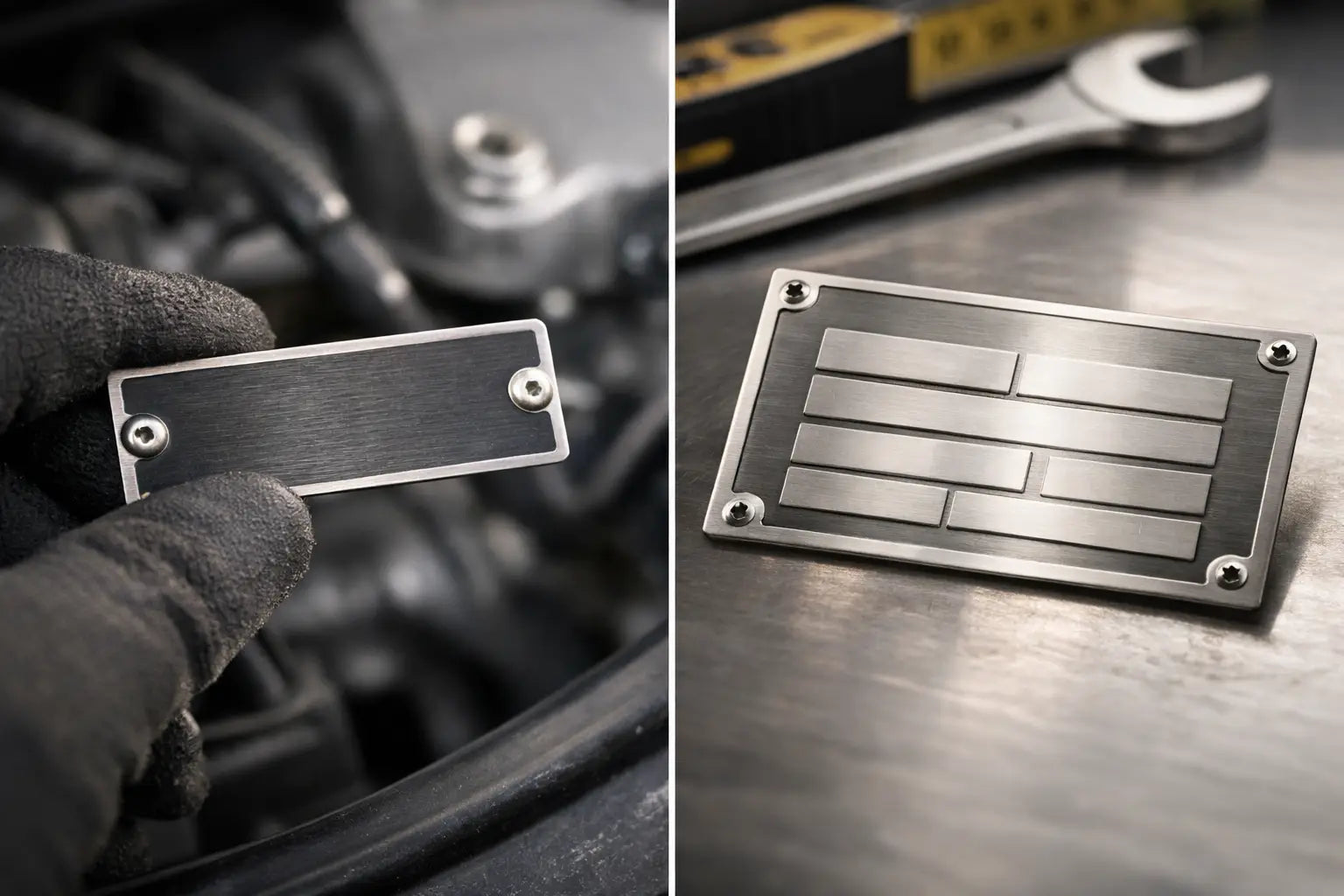

A missing or unreadable plate can turn a straightforward vehicle handover, inspection or registration check into a costly delay. That is why vehicle compliance plates Australian buyers specify need to do more than look correct on day one - they need to stay legible, fixed in place and fit for purpose in real operating conditions.
For fleet operators, trailer builders, workshops and procurement teams, the plate itself is a small item with a big job. It carries critical identification and compliance information, and if that information fades, corrodes or detaches, the operational headache lands with your team. The right plate reduces that risk. The wrong one creates rework, replacement costs and unnecessary questions when vehicles are inspected, sold or audited.
What vehicle compliance plates do
Vehicle compliance plates are used to display key manufacturing or compliance-related details on a vehicle or trailer. Depending on the application, that can include identification data, mass ratings, manufacturer details, build information or other required markings tied to the vehicle type and approval pathway.
In practice, these plates help connect the physical asset to its documented specifications. That matters when a workshop is completing a build, when a fleet manager is tracking assets, or when a buyer needs confidence that a trailer or vehicle has been correctly marked. A clear, durable plate supports traceability. It also saves time when details need to be checked quickly on site.
The exact information required can vary. A light trailer, plant trailer or modified vehicle may not all need the same layout or data fields. That is where many ordering mistakes happen. Buyers often start by asking for a "compliance plate" when what they really need is a plate tailored to a specific vehicle class, use case or approval requirement. Close enough is usually not good enough.
Vehicle compliance plates Australian businesses order most often
Across Australian transport and industrial sectors, the most common requirement is not just a standard plate. It is a plate built around a defined application. That could mean trailer VIN plates, identification plates for fleet assets, or custom metal plates that carry variable data for a production run.
For manufacturers and body builders, consistency matters just as much as durability. If every plate in a run needs matching formatting, clean engraving or printing, and reliable adhesion or fixing options, the supplier needs to understand production realities. There is no value in a cheap plate that slows assembly or fails after a season in the weather.
For operators in mining, construction, agriculture and heavy transport, the environment changes the buying decision. UV exposure, road grime, washdowns, abrasion and heat all affect how long a plate stays readable. Indoor office assumptions do not hold up on a worksite, in a yard, or on a trailer parked in full sun for years.
Why material choice matters more than many buyers expect
A compliance plate is only useful while its information remains legible. That puts material choice at the centre of the purchase, not at the end of it.
Metal plates are often preferred for demanding applications because they offer strength, dimensional stability and strong long-term readability when properly produced. Aluminium and stainless options can suit different environments, depending on exposure, mounting method and expected service life. The right choice depends on where the vehicle operates and what the plate needs to withstand.
Adhesive-backed options can work in some situations, but they are not automatically the best fit for every application. If the mounting surface is rough, exposed to oil, or regularly pressure cleaned, mechanical fixing may be the safer choice. On the other hand, if appearance, speed of installation and a clean finish matter, an adhesive solution may still be suitable if the substrate and environment are well understood.
Printing and engraving also involve trade-offs. A fast, low-cost print method may suit short-term or lower-risk use, but for long-term outdoor exposure, durability has to come first. If a plate carries critical identification or compliance details, replacement should not be part of the plan.
Common mistakes when ordering vehicle compliance plates
One of the most common problems is incomplete specification. Buyers know they need a plate, but the order goes out without confirmed dimensions, fixing method, variable data format or material grade. That usually leads to back-and-forth, delays or plates that are technically correct but awkward to install.
Another issue is treating all vehicles the same. A ute fleet, a light trailer program and a heavy equipment transport application can have very different marking needs. Plate size, readability, location and durability all depend on the asset and how it is used. A one-size-fits-all approach may simplify ordering, but it can create compliance and maintenance issues later.
There is also the problem of buying on appearance alone. A plate can look sharp when it arrives and still perform poorly once exposed to weather, grit and washdowns. Industrial buyers know this already from labels and tags in other parts of the business - if the material or print process is wrong, the failure just takes longer to show up.
How to specify the right plate the first time
The easiest way to avoid rework is to define the application before discussing price. Start with the vehicle type, the information that must appear on the plate, where it will be mounted and the conditions it will face. That gives the supplier enough to recommend a practical plate rather than just quote a generic one.
It also helps to confirm whether you need fixed data, variable data, or both. For example, a production run may require the same branding and structure on every plate, but with a unique VIN, serial number or mass rating on each unit. That affects how the plate is produced and checked before dispatch.
Artwork and formatting should be treated as functional, not decorative. Text size, spacing and layout need to support readability. If the plate will be inspected in poor light, mounted in a confined location or exposed to dirt, clarity matters more than squeezing in extra design elements.
For larger buyers, consistency across sites is worth planning up front. Standardised templates, agreed materials and repeatable approval processes can save a lot of time on future orders. That is especially useful for fleet operators, workshops and manufacturers handling ongoing builds rather than one-off jobs.
Durability in Australian conditions
This is where local experience matters. Australian conditions are hard on identification products. UV knocks around lower-grade materials, coastal exposure accelerates corrosion, and dust plus vibration can wear down edges and finishes faster than expected.
That is why vehicle compliance plates Australian operations rely on should be selected with actual site conditions in mind. A metro delivery trailer and a remote-area plant trailer may both need identification, but they do not need the same solution. Heat, chemicals, salt, abrasion and cleaning methods all shift the right specification.
Shortcuts usually show up at the worst time. The plate becomes difficult to read during an inspection, or the adhesive starts lifting before the asset is due for resale. At that point, the replacement cost is only part of the issue. The bigger cost is disruption - vehicles off the road, workshop time wasted, and staff chasing a problem that should have been avoided at ordering stage.
What good supply looks like
Industrial buyers do not need fluff from a plate supplier. They need clear guidance, dependable lead times and products that arrive ready to use. If customisation is required, the process should be straightforward. If the job is urgent, communication should be just as solid as the product.
A good supplier will ask the practical questions early. What is the plate for? What data needs to appear? How will it be fixed? What conditions will it face? That kind of front-end clarity reduces errors and helps make sure the plate suits the job.
Prime Tags Australia works with buyers who need that level of certainty - tough, customisable plates built from Australian materials for hard local conditions. That matters when compliance marking is not a box-ticking exercise but part of keeping assets identifiable, serviceable and ready for inspection.
If you are ordering vehicle compliance plates, treat them like any other compliance-critical component. Get the details right, match the material to the environment, and choose a supplier that understands how these products perform once they leave the office and hit the yard.