
A faded tag on a forklift is not a small problem. On a busy site, it can mean a missed pre-start issue, unclear lockout status, or a plant item staying in service when it should be stopped. That is why forklift safety tags need to do more than tick a box. They need to stay readable, stay attached, and make the machine status clear at a glance.
For Australian sites, that usually comes down to one simple question: will the tag still do its job after sun, dust, grease, washdowns and daily handling? If the answer is no, the tag becomes part of the problem instead of part of the control.
Why forklift safety tags matter
Forklifts sit in a high-risk category because they combine traffic movement, lifting operations and frequent operator changeover. Most businesses already know the need for inspections, maintenance records and isolation procedures. Where things often fall over is communication on the machine itself.
A forklift safety tag gives operators, supervisors and maintenance teams an immediate visual cue. It can show whether the unit is fit for use, due for inspection, under repair, isolated, or not to be operated. That sounds straightforward, but on a site with multiple shifts and mixed fleets, that visible status matters. It reduces guesswork and supports a safer handover between people.
It also supports consistency. Verbal instructions get lost. Whiteboard notes stay in the office. A properly designed tag stays with the forklift, where the decision is being made.
What a forklift tag needs to communicate
Not every site uses forklift tags in the same way. A warehouse with a small electric fleet will not have the same requirements as a quarry, fabrication workshop or transport yard. Still, the strongest tag systems usually cover three practical jobs.
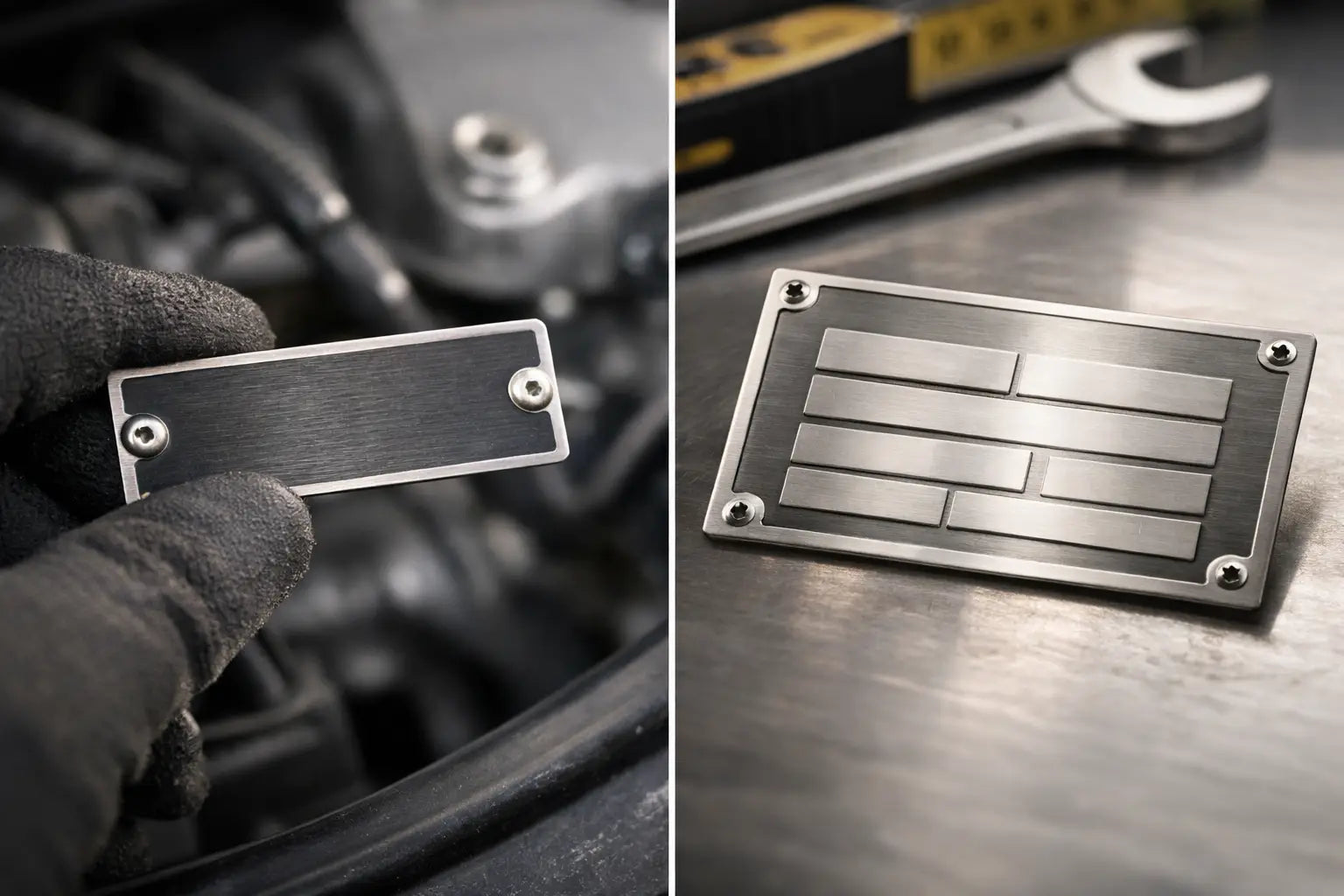
First, they identify the plant item clearly. That may include fleet number, asset ID, location or department. Second, they show status, such as inspected, due, faulty or out of service. Third, they provide enough writing space or printed detail to record the action taken, inspection date, fault note or authorisation.
That is where generic tags can become limiting. If the layout does not match the way your team actually works, people start writing over key fields, abbreviating critical information, or ignoring the tag altogether. A tag only works if it is easy to read and easy to use under normal site pressure.
Forklift safety tags for inspection and lockout
Most forklift safety tags fall into two broad groups: inspection tags and isolation or out-of-service tags.
Inspection tags are there to support routine checks and scheduled servicing. They help show that a pre-start inspection has been completed or that a maintenance interval has been met. In some workplaces, they also tie into asset registers or digital maintenance systems through numbering, barcodes or custom identifiers.
Isolation tags do a different job. They communicate that the forklift is not to be used because of a fault, repair work or another risk condition. In this case, clarity matters more than anything else. A tag needs strong contrast, plain wording and a secure attachment method. If an operator has to stop and interpret the message, the tag has already lost value.
Some businesses try to use one tag format for both jobs. Sometimes that works. Often it creates confusion. If a forklift can be both routinely inspected and separately isolated, using distinct tag designs is usually the cleaner option.
Why material choice makes the difference
On paper, a forklift tag is simple. On site, material choice decides whether it survives.
Forklifts are not gentle assets. Tags are exposed to UV, grime, hydraulic residue, abrasion and regular contact from gloved hands. In outdoor yards and civil works, add wind, rain and grit. In food or washdown environments, moisture resistance becomes even more important. A lightweight or low-grade tag may look fine when it is installed, then curl, crack, tear or fade far too early.
That creates cost in two ways. There is the direct replacement cost, but there is also the operational cost of unreliable identification. If your team cannot trust that tag information will still be legible in a month, they stop relying on it.
Durable synthetic materials are usually the better fit for forklift applications because they resist tearing and weathering far better than basic card or thin stock. Print quality matters too. If the ink fades quickly or rubs off under normal handling, the tag fails long before the forklift does. For industrial buyers, this is not about presentation. It is about retaining a readable control on an active asset.
Attachment matters as much as print
A well-printed tag is useless if it does not stay attached.
Forklifts present a practical challenge here because there are vibration points, moving parts and operator access areas to consider. The tag needs to be positioned where it can be seen without interfering with controls or creating its own hazard. The fixing method needs to hold in service conditions without becoming easy to remove, tamper with or lose.
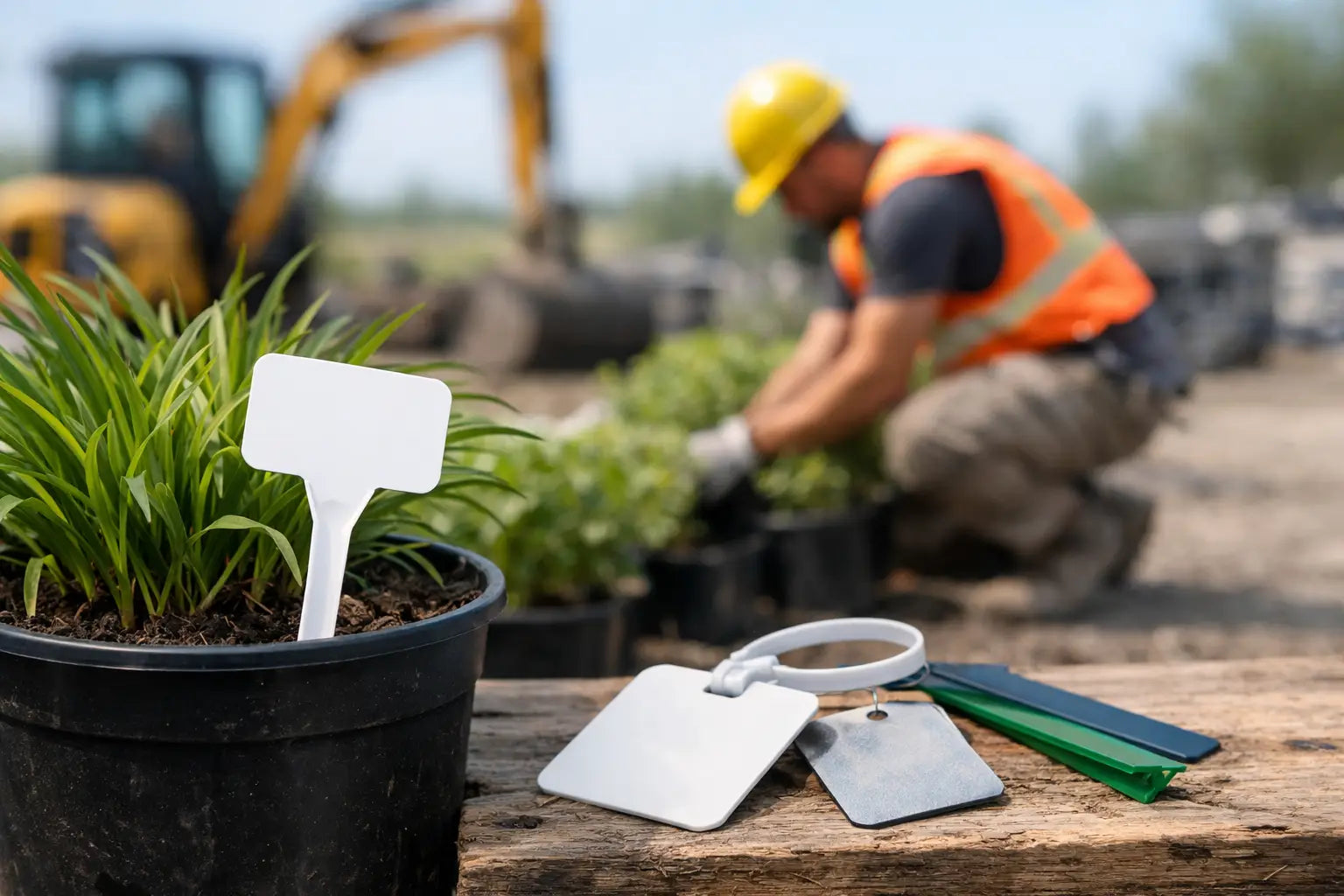
That is why the attachment style should be matched to the application. In some cases, a self-locking design is the cleanest option because it secures quickly and stays put. In others, a reinforced eyelet or heavy-duty tie may be more suitable. It depends on where the tag is mounted, how often it needs to be replaced, and whether the forklift is operating indoors, outdoors or across both.
The practical test is simple: can the tag stay readable and in place until the next planned update or removal? If not, the specification is wrong.
Custom forklift safety tags usually work better
For many sites, off-the-shelf tags are only good enough until the first real complication appears. Mixed fleets, multiple locations, contractor access, servicing intervals and internal approval steps all create information needs that a generic tag may not cover.
Custom forklift safety tags solve that by matching the tag to your process instead of forcing your process to fit the tag. That may mean adding a company name, asset range, site identifier, inspection fields, colour coding or pre-printed warnings. It may also mean using different layouts for electric and LPG units, indoor and outdoor fleets, or operational and maintenance teams.
Good customisation is not about adding more text. It is about making the right information obvious. Too much detail can clutter the tag and slow down decision-making. The stronger approach is to keep the message direct, support quick visual recognition, and only include fields that have a clear job on site.
For procurement teams, custom tags can also reduce errors when reordering. A repeatable specification with the correct material, print and layout is easier to manage than buying whatever looks close enough at the time.
Compliance is only part of the picture
It is reasonable to treat forklift tags as a compliance item, but that should not be the only lens. A compliant tag that fades early or tears off under normal use still creates risk.
The better view is that tags sit at the intersection of compliance, maintenance and plant control. They support inspections. They make machine status visible. They help prevent unintended use. They also create a more disciplined asset management system, particularly on sites running several forklifts across multiple shifts.
That means the best buying decision is not always the cheapest unit price. It is the tag that lasts, suits the task and reduces avoidable replacement and confusion. For Australian conditions, locally made industrial-grade tags often make more sense than lighter imported options built for milder environments.
Choosing forklift safety tags for your site
When assessing forklift tag options, start with the environment, then the use case, then the tag format. Ask where the forklift operates, what the tag needs to communicate, who fills it out, and how long it needs to remain legible. Those answers will usually point you towards the right material and fixing method fairly quickly.
It also helps to look at failure points in your current setup. If tags are fading, that is a material or print issue. If they are going missing, it may be the attachment method or placement. If people are ignoring them, the layout may be unclear or overloaded. Small design changes can make a noticeable difference when tags are part of a daily workflow.
For businesses that need a dependable supply across fleets or projects, working with a supplier that understands harsh Australian conditions is worth it. Prime Tags Australia, for example, focuses on industrial tags built from Australian materials for sites where UV, dirt and wear are not edge cases - they are standard operating conditions.
A forklift tag should never be the weak point in your plant control system. If it is there to communicate safety status, it needs to be clear on day one and still clear after the site has had a proper go at it. Choose tags that are built for the job, and your team will spend less time replacing them and less time guessing what a machine is allowed to do.