
One missing or unreadable tag can stop a lift, delay an inspection, or raise hard questions during an audit. That is why a proper lifting equipment tag guide matters on Australian worksites. When chains, slings, shackles and lifting beams are exposed to sun, grit, chemicals and constant handling, the tag is not a small detail. It is a critical part of identification, traceability and compliance.
For site managers, HSE teams, workshop supervisors and procurement staff, the job is straightforward on paper. Every lifting asset needs to be identifiable, legible and tied back to inspection and asset records. In practice, tag failure is common. Plastic goes brittle, print fades, holes tear out, and the asset is still in service while the tag is no longer doing its job. That creates risk fast.
What a lifting equipment tag needs to do
A lifting tag has one job before anything else - remain readable and attached in real operating conditions. If the tag cannot survive the environment, the information on it has little value. A workshop-safe tag may fail quickly on a mine site or coastal plant where UV, abrasion and salt are constant.
At a minimum, tags usually need to help users confirm what the item is, match it to asset or inspection records, and check whether it is within service or inspection requirements. Depending on the application, that may include serial numbers, working load limit details, inspection dates, equipment class, site references or other internal compliance fields.
The key point is that a lifting tag is not just an identifier. It supports operational control. When the tag is clear, crews can verify equipment faster. When it is damaged or missing, assets often get pulled aside until the paperwork catches up. That costs time, and on larger sites it can disrupt more than one job.
A practical lifting equipment tag guide for selection
Choosing the right tag starts with the asset and the environment, not just the data you want printed on it. A tag for a webbing sling is not the same as a tag for a chain assembly or a spreader beam. Attachment method, material thickness, flexibility and resistance to wear all need to match the equipment.
For lifting and rigging gear, durability usually comes down to a few practical questions. Will the tag be dragged, knocked or flexed every day? Is it exposed to UV full-time? Will grease, water or cleaning chemicals affect readability? Does the equipment require a compact tag that will not snag, or a larger format for easier scanning and visual checks? Those details determine whether a tag lasts months or starts failing almost immediately.
Material choice matters more than many buyers expect. In harsh Australian conditions, low-grade tag stock can fade, split or become unreadable long before the equipment itself is due for replacement. Tough industrial tag materials designed for outdoor use generally hold up far better, especially where abrasion and weather are part of normal service.
Customisation also plays a practical role. Standard fields work for some businesses, but many sites need tags built around internal asset systems, colour coding, inspection routines or contractor management requirements. If the layout does not match how your team works, the tag becomes harder to use and easier to ignore.
The information that should never be an afterthought
The exact information on a lifting tag depends on the equipment type, your internal procedures and the compliance framework you operate under. Even so, clarity beats clutter every time. If users need to squint, decode abbreviations or guess at worn text, the tag is not helping.
Most teams want a clean layout that separates core identification from inspection or traceability details. Asset ID, serial reference and rating information generally need to be obvious at first glance. Inspection fields should also be easy to find without turning the tag into a block of cramped text.
There is always a trade-off between including more information and keeping the tag usable in the field. A crowded tag may look complete in the office but fail the practical test on site. In many cases, the better approach is to keep the tag focused on critical identifiers and connect it to your broader maintenance or inspection records.
If barcodes, QR codes or internal tracking numbers are part of your asset system, they need to be printed at a size and contrast level that still works after dirt, wear and weather exposure. A code that only scans when brand new is not much of a control measure.
Why tag durability is a compliance issue, not just a product issue
It is easy to treat tags as consumables and buy on unit price alone. The problem is that cheap tags often cost more once replacement labour, downtime and lost traceability are counted properly. A tag that fades early does not just need replacing. It can create uncertainty about whether the equipment can remain in service.
On compliance-sensitive sites, that uncertainty is expensive. Supervisors may need to isolate the asset, verify records manually or wait for replacement identification. If several items are affected at once, routine lifting work can slow down quickly.
This is where specification matters. Tags made from tough, Australian-suited materials are generally a better fit for lifting applications than lightweight options intended for sheltered or low-contact environments. UV resistance, tear strength, print permanence and attachment security all affect whether the tag remains serviceable over time.
For buyers, the real question is not just how much a tag costs today. It is how reliably it performs through inspection cycles, rough handling and exposure. That is the difference between buying tags and solving an identification problem.
Matching tag type to equipment and site conditions
Different lifting assets fail tags in different ways. Flexible equipment can bend and crease a tag repeatedly. Metal components can rub attachment points until they crack. Outdoor gear can bleach under UV, while washdown areas can attack print and surface coatings.
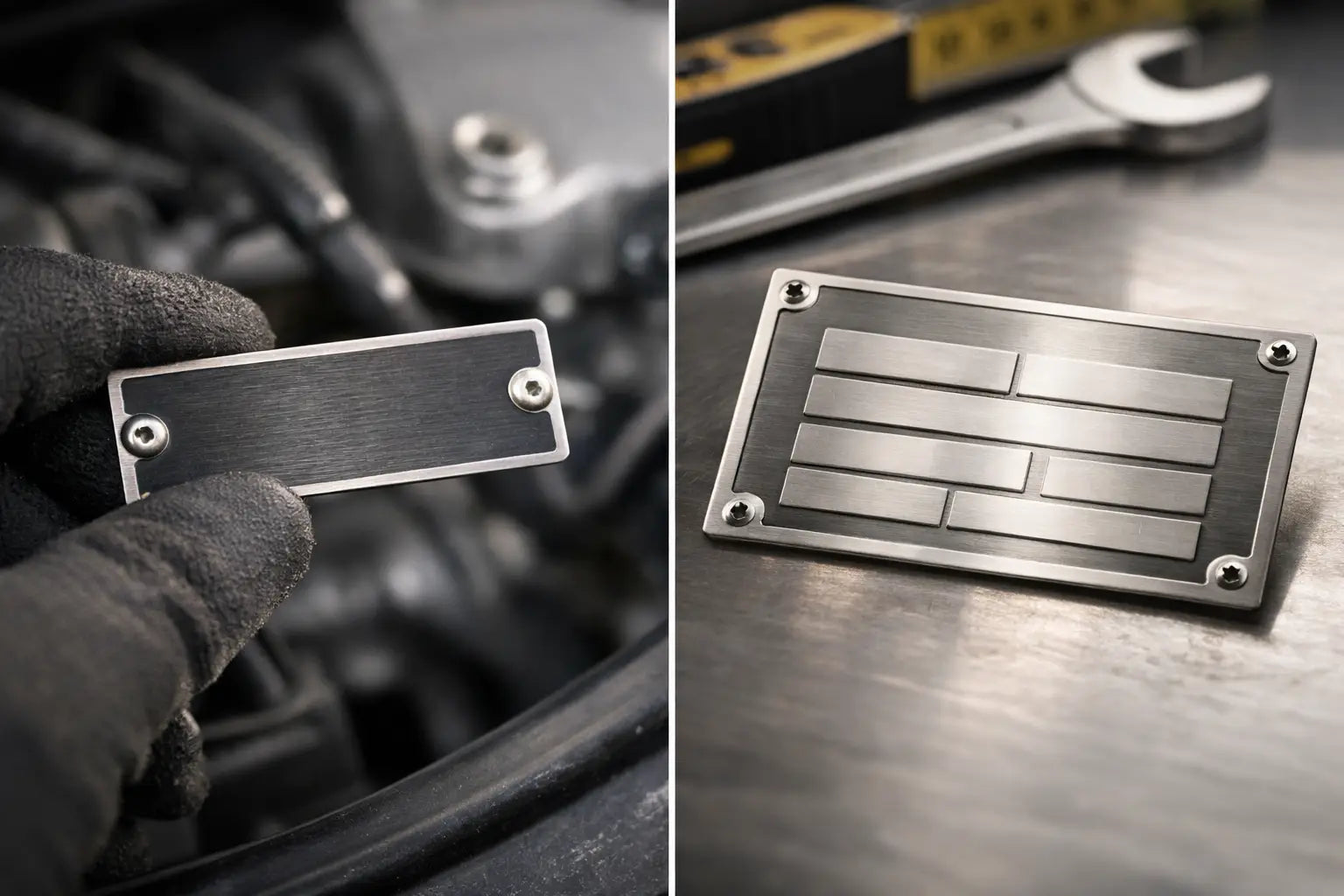
That means there is no single best tag for every lifting application. Some sites need highly durable synthetic tags for frequent handling. Others may need metal identification solutions for fixed or hard-wearing assets. In some cases, a smaller tag profile reduces snagging risk. In others, a larger tag is worth it because crews need to read it quickly from arm's length.
Attachment style is part of the decision as well. A strong tag is only as good as the way it is fitted. If the fixing method allows twisting, tearing or rubbing against hardware, lifespan drops fast. It pays to look at the whole tag system, not just the printed face.
This is also where custom supply makes a difference. A tag designed around your actual equipment dimensions, hole positions and data fields will usually outperform an off-the-shelf option that almost fits.
Common mistakes this lifting equipment tag guide can help you avoid
One of the most common mistakes is treating all lifting tags as interchangeable. They are not. Equipment type, exposure and inspection method all affect what works.
Another mistake is overloading the tag with internal references while neglecting readability. If the people using the gear cannot confirm key details quickly, the tag has missed the mark. The same goes for choosing materials based on appearance rather than service life.
Lead time can also become a problem. Many businesses only review tags after failures have already created a backlog. By then, urgent replacements are needed across multiple asset classes. It is far better to standardise tag formats early and keep supply predictable, especially if your site uses custom numbering or colour systems.
Finally, do not overlook consistency. Mixed tag formats across departments, projects or contractors make inspections slower and asset control harder. A more standardised tagging approach improves clarity for everyone who handles the equipment.
What buyers should ask before ordering
Before placing an order, it is worth checking how the tags will actually be used. Ask how long they need to last, what the asset is exposed to, how the equipment is inspected, and what information must remain visible at all times. That sounds basic, but it often reveals whether a standard tag is enough or whether a custom format is the smarter option.
You should also consider order flexibility. Some operations need large production runs across multiple sites. Others need short runs for a shutdown, a new project or a specialised lifting set. A supplier that can handle both without compromising quality gives you more control.
For Australian buyers, local material suitability matters as much as turnaround. Tags that look fine in a catalogue do not always stand up to inland heat, coastal exposure or heavy industrial wear. That is why many businesses prefer products built specifically for local conditions. Prime Tags Australia focuses on that practical requirement - durable identification products made for harsh worksites, fast-moving procurement needs and custom compliance demands.
A lifting tag should make life easier, not create another maintenance issue. If it stays attached, stays legible and fits your inspection process, it is doing its job. If you are reviewing your tagging setup, start with the conditions your equipment faces every day. The right tag is the one that still works when the job gets rough.