
A lifting sling with an unreadable tag is more than an inconvenience. It can stop a job, create doubt during an inspection, and leave your team guessing about identification, inspection status or rated capacity. That is why choosing the best tags for lifting gear is not a minor purchasing decision. On Australian worksites, tags need to stay legible, stay attached and keep doing their job in heat, grit, UV and hard handling.
For site managers, HSE teams and procurement buyers, the right tag comes down to one question: will it still be readable and secure after months of real use, not just when it leaves the supplier? The answer depends on the lifting gear, the environment and how much information the tag needs to carry.
What makes the best tags for lifting gear?
The best lifting gear tags do three things well. They identify the item clearly, support inspection and compliance processes, and survive the conditions the gear works in.
That sounds straightforward, but there is a trade-off in nearly every application. A soft, flexible tag may sit better on textile slings and harness-style products, while a rigid metal tag may suit chains, spreader bars or harsh outdoor use where abrasion is constant. A larger tag gives you room for more data, but it can also snag if the attachment point is poorly chosen. A cheaper tag might work for light-duty indoor use, but it often becomes false economy when fading, cracking or detachment forces replacement.
For most industrial buyers, the starting point is durability. If the print disappears, if the material goes brittle, or if the fixing method fails, the tag has stopped doing its job. In lifting applications, that creates operational risk quickly.
Material choice matters more than most buyers think
When buyers ask about the best tags for lifting gear, material is usually the first place to look. Not all tags are built for the same level of exposure.
Synthetic tags for flexible lifting equipment
Synthetic lifting and rigging tags are often the practical choice for webbing slings, round slings and other flexible gear. They are light, easier to attach to soft goods and can be produced with clear printed information, serial numbers and inspection details. The advantage is flexibility and ease of handling. The limitation is that lower-grade materials can wear fast if they are exposed to rough surfaces, repetitive dragging or direct weather for long periods.
For Australian conditions, UV stability matters. A tag that looks fine in a warehouse trial can deteriorate quickly on a civil site, in a yard or on mining plant. If the lifting gear is stored outdoors, moved between sites or used in dusty, abrasive environments, choose a tag material designed specifically for those conditions rather than a general-purpose option.
Metal tags for heavy-duty and long-term identification
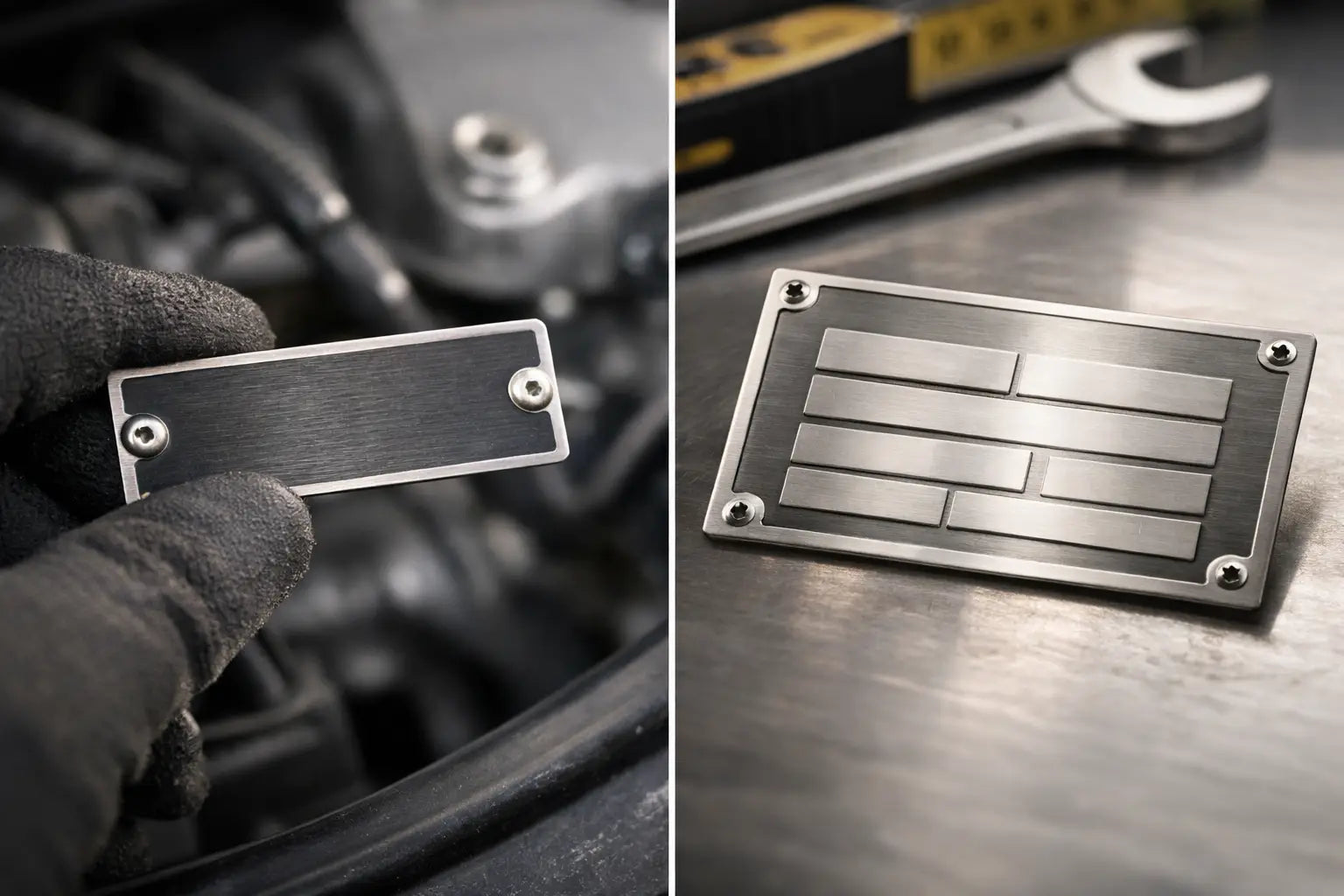
Metal tags are often the stronger option where impact, abrasion and weather are ongoing issues. Stainless steel and aluminium tags are common choices depending on the application, the required lifespan and the budget. Metal can hold engraved, stamped or permanently marked information that remains legible long after printed surfaces have failed.
The trade-off is practicality. Metal tags are not ideal for every textile product, and on some assemblies they can be less forgiving in use. They also need the right fixing method so they do not become a wear point against the gear itself. But where gear is exposed to harsh treatment and long service life is the priority, metal tags are hard to beat.
The attachment method is just as important as the tag
A high-quality tag is no use if it tears off in service. Attachment method is where many tag failures start.
For lifting gear, fixings need to be secure without compromising the equipment or creating unnecessary snag points. Self-locking tag systems, cable ties rated for industrial use, metal rings and purpose-designed fixing points all have their place. The right option depends on the gear type and whether the tag needs to be replaced during periodic inspection cycles.
If a tag is likely to be removed and reissued after inspection, ease of replacement matters. If it is intended as a long-term identifier, tamper resistance may matter more. Procurement teams often focus on the tag itself, but supervisors in the field know that a weak fixing can undo the whole purchase.
What information should lifting gear tags include?
A lifting tag needs to do more than show a serial number. The exact content will vary by asset type, site procedure and compliance framework, but most buyers need enough space for clear, durable identification and inspection-related data.
That often includes equipment ID, serial number, working load limit, inspection status, next inspection due date, and company or site identification. Some operations also require barcode or QR-based asset tracking, particularly where large fleets of lifting assets are managed across multiple locations.
The key is clarity. Cramming too much onto a small tag can make it hard to read quickly in the field. On the other hand, reducing detail too far can create problems during audits or inspections. A well-designed custom tag balances both. It gives the site team the information they need at a glance, while still supporting internal asset management.
Custom tags vs standard tags
Standard tags can work well for straightforward lifting applications, especially when the information requirement is simple and the gear is used in a consistent environment. They are usually faster to specify and easier to reorder.
Custom tags make more sense when your operation has specific identification formats, colour coding, asset numbering systems or inspection data requirements. They are also the better choice when gear is used across different divisions, contractors or locations and clear ownership needs to be visible.
This is often where industrial buyers see the real value. A tag that matches your system reduces confusion on site, speeds up inspections and cuts admin time. It can also reduce replacement errors because the gear is easier to identify correctly. Prime Tags Australia works with buyers who need that level of fit-for-purpose tagging rather than an off-the-shelf compromise.
Choosing tags for different lifting gear types
Not every lifting asset should be tagged the same way.
Textile slings usually need flexible, low-profile tags that will not interfere with handling. Chain slings and hardware assemblies often suit tougher tag materials and more secure mechanical attachment. Lifting beams, spreaders and fixed accessories may justify metal tags or plates where permanent identification is needed. Harness-linked lifting or rigging items can need compact tags that remain readable without creating bulk.
That is why a blanket answer to the best tag is rarely the right one. The better approach is to match the tag to the gear, then match both to the site conditions.
Why cheap tags fail on real sites
On paper, one lifting tag can look much like another. In service, the differences show up fast.
Cheap tags tend to fail in predictable ways. Print fades. Holes elongate. Materials crack. Fixings become brittle. Edges split. Once that starts, the cost of replacement is only part of the problem. There is also downtime, reinspection effort, ordering delays and the risk of gear being sidelined because identification is no longer reliable.
For buyers managing fleets of lifting equipment, that adds up. Paying slightly more for a tag built from Australian materials and designed for local conditions is often the lower-cost decision over the full service life. It also reduces the churn of repeated replacement orders that solve nothing long term.
What to ask before you order
A good supplier should be able to answer practical questions, not just send a price. Ask how the tag performs under UV exposure, abrasion and weather. Ask what fixing methods are available. Ask whether the print or marking method is suited to long-term field use. Ask whether custom numbering, barcodes or site-specific layouts are possible.
It is also worth asking for samples when the application is demanding. A sample tells you more than a catalogue photo ever will. You can check thickness, flexibility, legibility and attachment fit before committing to a larger run.
Lead time matters too. Lifting gear tagging is often tied to shutdowns, inspections, new asset onboarding or compliance deadlines. If the supplier cannot deliver when required, the rest of the specification starts to matter less.
The right tag is the one that keeps working
The best tags for lifting gear are not the cheapest, the flashiest or the most over-specified. They are the ones that remain readable, attached and fit for purpose under the conditions your gear actually sees.
For some sites, that means flexible synthetic tags with clear custom printing. For others, it means metal tags built for long-term abuse. In many cases, it means a mix across different asset classes rather than a single tag for everything.
If you are reviewing your current lifting gear tags, look past the unit price and focus on field performance. A tag that holds up on site protects identification, supports compliance and saves replacement headaches later. That is usually the better buy, and your maintenance team will notice the difference long before the paperwork does.