

Audits don't have to be a nightmare. In the industrial world, time is the one resource you can't buy more of. Every hour your team spends walking around with a clipboard, squinting at faded serial numbers, and manually typing data into a spreadsheet is an hour of lost productivity. Worse, it’s an hour where human error can creep in, compromising your compliance and safety records.
The solution isn't more paperwork; it’s smarter hardware. By integrating QR codes into your asset labels, you bridge the gap between your physical equipment and your digital database. This isn't just about high-tech gadgets: it’s about high-efficiency operations. When your labels are Designed Right, Built Strong, and Delivered on Time, you stop chasing data and start managing assets.
In this guide, we’ll break down exactly how to integrate QR codes with your industrial labeling strategy to slash audit times, eliminate errors, and ensure your site stays compliant in the toughest Australian conditions.
The Audit Nightmare (And the Digital Solution)
If you’ve ever managed a mine site or an industrial plant, you know the "clip-board crawl." It’s slow, it’s prone to error, and it’s expensive. Traditional equipment identification tags often rely on human eyes to read small, sometimes corroded text.
QR codes change the game. Unlike standard barcodes, QR codes can hold significantly more data and remain scannable even when the label is partially obscured or damaged. For a site manager, this means instant access to maintenance logs, safety certifications, and warranty details with a single scan from a smartphone or tablet.
Identify. Scan. Comply. That is the new standard for industrial asset management.

Step 1: Choose Your Weapon (Industrial Labels for Tough Sites)
Before you can think about software, you need hardware that survives. A QR code is useless if it fades in the sun or peels off in the rain. In the Australian outback, UV radiation and extreme heat are the primary enemies of site compliance.
When selecting your industrial labels, you need materials that are heavy-duty, UV-stable, and weather-resistant.
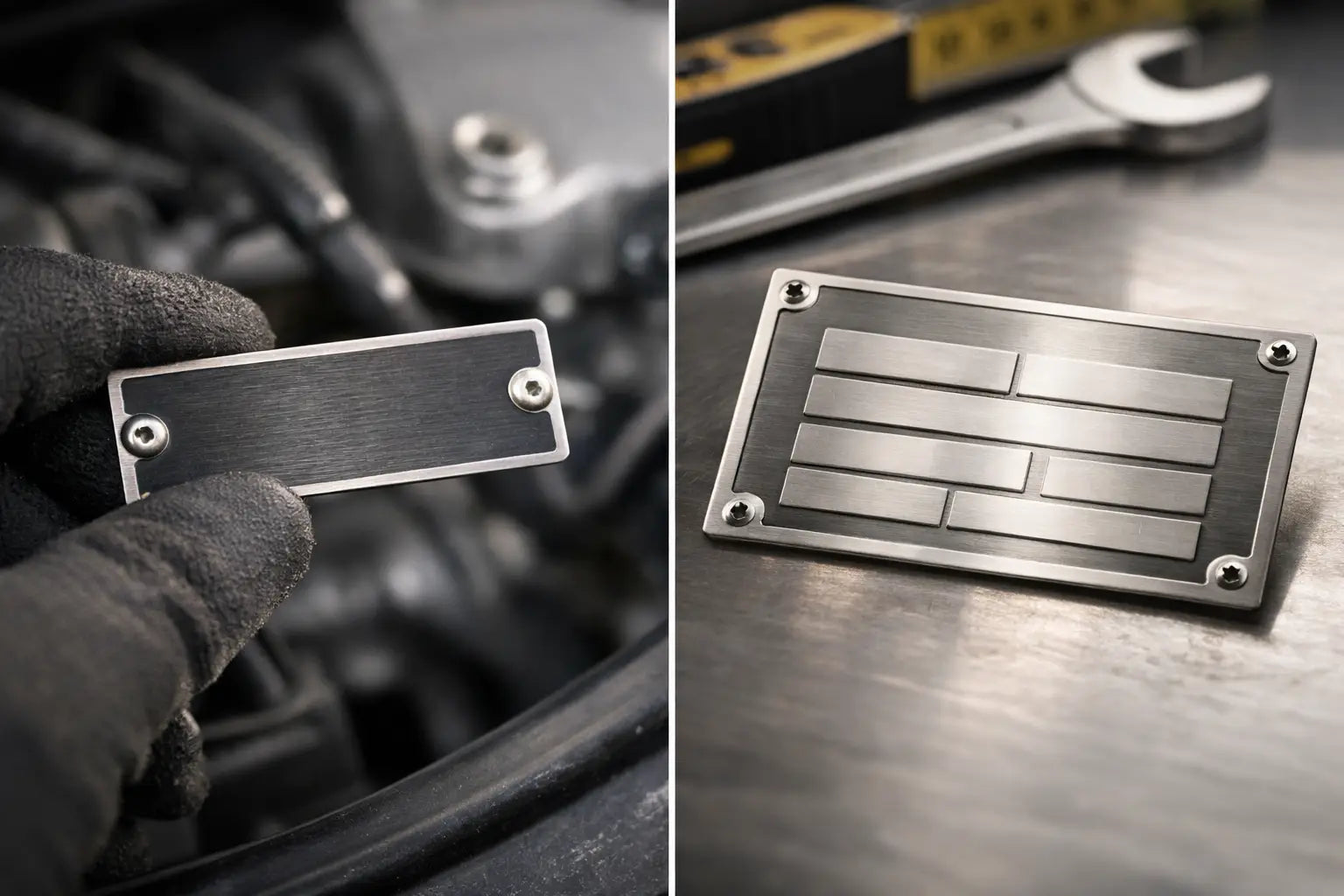
- Metal Asset Plates: For the most extreme environments, laser-etched stainless steel or anodized aluminum is the gold standard. These won't rust, won't fade, and won't fail.
- Heavy-Duty Poly Labels: If you need flexibility for curved surfaces, high-tack, UV-stabilized polyester labels offer a rugged alternative that grips tight and stays legible.
At Prime Tags, we don’t do "standard." We build labels for the grit and grime of real work. Check out our comparison of metal vs. poly labels to see which fits your specific project needs.
Step 2: Connect the Dots (The Integration Workflow)
Integration sounds complicated, but it’s a straightforward four-step process. You don't need a degree in IT; you just need a plan.
1. Data Preparation
Start with your Asset Register. Every piece of equipment needs a unique identifier. This could be an internal serial number or a specific asset ID. Ensure your database is clean: trash in, trash out.
2. QR Code Generation
Your QR code should point to a specific URL or a unique ID within your Asset Management Software (like a CMMS). When a technician scans the code, the software should automatically pull up that specific asset’s page.
3. Custom Label Printing
This is where Prime Tags steps in. We take your data and bake it into our custom safety tags and plates. We don't just print on the surface; we use industrial-grade etching and UV-stable inks to ensure the code remains crisp for years, not weeks.
4. Database Linking
Once the labels are applied, your team uses their scanning app to "onboard" the asset. They scan the new QR code, link it to the existing record in the system, and the digital twin is born.

Step 3: Deploy and Conquer (Scanning in the Field)
Deployment is where the "no-nonsense" approach pays off. When your team is out on-site, they shouldn't have to carry specialized laser scanners.
Modern QR codes work with the smartphone already in your pocket. This accessibility means anyone from the safety officer to the junior technician can verify an asset’s status instantly.
The "Scan and Go" Audit:
- Arrive at Asset: No searching for serial numbers buried under grease.
- Scan QR Code: Instant pop-up of the digital record.
- Update Status: Tick the "Inspected" box, upload a photo, and hit save.
- Move On: The database updates in real-time. No data entry back at the office.
This process reduces the physical time spent at each asset by up to 50%. Multiply that by 500 assets, and you’ve just saved your company a full week of labor.
The Payoff: Hours Saved, Mistakes Deleted
The real value of QR-integrated asset labels is the elimination of the "human factor" in data entry.
- Zero Transcription Errors: No more mistyping a "0" for an "O." The scan is 100% accurate every time.
- Instant History: See when the last flange tagging was completed or when the next fire door inspection is due.
- Audit-Ready Always: When the regulator walks onto the site, you don't scramble for folders. You scan a tag and show them the live compliance history.
In high-stakes environments like mine sites, this isn't just about efficiency: it's about liability. If you can't prove it was inspected, it wasn't inspected. QR codes provide an unbreakable digital paper trail.

The Technical Edge: Why QR Codes Outperform Barcodes
You might be wondering: “Why not just use a standard barcode?”
In a warehouse, barcodes are fine. On a construction site or an oil rig, they fail. Standard 1D barcodes require a clean, horizontal scan across every single line to work. If a scratch runs through the middle, the barcode is dead.
QR codes (2D barcodes) feature built-in error correction. Because the data is stored both vertically and horizontally, a QR code can be up to 30% damaged and still be perfectly readable. In our world, where tags get hit by rocks, covered in dust, or baked in the sun, that 30% margin is the difference between a successful audit and a total system failure.
The Prime Tags Advantage: Built for Grit, Priced for Value
We know you have choices when it comes to suppliers. But at Prime Tags, we don't just sell labels; we sell peace of mind for site managers.
100% Australian Materials
Our products are made right here to handle the unique challenges of the Australian climate. From the high-salt air of the coast to the intense UV of the desert, our compliance plates are built to outlast the equipment they are attached to.
Lowest Price Guarantee
We aren't just the best; we’re the most cost-effective. We offer a 15% Price Guarantee. If you find a lower price on a comparable product, we won't just match it: we’ll beat it by 15%. Managing safety shouldn't break your budget.
Fast Turnaround
When a shutdown is looming, you can't wait weeks for tags. We offer daily shipping Australia-wide to ensure your project stays on schedule. Designed Right, Built Strong, Delivered on Time.

Conclusion: Stop Searching, Start Scanning
The transition from manual audits to a QR-integrated system is the single most effective upgrade you can make to your asset management strategy this year. It turns a grueling, error-prone task into a streamlined, digital process.
Don't let your compliance fall behind because of outdated technology. Protect your assets, protect your team, and protect your time.
Ready to upgrade your site? Explore our range of heavy-duty asset plates or contact us today for a custom solution tailored to your project’s exact needs. We’ll help you build a tagging system that won't fade, tear, or fail.