
A plant label that fades, lifts or becomes unreadable is not a minor housekeeping issue. On a mine site, workshop, processing plant or transport yard, it can slow maintenance, compromise traceability and leave critical equipment without clear identification. Knowing how to specify durable plant labels starts with the actual conditions the label must survive, not just the size of the sticker.
The right specification gives your supplier clear, usable information. It also prevents the common false economy of ordering a low-cost label that needs replacing after one summer, one washdown cycle or a few weeks of abrasion.
Start with the plant environment
Plant labels do not all face the same conditions. A label inside an electrical cabinet has very different demands from one fixed to mobile equipment working outdoors in Pilbara heat, coastal salt air or a dusty quarry. Begin by identifying where the label will sit and what it will contact over its service life.
Consider UV exposure, temperature range, water and washdowns, fuel, oil, hydraulic fluid, solvents, salt, grit and physical abrasion. Also account for vibration. Labels fitted to pumps, generators, forklifts, excavators and processing equipment may be exposed to constant movement that tests both the face material and adhesive.
Be specific about cleaning practices as well. Pressure washing, degreasers and industrial cleaning chemicals can damage print or work under poorly matched adhesives. If an item is repainted regularly, stored outdoors or handled frequently by gloved operators, say so at the quoting stage.
A useful rule is this: specify for the harshest realistic condition, rather than the average condition. It is usually cheaper to select the right construction once than to manage repeat replacements across a fleet or site.
How to specify durable plant labels by material
Material selection determines how well a label stands up to its environment. There is no single best material for every application, so the specification should match the risk.
For general-purpose plant identification, a tough synthetic label material can provide good resistance to moisture, UV and everyday handling. It suits asset numbers, equipment instructions, service references and barcode labels where the surface is reasonably smooth and the label does not face constant impact.
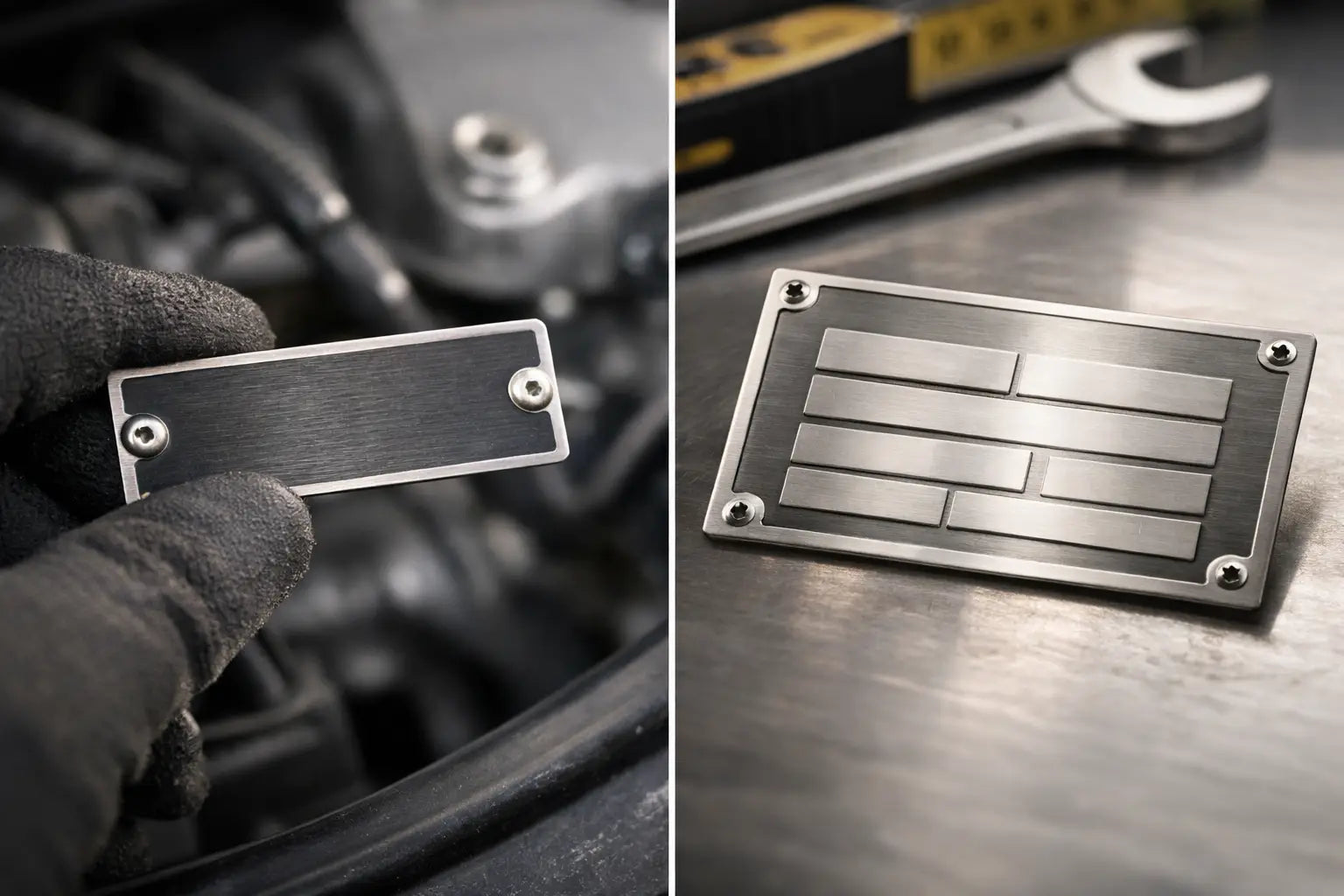
Where abrasion, high temperatures, chemicals or prolonged outdoor exposure are likely, a metal plate or etched metal label may be the better option. Aluminium and stainless steel plates are commonly chosen for equipment identification, serial data, compliance information and permanently marked assets. A metal plate costs more than a standard label, but it can be the practical choice when a missing identifier creates a maintenance or compliance problem.
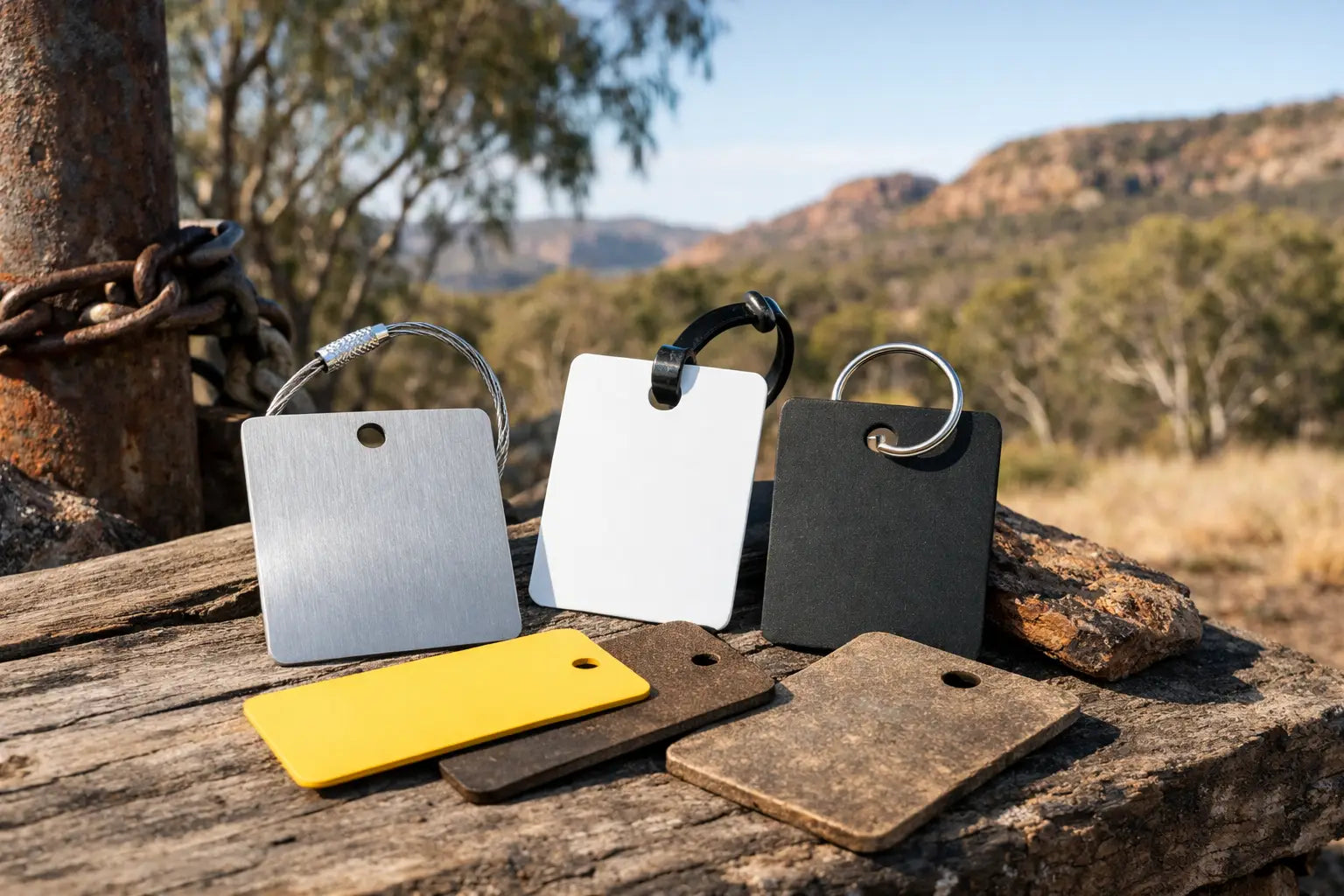
Flexible tags are often better suited to hoses, cables, valves and items without a flat mounting face. In these cases, specify the tag material, attachment method and required hole size together. A label that is durable on a panel may fail quickly when wrapped around a moving hose or secured with the wrong tie.
When requesting a quote, describe the application in plain terms. For example: “outdoor pump skid, full sun, weekly washdown, oil exposure, asset barcode required, expected life five years”. That gives a capable supplier enough detail to recommend a suitable material rather than simply matching a previous order.
Specify the attachment method, not just the label
Even the strongest face material will fail if the attachment method is wrong. Adhesive performance depends on the surface, preparation and application conditions.
For self-adhesive plant labels, identify the substrate: painted steel, powder-coated metal, stainless steel, aluminium, plastic, rubber, rough cast surfaces or a low-energy plastic. Some surfaces need a more aggressive adhesive, while others may require mechanical fixing because they are textured, oily or exposed to heavy vibration.
Surface preparation matters. The application area should be clean, dry and free of oil, dust, silicone and loose paint. Labels applied to cold, damp or contaminated surfaces may appear secure at first, then lift at the edges once the equipment returns to service.
For high-risk applications, specify mechanical fixing. Holes for rivets, screws, wire or cable ties provide a more dependable result on rough plant, flexible equipment and surfaces exposed to constant dirt or fluid contamination. If the plate will be riveted, confirm hole diameter, centres and whether the fixing points need to avoid internal components or existing hardware.
Do not assume every label needs permanent adhesive or metal construction. Temporary inspection status, maintenance hold points and short-term identification may need a removable label or tag. The important point is to match the expected service life to the fixing method.
Make the information readable in the field
A durable label is only useful if personnel can read it quickly. This is where many specifications fail. They focus on material but overlook layout, text height and contrast.
Start with the function of the label. Is it used to identify an asset, show a serial number, display a warning, record an inspection status or support scanning? The answer should determine the information hierarchy. The asset number or safety message should be immediately visible, while secondary details can sit below it in smaller text.
Choose high-contrast print. Black text on a light background is usually effective for general equipment identification, while safety labels may need established warning colours and symbols. Avoid squeezing too much content into a small label. If personnel need to read the information from a working distance, increase the label size or separate the data across more than one label.
Barcodes and QR codes require particular care. Specify the code type, the data it must contain, the scanning equipment in use and the minimum size needed for reliable reads. A barcode may print cleanly but still fail in service if it is too small, placed on a curved surface or covered by grime. For critical asset systems, request verification of barcode legibility before the full run is produced.
Variable data should also be clearly defined. Provide a spreadsheet or approved sequence for asset numbers, serial numbers, inspection dates and equipment references. Confirm leading zeros, prefixes, number ranges and whether each label must be unique. One incorrect character can create unnecessary rework across maintenance and compliance records.
Include the details your supplier needs
A complete plant label specification avoids assumptions and reduces approval delays. For a custom order, include these five areas:
- the application and environmental conditions, including UV, chemical, washdown and abrasion exposure;
- material and finish requirements, or enough site detail for a material recommendation;
- dimensions, shape, corner style, mounting holes and attachment method;
- artwork requirements, including logos, colours, symbols, fonts, barcodes and variable data; and
- quantity, delivery timing, proof approval process and whether spare labels are required.
Ask for a proof before production, especially for labels with serialisation, compliance statements, barcodes or multiple variants. Check spelling, dimensions, colours, hole positions and data sequences against the equipment register. It is far easier to correct a digital proof than to sort a large run of incorrect plates after delivery.
Plan for service life and replacement
The most durable label is not always the right choice if the equipment is routinely refurbished, reallocated or modified. Specify an expected service life and decide whether the label must survive for the life of the asset, until the next major overhaul or only for a defined inspection period.
For permanently identified plant, use a construction that remains readable after normal cleaning and field use. For equipment that changes configuration, consider a permanent base plate with replaceable inserts or separate labels for variable information. This can reduce future replacement costs without sacrificing traceability.
It is also worth ordering a controlled quantity of spares for high-use plant. Keep the artwork and data format on file so replacements remain consistent across sites, workshops and contractors. Consistent identification helps maintenance teams find the right asset faster and prevents mismatched labels from creeping into the register.
Prime Tags Australia can help translate site conditions, artwork and data requirements into a worksite-ready label or plate specification using Australian materials built for demanding local conditions.
A good specification does more than produce a label that looks right on the day it arrives. It gives your team an identifier that stays attached, stays legible and keeps doing its job when the plant is exposed to the conditions it was built to handle.