
A faded inspection tag on a lifting point, a cracked asset label on plant, or an unreadable hose marker is more than a cosmetic problem. It can interrupt maintenance, create doubt during an audit and leave workers without the information they need. The best material for outdoor tags depends on the environment, the information being displayed and how long that identification must remain legible.
For Australian worksites, material selection needs to account for more than rain. High UV, heat, red dust, salt air, washdowns, oils, vibration and physical abrasion can all shorten the life of a poorly specified tag. Choosing a material by price alone often leads to early replacement, inconsistent records and unnecessary compliance risk.
Best material for outdoor tags: start with the exposure
There is no single material that suits every outdoor application. A tag fitted to a fire extinguisher cabinet under cover has different requirements to a plate fixed to mobile plant in a quarry, or a hose label exposed to weather, fuel and handling every day.
The first question is what the tag will face over its service life. UV exposure is usually the main cause of fading and brittleness outdoors. In coastal locations, salt spray can corrode unsuitable metals and weaken fittings. On construction, mining and manufacturing sites, abrasion, impact and chemical contact are often the deciding factors.
Also consider the consequence of failure. A temporary identification tag can be replaced as part of routine work. A compliance plate, asset plate or critical inspection tag needs a material and marking method that remains clear for years. The more critical the information, the less room there is for a short-life solution.
UV-stable plastic tags for everyday outdoor identification
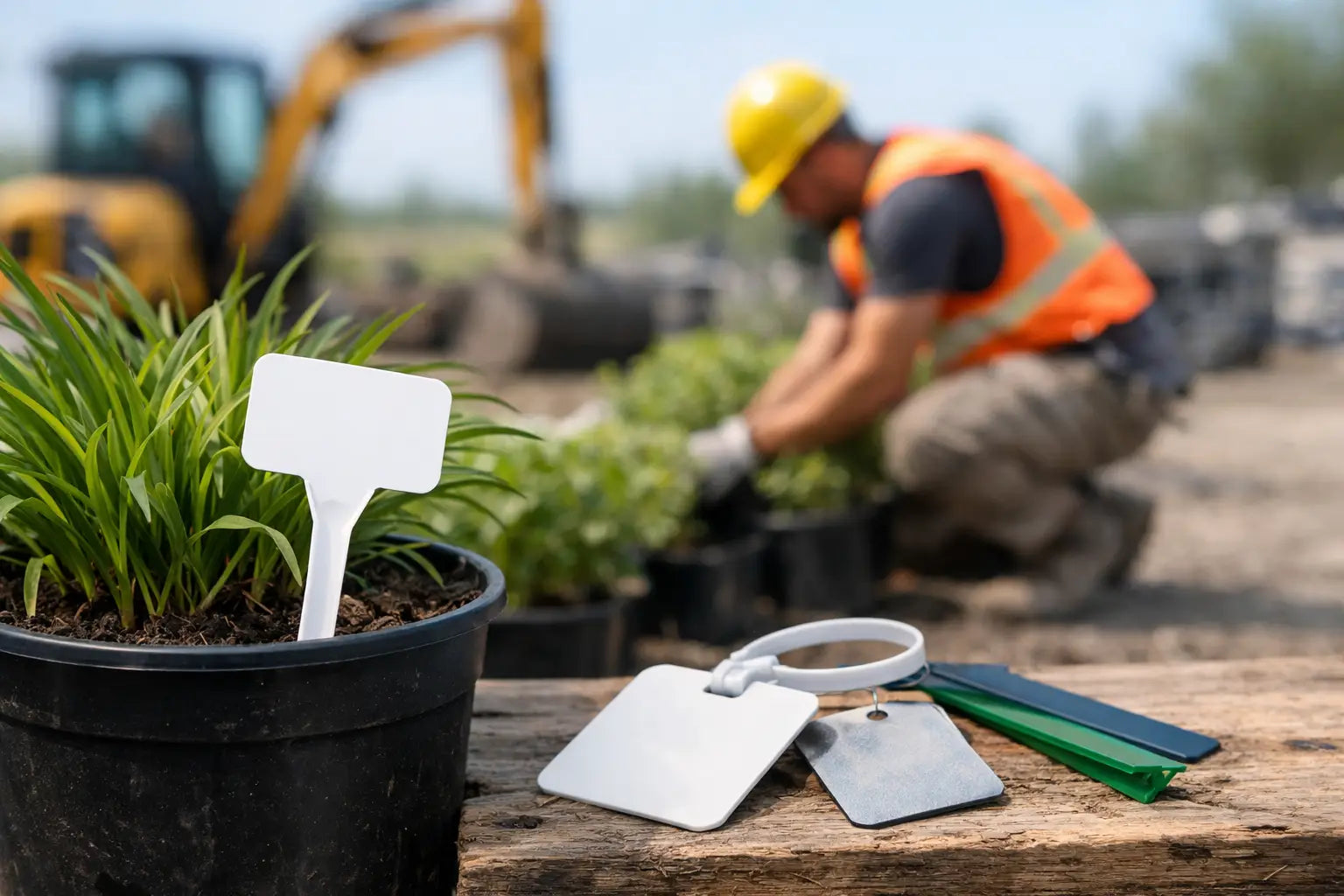
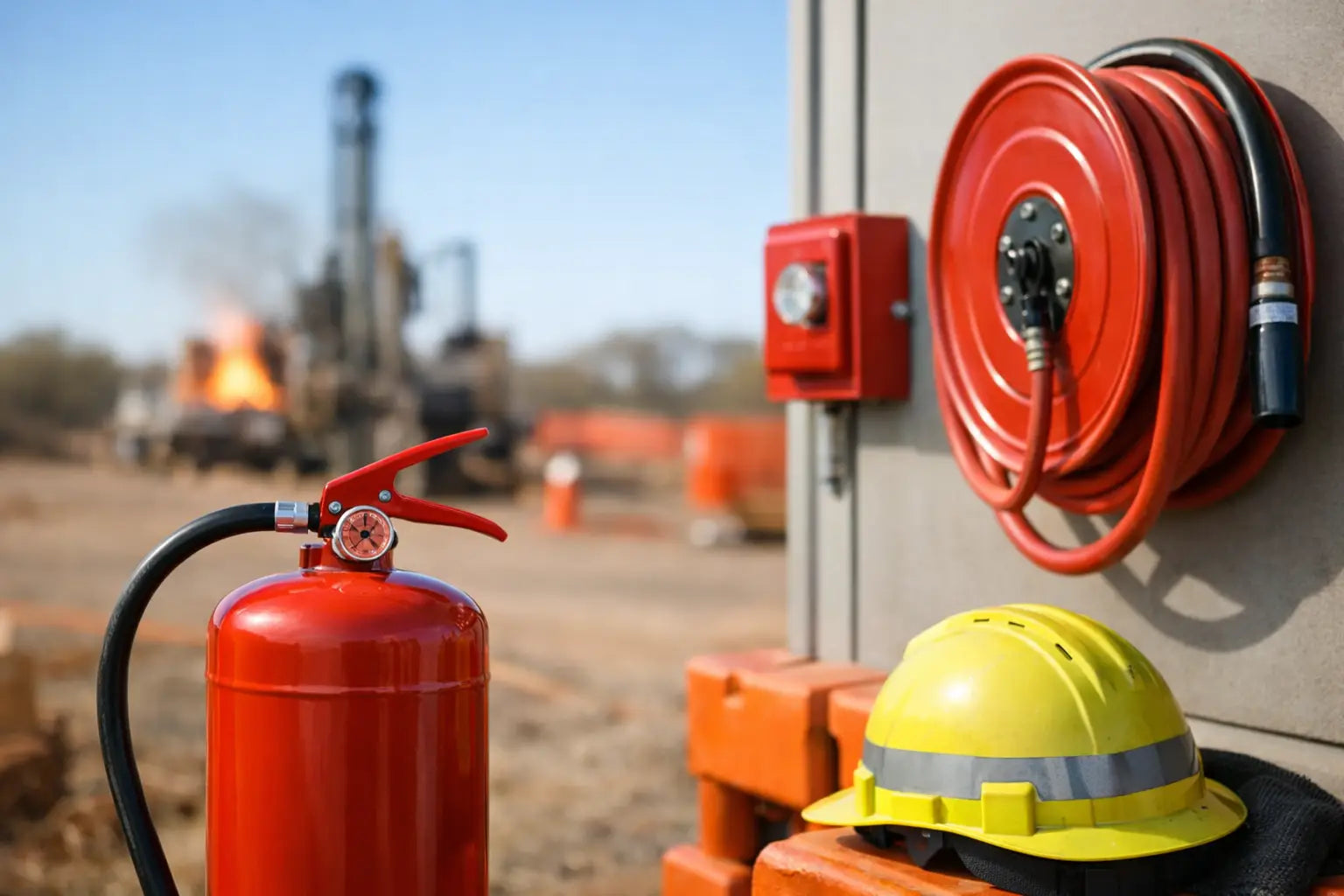
UV-stable plastic is a practical choice for many outdoor safety, inspection and identification tags. It is lightweight, non-corrosive, economical and available in colours that support visual site systems. When correctly specified, it performs well in weather and is suitable for applications such as harness tags, flange tags, fire equipment tags, status tags and general plant identification.
The key word is correctly. Standard indoor plastic can become brittle, discolour or crack quickly in direct sunlight. A purpose-made outdoor-grade polymer is designed to better withstand UV exposure while keeping the tag flexible enough to handle movement and regular use.
Plastic tags are particularly useful where electrical conductivity is a concern, where a tag needs to flex around equipment, or where colour coding is central to the inspection process. They can also be produced in custom shapes and sizes for a cleaner fit on valves, hoses, machinery and safety equipment.
Their limitation is physical damage. In high-abrasion areas, a plastic tag can be scraped or cut by grit, steel edges and repeated contact. If the tag is fitted to moving equipment or exposed to constant handling, a thicker tag or a metal alternative may be the better long-term choice.
When plastic is the right fit
Choose UV-stable plastic where the tag needs to be visible, lightweight and resistant to ordinary weathering. It is often the most cost-effective option for high-volume safety and inspection programs, provided the tag is positioned away from severe abrasion and extreme heat.
Anodised aluminium for durable asset and compliance plates
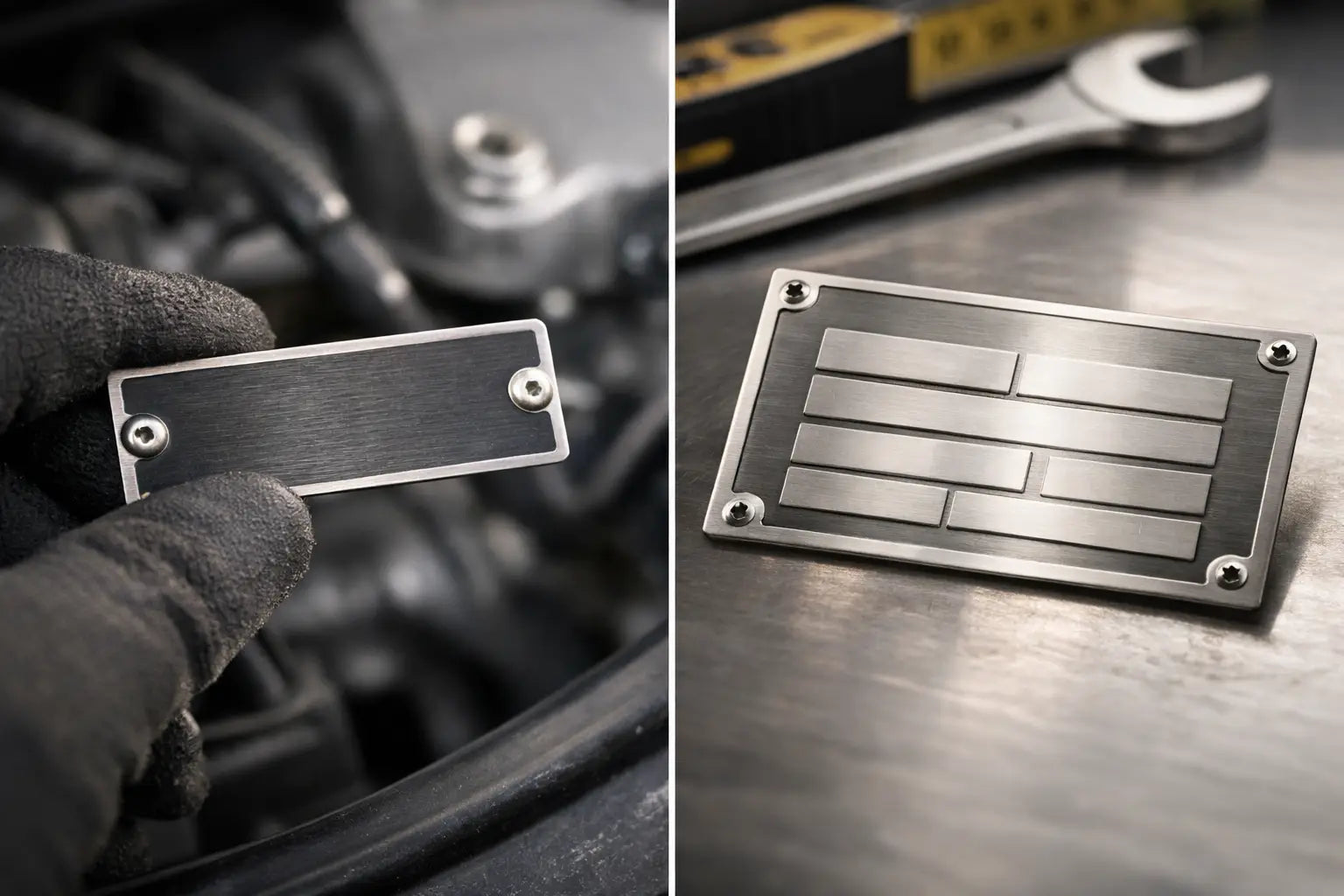
Anodised aluminium is one of the strongest all-round options for long-term outdoor identification. It combines low weight with good corrosion resistance and a hard surface that handles everyday industrial use well. For asset plates, serial number plates, trailer VIN plates, machinery identification and equipment compliance plates, aluminium is often the practical standard.
Anodising creates a protective oxide layer on the aluminium surface. This improves resistance to weathering and helps the plate maintain a professional finish in outdoor conditions. It also provides a suitable base for durable marking methods, including engraved, etched or printed information depending on the required life and detail.
Aluminium works well where a tag must remain flat, securely mounted and easy to read from a distance. It is more rigid than plastic and better suited to equipment that is exposed to vibration, impacts and routine cleaning. It is also available in a range of thicknesses, allowing the plate to be matched to the job rather than over-specified.
However, aluminium is not automatically the best answer in every location. It can be affected by harsh chemical environments, and untreated edges or unsuitable fasteners can create problems over time. In highly corrosive coastal, chemical-processing or marine settings, material selection needs closer attention.
Stainless steel for severe corrosion and hard service
When the environment is especially aggressive, stainless steel is hard to beat. It is a strong option for tags and plates exposed to salt air, washdown chemicals, high temperatures, heavy handling or repeated abrasion. Stainless steel is commonly specified for long-life plant identification, marine equipment, processing facilities, utilities and demanding outdoor infrastructure.
Its main advantage is durability under conditions that can quickly compromise plastic or lighter metals. A properly marked stainless steel tag resists corrosion and remains structurally sound where a thin, flexible tag would not last.
The trade-off is cost and processing. Stainless steel is heavier, harder to cut and generally more expensive than aluminium or plastic. It is usually best reserved for critical equipment, harsh environments or applications where replacement access is difficult and a long service life justifies the higher upfront cost.
For saltwater exposure, use a stainless grade suited to the environment rather than assuming all stainless performs the same. The fixing method matters as well. A quality plate can still fail early if it is attached with incompatible hardware or placed where water and contaminants are trapped behind it.
Vinyl labels have a place, but not everywhere
Outdoor-grade vinyl labels can be highly effective for curved surfaces, cabinets, control panels, pipes and equipment where drilling or hanging a rigid tag is impractical. They are a sensible option for barcode labels, operational instructions, equipment markings and short-to-medium-term asset identification.
For outdoor use, the label stock, adhesive, laminate and print process all need to suit the surface and exposure. A label that performs well on a clean painted cabinet may not adhere to rough powder coating, oily steel, textured plastic or hot equipment. Surface preparation is often the difference between a label that lasts and one that lifts at the corners after a few weeks.
Vinyl should not be treated as a substitute for a metal plate where legal or compliance information must remain permanently attached and legible. It can be an excellent practical solution, but only where the application allows for it.
The marking method matters as much as the material
A durable tag is only useful if its text, numbers, barcode or inspection fields remain readable. Material and marking need to be specified together.
Printed surfaces can provide clear colour, logos and detailed layouts, but they require the right inks and protective finish for outdoor exposure. Engraving and etching are better suited to permanent identification because the information is physically formed into the surface rather than sitting only on top of it. For harsh handling, recessed or protected marking can significantly extend readability.
Barcode labels need special care. A barcode may look acceptable to the eye but fail to scan once it fades, scratches or loses contrast. Where scanning is central to maintenance or asset control, test the code size, contrast and placement before committing to a large run.
Match the tag to the fixing method
A good outdoor tag can fail because of the attachment, not the tag body. Cable ties, stainless wire, chains, rivets, screws, adhesive and self-locking designs each suit different jobs.
For movable equipment, a tag needs enough clearance to avoid being rubbed away or caught on moving parts. For fixed plates, mounting holes and fasteners should be planned around access, vibration and corrosion. Adhesive labels need a clean, dry surface and adequate cure time before they are exposed to weather or washdowns.
Where tampering is a concern, use a fixing method that makes unauthorised removal obvious. Where regular inspection updates are required, choose a format that allows replacements without damaging the equipment or creating a pile of outdated tags.
A practical material selection checklist
Before ordering, confirm these five points with the supplier:
- The level of UV, moisture, salt, chemical and abrasion exposure.
- Whether the information is temporary, regularly updated or required for the life of the asset.
- The tag size, viewing distance and amount of data that must remain legible.
- The surface, location and fixing method available on the equipment.
- Whether the tag supports a compliance obligation, inspection program or internal identification process.
Prime Tags Australia supplies custom outdoor tags, labels and plates made from Australian materials for conditions that punish weak identification products. The right specification can be produced for a small replacement order or a large site-wide rollout, without compromising the details that matter on the job.
The best material is the one that stays attached, legible and fit for purpose until the next scheduled change - or for the full working life of the asset. Start with the exposure, specify the marking and fixing method, and choose the material that removes doubt from the worksite.