
A missing, faded or damaged vehicle plate is not just a cosmetic problem. It can slow down registration, create questions during an inspection, complicate a resale, or leave a fleet asset harder to identify. When comparing VIN plates vs builder plates, the key point is simple: they may sit on the same vehicle, but they serve different identification and compliance purposes.
For workshops, fleet operators, trailer manufacturers and body builders, getting the wording, data and material right matters. A plate has to remain readable after years of UV, road grime, wash-downs, vibration and general worksite abuse.
VIN plates vs builder plates: the core difference
A VIN plate displays the vehicle identification number, commonly known as the VIN. This is the unique identifier assigned to a vehicle and is used to connect it with registration, ownership, manufacturing and vehicle history records. On most modern vehicles, the VIN is a 17-character alphanumeric code.
A builder plate, sometimes called a manufacturer’s plate, identification plate or body builder plate depending on the application, identifies the party that built, completed or modified the vehicle or trailer. It can carry manufacturing details, weights, axle limits, model information and other specifications relevant to the finished vehicle.
In practical terms, the VIN answers: “Which individual vehicle is this?” The builder plate answers: “Who built or completed it, and what are its relevant specifications?”
The two are often confused because both are metal plates fixed to a vehicle, trailer or equipment body. They are also often ordered at the same time. However, one should not be used as a substitute for the other.
What a VIN plate normally shows
The central feature of a VIN plate is the VIN itself. Depending on the vehicle, manufacturer and original build requirements, the plate may also show the make, model, date of manufacture, country of origin or other identifying information.
The VIN must match the vehicle’s approved records and, where applicable, the VIN marked or stamped elsewhere on the vehicle. On many vehicles this may include a location on the chassis, frame, firewall, body structure or dashboard area. A plate is not proof that a VIN is correct if it conflicts with an original chassis marking or official vehicle record.
That distinction matters when arranging a replacement. A worn VIN plate can be remade from verified documentation or manufacturer records where appropriate, but the process should never involve guessing a VIN, changing characters to suit a registration record, or creating an identification plate for a vehicle with uncertain provenance.
VIN plates are especially common on trailers, plant trailers, custom vehicles, imported vehicles and fleet assets where a durable, visible reference point helps inspections and day-to-day administration. Placement needs to be practical, but it should also be protected from damage and accessible when a vehicle is being checked.
VIN plates are about identity, not operating limits
A VIN plate may include other details, but its primary job is identification. It does not automatically provide every piece of loading or construction information needed for safe operation. If the vehicle requires stated mass ratings, tyre information, axle limits or body-specific restrictions, those details may belong on a separate plate or label.
This is a common issue with modified utes, truck bodies, service trailers and specialised fleet builds. The original vehicle identifier remains relevant, while the completed vehicle may require additional information relating to the body, equipment or certified modification.
What a builder plate normally shows
Builder plates are used where the builder, manufacturer or completing business needs to permanently identify the finished product. For a trailer, this can include the manufacturer’s name, make or model, date of manufacture, VIN, aggregate trailer mass, tare mass, gross vehicle mass where relevant, and axle or tyre specifications.
For a truck body, canopy, plant item or custom-built asset, the information may be different. A builder plate may identify the fabricator, job number, serial number, body type, design load, manufacturing date and applicable internal or engineering reference. The right data depends on what has been built and which rules, approvals or customer specifications apply.
A builder plate is therefore more application-specific than a basic VIN plate. It tells the next owner, inspector, workshop or site team more about the finished construction. It is particularly useful where a body builder has added a tray, crane, service body, tipping body, refrigerated unit or other significant component to a base vehicle.
Vehicle compliance information can be separate again
The term “compliance plate” is still used widely across Australian workshops and transport businesses. However, vehicle approval arrangements have changed over time, and the information required can vary according to the vehicle’s age, category, supply pathway, state or territory requirements, and whether it has been modified.
That means a builder plate is not automatically a formal compliance plate, and a VIN plate is not automatically evidence of compliance. If a vehicle needs approval-related information, consult the relevant manufacturer, certifier, engineer, registration authority or applicable vehicle standard before finalising the plate artwork.
For procurement teams, this is the safest approach: treat the plate supplier as the manufacturing specialist and ensure the approved technical information comes from the responsible manufacturer, engineer or compliance authority. A well-made plate preserves correct data. It cannot make unverified data compliant.
When you need one plate, two plates or more
A straightforward trailer build may require a combined identification plate containing both the VIN and builder details, provided the specified information and format are appropriate for the application. Combining the information can reduce clutter and gives inspectors one clear point of reference.
In other situations, separate plates are the better option. This is common where the original VIN information must remain distinct from body-builder details, where an aftermarket modification has its own approval information, or where different materials and mounting locations are needed.
For example, a fleet truck might retain its original manufacturer VIN identification while carrying a separate builder plate for the service body. A heavy-duty trailer may have a primary VIN and manufacturer plate, plus a separate tyre-pressure label, load restraint information, inspection tag or maintenance identification plate. Each item has a distinct purpose, and combining everything onto one crowded plate can make critical details hard to read.
The decision comes down to the vehicle type, the data required, the party responsible for each item and the expected inspection process. If different people are responsible for the base vehicle, modification and ongoing maintenance, separate plates usually provide clearer accountability.
Choosing a plate that survives Australian conditions
A plate can contain perfect information and still fail its job if the print fades, the adhesive lets go or the material cracks around the fixings. Vehicle and trailer plates are exposed to conditions that quickly show up poor material choices: direct sun, salt air, diesel residue, abrasive dust, high-pressure washing, mud, vibration and heat.
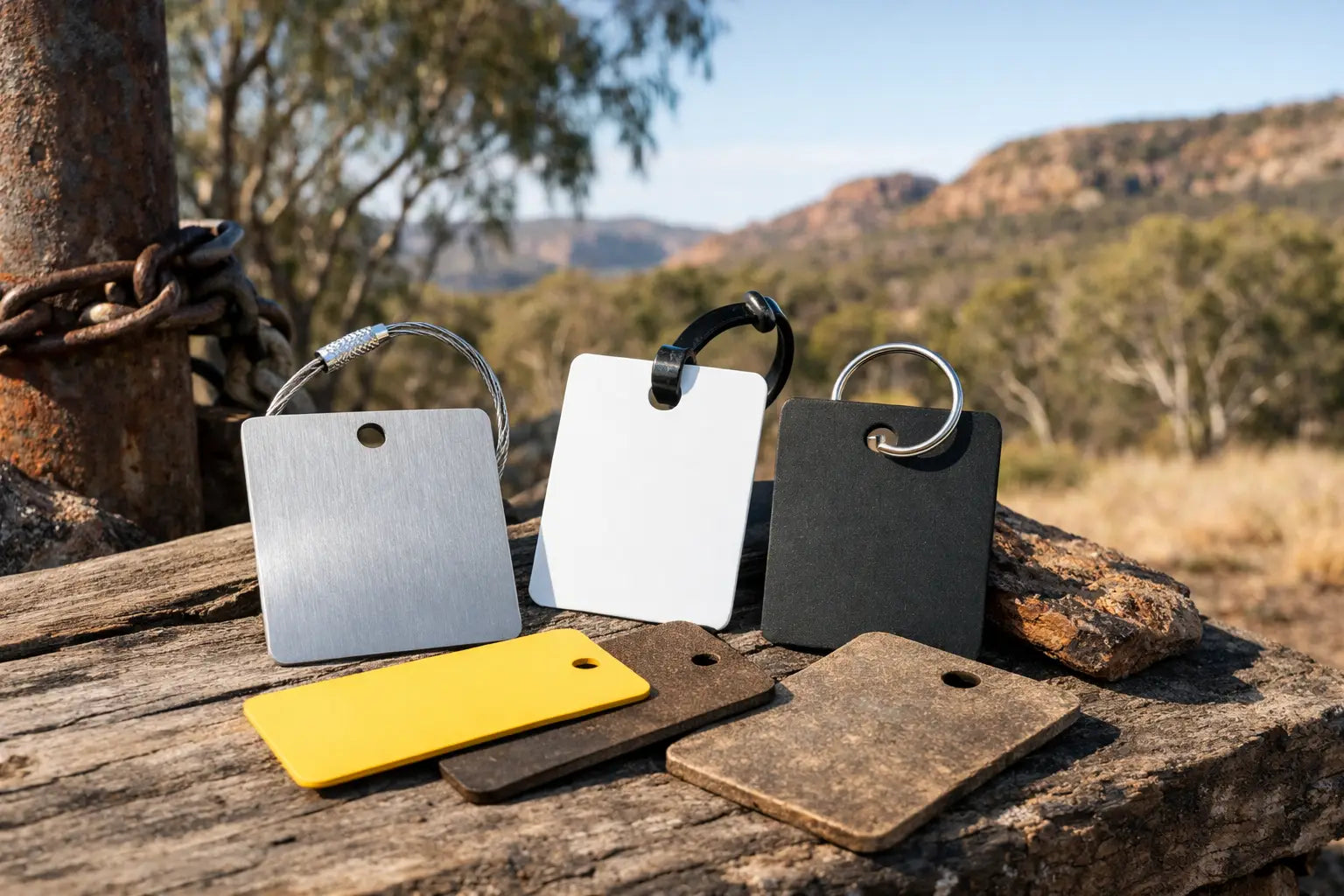
For permanent identification, metal plates are commonly selected for strength and long service life. Aluminium and stainless steel are both used, but the better choice depends on the environment, mounting surface, exposure and required finish. Aluminium is lightweight and suits many vehicle applications. Stainless steel can offer added resistance where corrosion, wash-downs or hard industrial use are ongoing concerns.
The marking method matters as much as the base material. Engraved, etched or otherwise permanent markings are generally a better fit for data that must remain legible for years. Surface-only printing may be suitable for some labels, but it can be vulnerable where cleaners, abrasion or UV exposure are severe.
Mounting also deserves attention. A plate fitted where it catches boots, tools, cargo or road debris will not last as well as one positioned on a protected, accessible flat surface. Rivets, screws or industrial-grade adhesive each have a place, but the fastening method should suit the plate material, substrate and vibration level.
Information to confirm before ordering
Before producing a VIN or builder plate, confirm the exact approved text, numbers and layout. Check character spacing carefully, particularly for VINs where a single incorrect character can cause a major administration problem.
Also confirm the plate dimensions, mounting holes, corner style, material, finish and required quantities. If plates are being fitted across a fleet or production run, establish whether each plate has unique variable data or whether the same builder information is repeated with only VINs, serial numbers or dates changing.
It is worth creating a controlled artwork approval process. One authorised person should check the final proof against the source documentation before production starts. This protects the workshop from costly rework and gives procurement, compliance and operations teams a clear record of what was approved.
For damaged or missing plates, keep the original where possible and photograph the installation location before removal. Record the vehicle registration, VIN, asset number and supporting documents. That small amount of discipline can save considerable time when the vehicle is inspected, sold or repaired later.
Make the plate fit the job
The best choice between VIN plates and builder plates is not about which one looks more official. It is about ensuring every vehicle carries the correct, verified information in a durable format that suits its build and operating environment.
Prime Tags Australia can manufacture custom metal identification and vehicle plates using Australian materials for demanding conditions, with layouts tailored to your approved data and mounting requirements. Start with accurate source information, specify a plate built for the environment, and you give your vehicles a clear identification record that remains useful long after the paperwork has been filed.