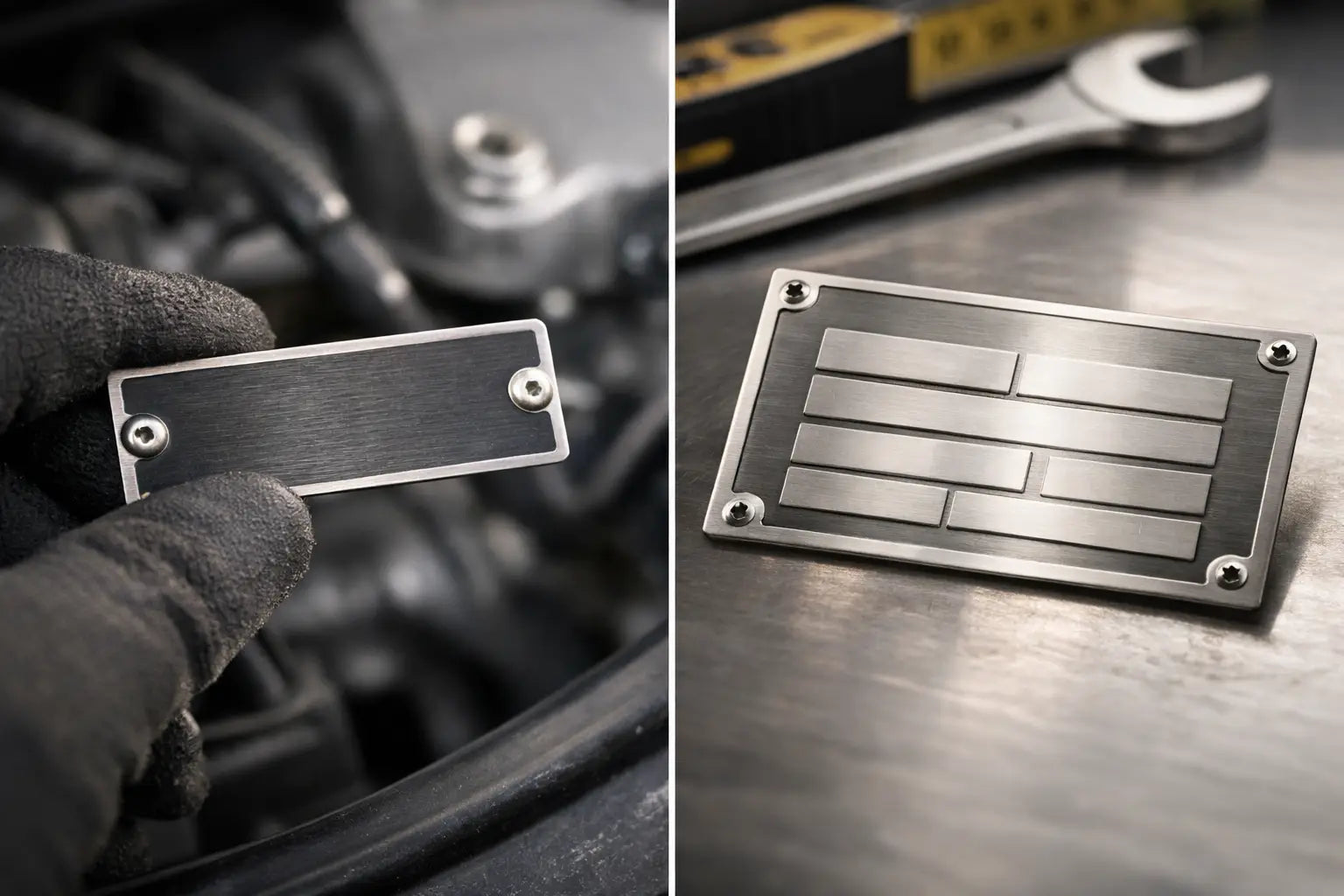

When a tag fails on site, it rarely stays a small problem. A faded asset ID, a cracked inspection tag or a plate that can no longer be read can slow maintenance, create audit issues and force unnecessary replacement. That is why the question of poly tags vs metal tags matters - not as a catalogue comparison, but as a decision that affects reliability, traceability and compliance in real working conditions.
For most Australian businesses, there is no universal winner. The right choice depends on what the tag needs to survive, how long it needs to last and how critical the information is. In some applications, poly gives you the best balance of flexibility, speed and value. In others, metal is the only sensible option.
Poly tags vs metal tags in real worksite conditions
The biggest difference between poly and metal is not just material. It is how each one behaves under pressure.
Poly tags are typically chosen where flexibility, impact resistance and cost control matter. They are well suited to safety tagging, inspection cycles, temporary or semi-permanent identification, and applications where tags are handled regularly. A good poly tag can handle water, grime, UV exposure and general site wear, especially when it is manufactured for Australian outdoor conditions rather than light-duty indoor use.
Metal tags are the stronger option when permanence is the priority. They are commonly used for asset plates, compliance plates, VIN plates, machinery identification and any application where information needs to remain legible for years in harsh service. Metal holds up better against abrasion, high heat and aggressive environments, particularly where a printed or written surface on plastic would eventually wear out.
That does not mean metal always lasts longer in every setting. If a tag is mounted where it cops constant vibration or impact, a rigid metal plate can bend or deform while a tougher flexible polymer may keep performing. Material choice only works when it matches the actual use case.
Where poly tags make more sense
Poly tags are a practical option for many operational and compliance jobs because they are easy to deploy and fit a wide range of fixing methods. They can be punched, printed, colour-coded and customised without the weight or cost of metal. For businesses managing large volumes of tagged items, that matters.
Inspection programs are a good example. If you are tagging lifting gear, hoses, harnesses, fire equipment or general site assets that require visible status updates, poly is often the better fit. It is lighter, easier to handle in the field and simpler to replace when inspection cycles change. Where teams need quick visual identification by colour, shape or printed fields, poly usually offers more flexibility.
Poly also works well where the tag is likely to be knocked around. A rigid metal plate can be overkill for a short-cycle inspection tag, while a quality polymer tag can absorb movement and rough handling without becoming a sharp hazard or breaking off easily.
Cost is another factor, especially for larger fleets of assets or broad maintenance schedules. If the tag itself is not intended to outlast the equipment, paying for metal can add unnecessary spend. For procurement teams balancing durability with replacement frequency, poly often provides better value over the life of the program.
Still, not all poly tags are equal. Material grade, UV resistance, print method and thickness make a major difference. A cheap plastic tag may look fine on day one and fail fast in sun, grit and heavy use. For Australian sites, that gap between light-duty and industrial-grade product is significant.
Best-fit applications for poly tags
Poly is commonly the better option for inspection tags, safety tags, lockout tagging, colour-coded identification, hose labels, harness records and other applications where flexibility and fast field use matter. It is also a strong choice when custom shapes, variable data or shorter replacement cycles are part of the job.
Where metal tags are the better investment
Metal tags come into their own when permanence, tamper resistance and long-term legibility are non-negotiable. If the tag carries critical equipment data, compliance details, serial information or traceable asset ID that needs to remain readable for years, metal is usually the safer call.
This is especially true in plant, transport, utilities and manufacturing environments where machinery runs hot, surfaces get blasted with dust and debris, or assets are cleaned with chemicals and high pressure. Metal plates are more resistant to scratching, heat and environmental wear than most polymer alternatives.
For fixed asset identification, metal also presents a more permanent and professional finish. That matters in audits, handovers and regulated environments where plates are expected to remain attached and legible over the service life of equipment. Trailer VIN plates, vehicle compliance plates and heavy asset plates are obvious examples.
Another strength is engraving or etching. When information is mechanically or chemically marked into metal rather than printed onto a surface, there is less risk of losing critical data to abrasion or fading. If an identifier must still be read years after installation, metal has a clear edge.
The trade-off is that metal is usually more expensive, less flexible and not always necessary for everyday tagging. It may also require more deliberate fixing methods, depending on the asset and installation surface. For some mobile equipment or temporary programs, that extra permanence can be more burden than benefit.
Best-fit applications for metal tags
Metal is often the right solution for asset plates, machinery identification, VIN and compliance plates, long-term barcode plates, serial number tags and other permanent identification jobs where failure is not acceptable.
Durability, compliance and whole-of-life cost
Buyers often compare poly and metal on unit price first. That is understandable, but it can lead to the wrong decision.
A lower-cost poly tag is not cheaper if it needs replacing several times a year because it fades, splits or becomes unreadable. At the same time, a premium metal plate is not better value if the application only needs a short-cycle inspection marker that will be updated or replaced regularly. The more useful measure is whole-of-life cost - purchase price, installation, replacement frequency and the operational risk of failure.
Compliance adds another layer. If a tag supports inspection records, asset identification or regulated product marking, legibility is the main issue. A tag that physically stays in place but cannot be read is a compliance problem all the same. That is why material selection should start with the required service life and the consequences of information loss.
Australian conditions also need to be taken seriously. UV, coastal exposure, dust, mud, washdowns and high-traffic handling can wear through weak materials quickly. Industrial buyers know the pain of ordering tags that look suitable on paper but do not last a season on site. Products built from Australian materials for local conditions generally perform more reliably because they are designed around the environment they will actually face.
How to choose between poly tags and metal tags
The simplest way to make the right call is to work backwards from the application.
Start with service life. If the tag only needs to last through inspection intervals or operational use over a shorter period, poly is often enough. If it must stay readable for years, metal deserves serious consideration.
Then look at exposure. Heavy UV, abrasion, chemical contact and heat push the decision towards metal, while movement, frequent handling and flexible fixing often favour poly.
Next, consider the information carried on the tag. Temporary status markings, colour coding and inspection fields are well suited to poly. Permanent IDs, serials and compliance data usually justify metal.
Finally, think about replacement behaviour. If your team expects to swap tags out as part of normal maintenance, poly keeps that process efficient. If replacement is difficult, costly or disruptive, a longer-life metal solution may save money over time.
For many sites, the answer is not either-or. It is both. Poly tags may be used for inspections and operational status, while metal plates cover fixed asset identity and permanent compliance marking. That mixed approach often delivers the best result because each material is used where it performs best.
A dependable supplier should be able to help map the right tag type to the job, including custom sizing, print requirements, fixing options and material recommendations. That matters when the line between fit-for-purpose and false economy is thin. Prime Tags Australia works with businesses that need exactly that kind of practical match between product and site conditions.
If you are weighing up poly and metal, the best question is not which one is better overall. It is which one will still be doing its job properly after the dust, sun, handling and inspection pressure have had their say.