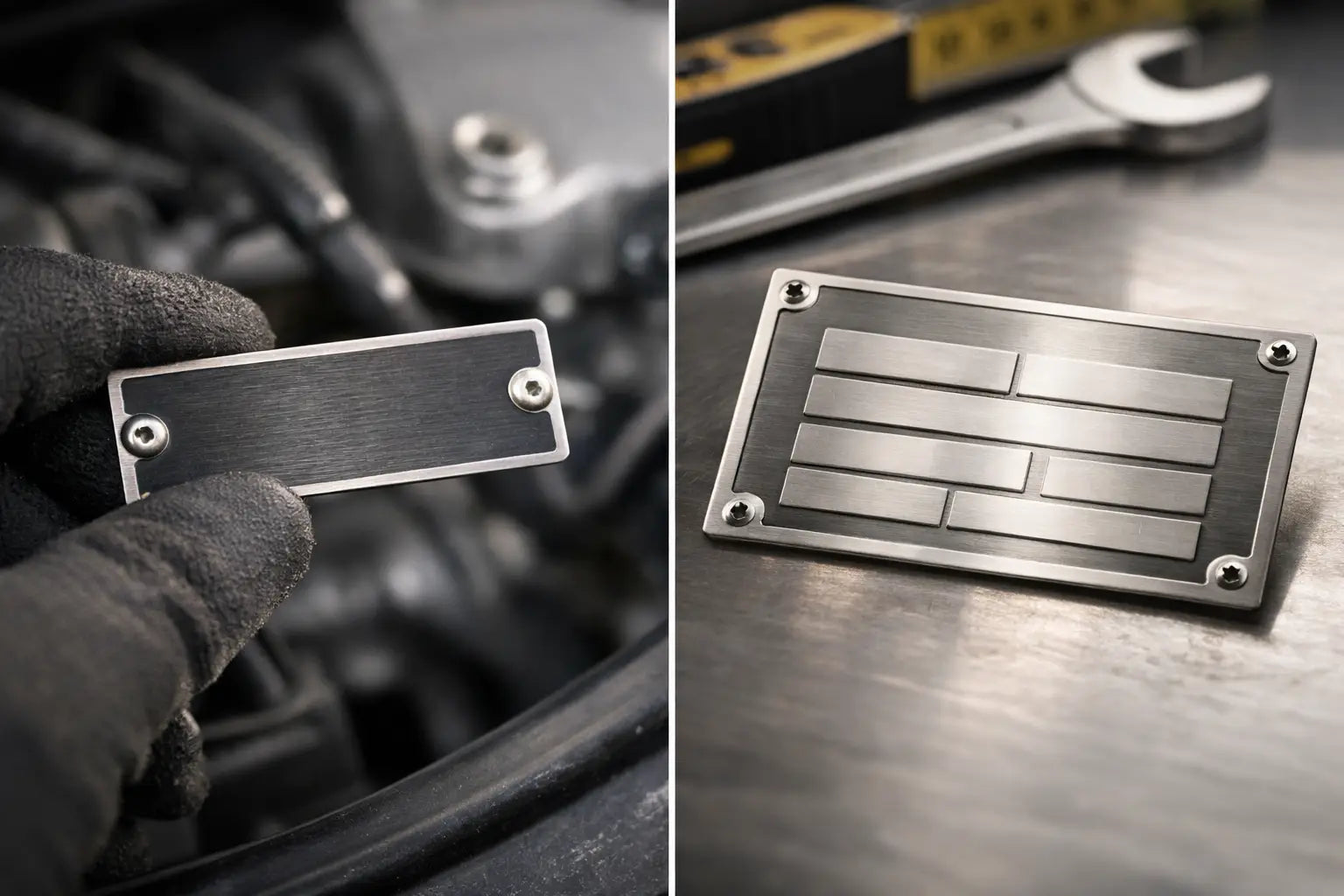

A faded tag on a lifting sling, fire door or isolation point is not a small issue. It can stall an inspection, trigger a compliance headache, or force a replacement job long before it should be needed. That is why custom safety tags Australia businesses order need to do more than look right on day one - they need to stay readable, stay attached and suit the exact job they were made for.
For industrial buyers, the real question is not whether a tag can be printed. Plenty of products can. The question is whether the tag will hold up on an exposed worksite, match your inspection process, and make life easier for the people using it in the field. That is where customisation matters.
Why custom safety tags matter on Australian worksites
Generic tags have their place, but they often fall short once conditions get hard or the application gets specific. On Australian sites, tags are expected to handle strong UV, dust, grit, wind, moisture, rough handling and regular contact with tools, machinery and PPE. A tag that works in a clean indoor setting may fail quickly in mining, construction, utilities or transport.
Custom safety tags solve that by matching the product to the actual operating environment. That might mean choosing a tougher material, changing the attachment style, increasing print size for faster visual checks, or adding numbering, barcodes and site-specific fields. These details are not cosmetic. They affect traceability, inspection accuracy and replacement frequency.
There is also a compliance angle. Many businesses need tags that align with internal maintenance systems, client specifications or industry inspection routines. If the layout is unclear, the fields are wrong, or the material degrades too early, the tag stops doing its job. A custom option gives you a better fit for both the asset and the process around it.
What to look for in custom safety tags Australia suppliers offer
Not all custom tags are built to the same standard. For buyers responsible for safety and compliance, the best place to start is material performance. If a tag is going onto equipment exposed to sun, abrasion or weather, short-life materials usually become a false economy. Lower upfront cost can quickly turn into higher replacement spend, extra labour and avoidable site risk.
Print durability matters just as much. Clear information is the whole point of a safety tag. If serial numbers, inspection dates or warnings fade, smudge or wear off too soon, the tag becomes unreliable. The same applies to hole strength, flexibility and attachment security. A well-printed tag is no use if it tears under normal handling or detaches from the asset.
Lead time is another practical factor. Industrial buyers often need custom work turned around fast, especially when onboarding assets, updating inspection programs or responding to project deadlines. A supplier that understands operational pressure will make quoting, proofing and production straightforward rather than dragging out the process.
Local manufacturing can make a real difference here. Tags built from Australian materials for Australian conditions are usually a safer fit for harsh environments than generic imported stock designed for broader markets. That is particularly relevant when UV resistance and site durability are non-negotiable.
The right tag depends on the application
Custom safety tags are not one product category in practice. They cover a wide range of uses, and each one places different demands on the tag.
For lifting and rigging gear, durability and legibility are front and centre. These tags need to tolerate regular handling and movement while keeping inspection information easy to read. A weak tag or poor fastening method can create unnecessary downtime and replacement cycles.
For harness tags, flexibility and wear resistance matter because the tag needs to sit on equipment that is handled frequently and checked closely. If the tag becomes cracked, brittle or unreadable, confidence in the inspection record drops with it.
For lockout, isolation or out-of-service applications, visibility is critical. The message has to be immediate and unmissable. In those cases, colour, layout and wording are just as important as material choice.
For hose labels, asset IDs and equipment inspection tags, there is often a stronger focus on tracking, numbering and system integration. Barcodes, QR codes, sequential numbering and custom text fields can all support faster audits and maintenance workflows, but only if they are printed clearly and positioned sensibly.
This is why a one-size-fits-all tag range rarely delivers the best outcome across a whole site. Different assets need different formats, materials and attachment methods.
Customisation that actually improves site use
Good customisation is not about adding extras for the sake of it. It is about making the tag easier to use in the real world.
The most useful changes are often simple. Larger writing areas can improve field inspections. Pre-printed company details can reduce handwriting errors. Sequential numbering helps with traceability. Colour coding can speed up visual identification. Barcodes can support asset registers and maintenance systems. Hole placement, shape and fastening style can all affect how well the tag stays in place.
Layout is another area where practical design matters. A crowded tag with too much information can be just as frustrating as one with too little. Buyers should think about who is using the tag, what they need to record, and how quickly they need to read it. A workshop supervisor checking gear on the floor does not want to fight with a cluttered layout or tiny print.
This is where experienced suppliers earn their place. They can help refine the tag design so it works not only on screen, but also in dirty, bright, high-use environments where clarity counts.
Common buying mistakes to avoid
One of the most common mistakes is buying on unit price alone. That can look good in procurement, but it often ignores the full cost of failure. If a cheaper tag fades, cracks or tears early, the replacement cycle wipes out any initial saving. Add labour, downtime and compliance exposure, and the real cost can be much higher.
Another mistake is treating all environments the same. A tag used indoors in a controlled facility does not face the same conditions as one fixed to plant in full sun and dust. Material selection should reflect where the asset lives and how it is handled.
Some buyers also underestimate the value of samples and proofing. A tag may look fine in a digital proof, yet still need changes to improve readability, attachment or space for field entries. Testing the product before a full order can prevent avoidable issues, especially for specialised applications or large rollouts.
There is also a risk in working with suppliers who do not understand industrial compliance products properly. A tag is not just printed stock. In many cases it is part of an inspection, maintenance or traceability system. If the supplier cannot speak clearly about durability, application and custom options, that should raise questions.
How to choose a supplier with confidence
The safest choice is a supplier that understands harsh conditions, responds quickly and offers clear advice without overcomplicating the process. Industrial buyers do not need marketing fluff. They need confidence that the tags will suit the application, arrive on time and perform as expected.
Ask practical questions. What materials are used? How do they handle UV and abrasion? Can the tag be customised to your inspection fields and attachment method? Are small runs available, or only high-volume orders? Can you review samples before committing? How quickly can production happen once approved?
These questions quickly separate catalogue sellers from serious industrial suppliers. The right partner will not just take artwork and print it. They will help make sure the final product is fit for purpose.
That is one reason many Australian buyers prefer dealing with specialists such as Prime Tags Australia, where the focus stays on worksite-ready identification and compliance products rather than generic label supply. When the product is made for industrial use from the start, the buying decision gets easier.
Built for the job, not just the order form
Custom safety tags Australia businesses choose should be judged by what happens after installation, not just by how they look in a quote. If they stay readable, stay secure and support your inspection process under real site conditions, they are doing their job. If not, they become another maintenance problem.
For procurement teams, site managers and compliance leads, the smartest buy is usually the tag that fits the asset, the environment and the workflow from the outset. Get that right, and you reduce replacements, protect traceability and make inspections easier for the people who have to rely on the tag every day.
When safety and compliance products are designed right, built strong and delivered on time, they stop being an afterthought and start doing what they should - quietly supporting the job without creating extra work.