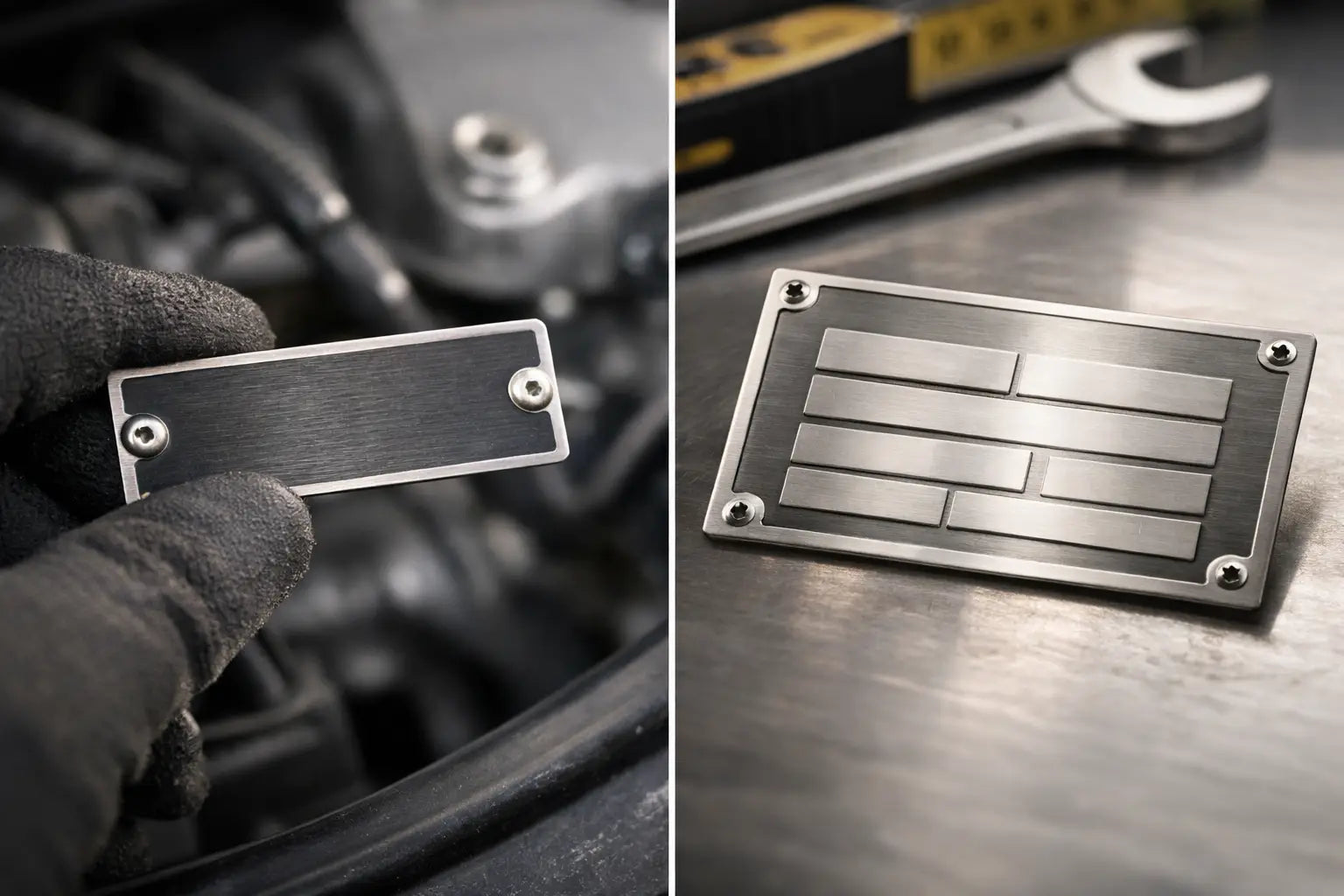

A missing pump tag rarely looks like a major problem until the next inspection, shutdown or service call. Then someone is tracing serial numbers by hand, checking faded labels against old spreadsheets, and losing time on a job that should have taken minutes. That is where a solid industrial asset tagging guide earns its keep. In industrial settings, tagging is not just about sticking an ID on equipment. It is about keeping assets identifiable, traceable and compliant in conditions that punish weak materials and poor planning.
What an industrial asset tagging guide should actually cover
A useful industrial asset tagging guide starts with the basics - what needs to be identified, who needs to read it, and what the tag has to survive. On a mine site, processing plant, workshop or transport yard, assets are exposed to UV, grime, washdowns, abrasion, chemicals and regular handling. If the tag cannot hold up in that environment, the system falls apart fast.
The aim is straightforward. Every asset should have a clear, durable identity that supports maintenance, inspections, auditing and replacement planning. For some businesses, that means a simple numbered asset label. For others, it means barcodes, QR codes, metal plates, compliance data, inspection fields or site-specific formatting that matches internal systems.
That is why tagging decisions should never be made on price alone. A cheaper label that fades, cracks or peels early usually costs more once rework, downtime and failed scans are factored in.
Start with the asset register, not the tag roll
Before choosing materials or print format, get clear on your asset register. If the register is inconsistent, the tags will be too. This is where many tagging projects drift off course. Different departments use different naming rules, equipment classes or numbering structures, and the tag ends up carrying bad data in a durable form.
The better approach is to settle the asset logic first. Decide how you will identify asset type, location, unique number and any mandatory compliance fields. Keep it practical. A tag has limited space, and the more crowded it gets, the harder it is to read in the field.
For high-volume asset fleets, standardisation matters more than squeezing every data point onto the label. The asset ID should be the primary reference, with supporting details pulled from the system when needed. For smaller operations without a fully integrated CMMS, adding more visible information to the tag can make sense. It depends on how your team actually works on site.
Choosing the right tag material for Australian conditions
Material choice is where good tagging projects are won or lost. Paper-backed office labels have no place on plant, tools, fire equipment, lifting gear or outdoor infrastructure. Harsh local conditions expose shortcuts quickly.
Polyester labels suit many general asset identification jobs where strong adhesion, print clarity and decent chemical resistance are needed. They are often a good fit for indoor plant, electrical equipment, switchboards and controlled industrial areas. But they are not the answer for everything.
Where abrasion, impact, heat or extended outdoor exposure come into play, metal asset plates or more specialised industrial tag materials are often the smarter option. In coastal areas, washdown zones or high-UV environments, the gap between an ordinary label and a purpose-built industrial product becomes obvious within months, not years.
Attachment method matters as much as the face material. Adhesive labels are fast and clean when applied to suitable surfaces, but they can struggle on rough, dirty, oily or irregular equipment. Mechanical fixing, self-locking tags, cable tags or plate-style identification can be better for hoses, rigging, mobile plant and equipment exposed to regular wear.
Industrial asset tagging guide to data layout and readability
Even the toughest tag fails if no one can read it. Good layout is simple, uncluttered and designed for field use. That means clear numbering, sensible font size and enough contrast to stay legible in poor light, dusty areas and quick inspections.
Think about viewing distance. A tiny asset number may look neat on a proof, but it is not much use on a ladder, in a plant room or beside operating equipment. If the tag includes a barcode or QR code, leave enough quiet space around it and test real-world scanning before full production. A code that only scans in the office is not doing the job.
There is also a balance between human-readable data and digital tracking. Barcodes and QR codes are excellent for speed and accuracy, but they should not replace visible asset numbers altogether. Batteries go flat, scanners fail, and contractors do not always have system access. The tag still needs to work with the naked eye.
What to include on the tag
Most industrial asset tags work best when they include the core asset ID, the company or site name where needed, and a machine-readable code if the business uses digital tracking. Some assets also need serial numbers, inspection references, capacity details or compliance information.
The mistake is trying to fit every conceivable detail onto one small label. If the tag becomes cluttered, critical information gets lost. Keep the front-facing data limited to what operations, maintenance and audit teams need most often.
When customisation is worth it
Customisation is not just about adding a logo. In industrial environments, custom formats can solve practical problems. Colour coding can separate departments or asset classes. Sequential numbering can speed up rollout. Special adhesives or substrates can match difficult surfaces. Pre-punched plates, tamper-evident options or heavy-duty tags can also reduce failure in demanding applications.
For buyers managing mixed assets across several sites, tailored tagging often improves consistency and cuts replacement rates. The extra upfront planning usually pays back in easier identification and fewer field issues.
Installation matters more than most teams expect
A premium tag applied badly will still fail. Surface preparation is one of the most overlooked parts of asset tagging. Dust, grease, moisture and heat all affect adhesion. So does the shape of the equipment. Curved, textured or powder-coated surfaces may need a different label construction or fixing method altogether.
Timing matters too. If assets are tagged during commissioning, before they are fully cleaned or finalised in the system, errors creep in. If tagging is left too late, equipment is already in service and harder to access. The best time is usually during a planned asset onboarding or maintenance window, with the register already verified.
This is also where supplier support helps. A tag should be built for the actual surface and environment, not guessed from a catalogue photo.
Common mistakes this industrial asset tagging guide can help you avoid
One common mistake is choosing a single tag type for every asset on site. It sounds efficient, but it rarely holds up. A label that performs well on electrical panels may be wrong for hoses, outdoor plant or lifting equipment. Different assets need different solutions.
Another is poor numbering logic. If IDs are duplicated, inconsistent or too long to use easily, people stop relying on them. The same goes for tags that are placed where they cannot be seen without shutting down equipment or climbing over guarding.
Then there is replacement planning. Tags do not fail all at once. They degrade over time, usually in the worst exposure points first. If there is no review cycle, the site ends up with a patchy identification system where some assets are perfectly marked and others are unreadable.
How to build a tagging system that lasts
Treat asset tagging as part of your maintenance and compliance framework, not a one-off purchase. That means selecting materials based on use case, standardising data, testing prototypes in real conditions and keeping reordering simple. It also means thinking beyond the first install. Can you match formats later? Can you get small or large runs without restarting the whole process? Can the supplier handle custom requirements without slowing everything down?
For Australian worksites, durability is not a marketing extra. It is the baseline. Tags need to stay legible through heat, UV, grit, washdowns and regular handling. That is why many industrial buyers favour products made for local conditions and supported by suppliers who understand compliance-driven applications. Prime Tags Australia, for example, focuses on industrial-grade identification products built from Australian materials for exactly those kinds of environments.
A good tagging system should make life easier for maintenance crews, auditors, procurement teams and supervisors. It should shorten inspections, support cleaner records and reduce the hassle of replacing failed labels every few months.
If you are planning a rollout, start small, test hard and standardise what works. The right tag is the one that still reads clearly after the site has had a fair crack at it.