
A tag that cracks after a month on site is not a small problem. It creates doubt around inspection history, slows maintenance work, and can turn a simple compliance check into a paperwork chase. If you are working out how to choose inspection tag materials, the right starting point is not colour, size or price. It is the actual conditions the tag has to survive.
For Australian sites, that usually means more than a clean indoor environment. You might be dealing with UV, washdowns, chemicals, abrasion, salt air, mud, heat, swinging equipment or constant handling by gloves and tools. The best inspection tag material is the one that stays legible, attached and fit for purpose for the full inspection cycle - not the one that only looks good on day one.
How to choose inspection tag materials for the real job
A lot of buying mistakes happen when inspection tags are treated as generic. They are not. A fire extinguisher tag in a commercial building has very different demands from a lifting gear tag on a mine site or a scaffold inspection tag exposed to weather and rough handling.
Start by asking four practical questions. Where will the tag be used? How long does it need to last? What information must stay readable? And how will it be attached? Once those answers are clear, the material choice becomes much easier.
If the asset is kept indoors, handled lightly and inspected frequently, a lighter-duty synthetic may do the job well and keep costs down. If the tag is exposed to sunlight, grit, rain or chemicals, stepping up to a heavier-duty material is usually the smarter decision. Replacement labour and compliance risk cost far more than a cheaper tag ever saves.
Match the material to the environment
Environment is the biggest factor in tag performance. A material that works perfectly in a sheltered plant room can fail quickly on an open construction site.
UV and weather exposure
Outdoor tags need strong resistance to fading, embrittlement and surface breakdown. In Australian conditions, UV is hard on plastics and printed information alike. If a tag is going on equipment stored outdoors, mounted on fencing, attached to hoses, or used around yards and mobile plant, UV-stable materials matter.
This is where tough synthetic inspection tags often outperform basic alternatives. They hold their shape better, keep print clearer for longer and resist cracking when exposed to sun and temperature changes. If the inspection period runs across months rather than weeks, outdoor durability should be treated as essential, not optional.
Water, washdowns and humidity
If tags are used in food processing, utilities, marine settings or washdown areas, moisture resistance is critical. Paper-based options are a poor fit here, even for short-term use. Synthetic materials and metal solutions generally offer better reliability where water is routine.
Humidity also affects more than the tag face. It can weaken certain attachment methods and reduce print life if the wrong marking process is used. A good material choice should work with the right print method and the right fixing option.
Chemicals, oils and abrasion
Workshops, manufacturing plants and heavy industry put tags in contact with grease, solvents, fuel, hydraulic fluids and general abrasion. In these settings, the surface must resist rubbing and remain readable after handling.
A tag that looks fine when installed can quickly become useless if text smears or the surface scores too easily. For harsher applications, thicker synthetic materials or metal tags are often the better fit. They handle contact, friction and site wear with less deterioration.
Choose based on service life, not just purchase price
Inspection cycles vary. Some tags only need to remain readable for a short period. Others must last for years on fixed assets, lifting equipment or infrastructure. That difference should drive the material decision.
For short-term or low-risk applications, a lighter material can be reasonable if it still meets the site conditions. But for long-life identification, spending slightly more on a durable tag usually reduces total cost. Fewer replacements mean less admin, fewer site call-backs and less chance of missing critical information when an audit or service event comes around.
This is especially relevant for businesses managing large asset fleets or multiple sites. Standardising on a material that is tough enough across most operating conditions can simplify procurement and improve consistency, even if a small number of sheltered applications technically could use something cheaper.
How to choose inspection tag materials by tag type
The best material also depends on what the tag is identifying and how the inspection is recorded.
For general safety and inspection tags, flexible synthetic materials are often a strong all-round option. They suit many indoor and outdoor uses, can be custom printed, and are easier to handle where tags need to bend or move with the asset.
For lifting, rigging, harness and plant applications, strength and long-term legibility become more important. These tags may be exposed to constant movement, rough handling and harsh weather. In those cases, heavier-duty synthetics or metal tags are often the better choice.
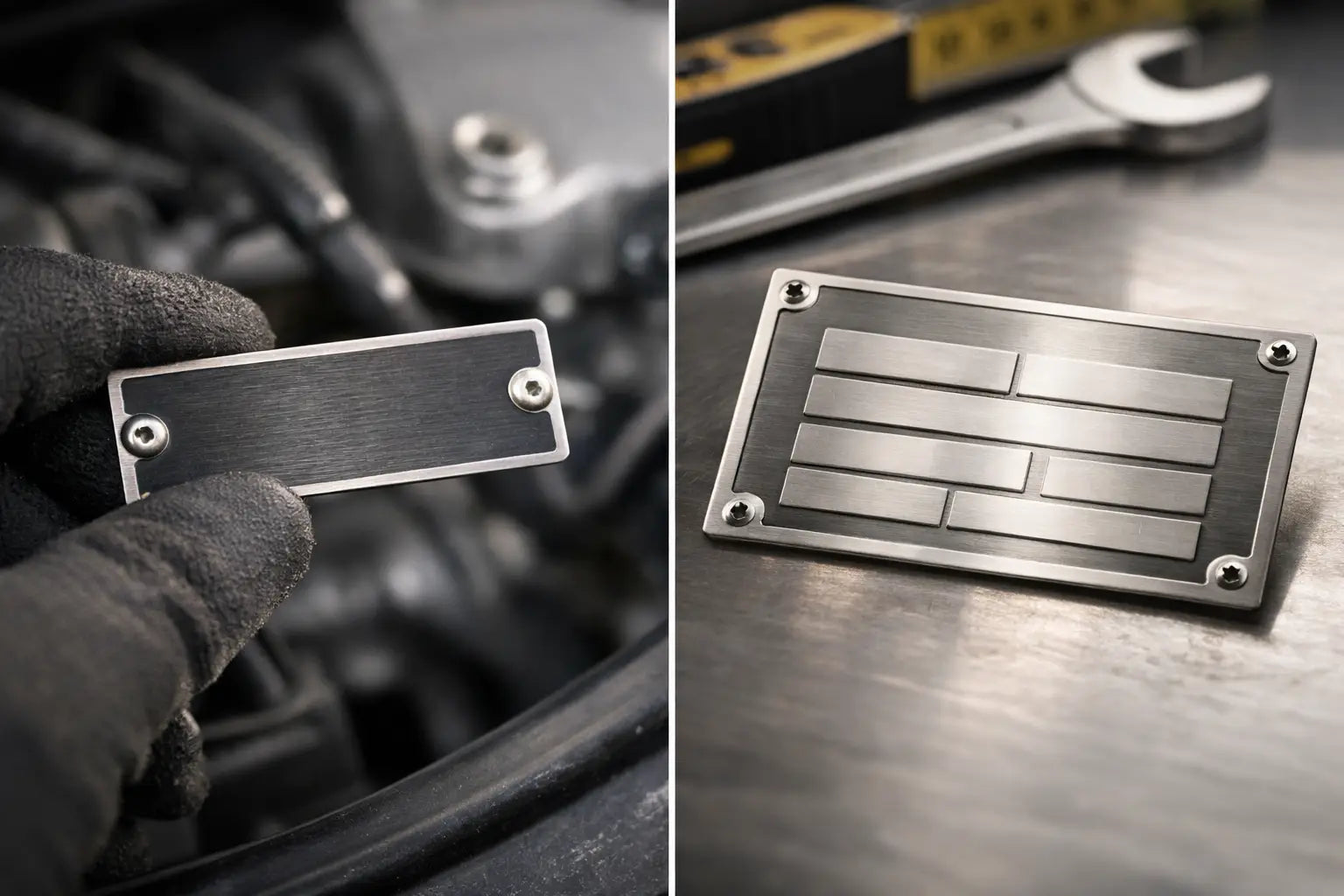
For fixed assets and compliance plates, metal can make more sense where permanence is the priority. Aluminium, stainless steel or other metal solutions are commonly used where engraved or permanently marked information needs to remain readable over the long term. The trade-off is that metal is less flexible and not right for every attachment method or every asset shape.
Don’t separate material from print method
A good tag material can still fail if the print method is wrong. This gets missed more often than it should.
If inspection details are handwritten, the surface needs to accept the right pen or marker without smudging or fading too fast. If the tag is pre-printed with variable data, barcodes, serial numbers or site-specific information, the material has to work with the chosen print process and remain legible after exposure to the job.
Barcodes and QR codes add another layer. They need a smooth, stable print surface and enough resistance to scratching and weathering to stay scannable. If your maintenance team relies on digital asset tracking, there is no point using a material that compromises scan performance after a few months.
Attachment method matters as much as the tag itself
A durable tag is only useful if it stays attached. Material choice should always be considered alongside fixing method.
If the tag is secured with cable ties, rings, wire or self-locking tails, make sure the material handles the tension and movement involved. Some applications need a flexible tag that can bend without tearing. Others need a rigid plate that sits flat and secure. Tags used on hoses, valves, harnesses or moving plant often benefit from materials designed to cope with flex and vibration.
There is also a practical site issue here. If crews have to force a stiff tag onto awkward equipment, or if the hole position does not suit the fixing point, installation becomes inconsistent. That can shorten tag life regardless of material quality.
Compliance, readability and audit confidence
Inspection tags are not just identifiers. They are part of the compliance record on the asset itself. That means material selection should support clear, durable information display.
If the tag includes service dates, inspection status, test history, asset numbers or responsible person details, all of that must remain readable for the required period. Faded print, snapped corners and distorted tag faces create uncertainty during audits and field checks.
This is why many industrial buyers choose materials built for harsh local conditions rather than generic imported stock. Products made from Australian materials and suited to Australian UV and site exposure can offer more predictable performance where compliance cannot be left to chance. For buyers balancing durability, lead time and custom requirements, that reliability matters.
When customisation should influence material choice
Custom tags often need more than standard text. You may require logos, sequential numbering, colour coding, barcodes, asset classes, department IDs or site-specific wording. Not every material handles customisation equally well.
If visual identification is important from a distance, the material should support crisp print and stable colour. If each tag carries unique data, consistency across a large run becomes critical. And if the site uses different tag types for different inspection regimes, you need a material range that keeps visual standards consistent while matching each application.
This is where working with an experienced supplier helps. Prime Tags Australia, for example, focuses on worksite-ready identification products built for local conditions, which makes it easier to match material, print and use case without overcomplicating the decision.
The right choice is usually not the most expensive material on the board. It is the one that matches your environment, inspection cycle, attachment method and compliance needs with the least risk of failure. If a tag needs to survive sun, dirt, handling and time, buy for the site it will face - not the shelf it came off. That approach saves rework, protects traceability and gives your team one less thing to chase later.