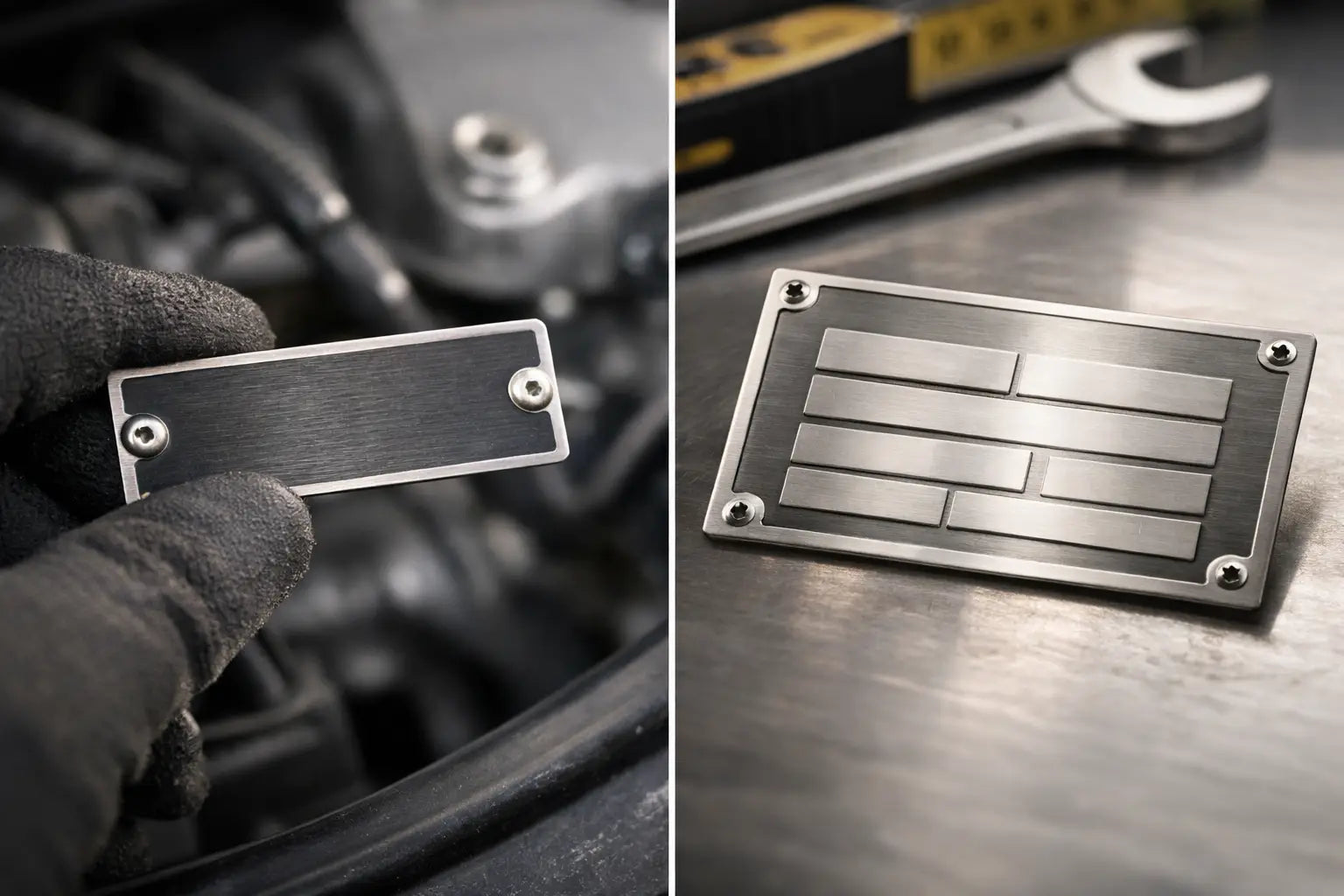

A tag that fades after one summer, cracks in a washdown area, or goes missing from a critical asset is not a small purchasing mistake. It creates rework, replacement costs, inspection headaches and, in some cases, a genuine compliance risk. This industrial identification tag buying guide is built for Australian buyers who need tags and labels to stay readable, stay attached and stay fit for purpose in hard conditions.
What this industrial identification tag buying guide should help you decide
Most industrial buyers are not choosing between good and bad. They are choosing between products that look similar on a quote sheet but perform very differently once they hit the site. The right decision depends on where the tag will be used, what information it needs to carry, how long it needs to last, and whether it supports a compliance or inspection requirement.
That means the buying decision is rarely just about size and price. A hose label in a sheltered plant room has different demands to a lifting tag on a mine site, a fire door tag in a commercial facility, or a metal asset plate fixed to mobile plant. If you buy on unit cost alone, you can end up paying more in replacements, labour and lost traceability.
Start with the application, not the tag
The fastest way to narrow your options is to define the job the tag needs to do. Some products are mainly for identification. Others need to handle inspection records, serial tracking, warning information, ownership details or compliance data. If the tag has to support audits, maintenance scheduling or asset management, readability and consistency matter just as much as toughness.
Ask a few practical questions early. Is the tag for a fixed asset or mobile equipment? Will staff need to write on it, scan it, or only read it visually? Does it need to survive outdoors, chemicals, abrasion, pressure washing, heat or constant handling? Is it temporary, long-term or effectively permanent?
This matters because different formats solve different problems. Self-locking tags suit applications where quick attachment is critical. Metal plates make sense when long service life and permanent identification are the priority. Inspection tags need enough space and structure for service data. Barcode or serialised labels are often the better choice when asset systems and traceability are driving the purchase.
Material choice is where performance is won or lost
Material selection is the part buyers regret getting wrong. On paper, many tags can appear equivalent. On site, they are not.
For general industrial use, you need material that can handle UV, weather, grime, abrasion and routine wear without becoming brittle or unreadable. In Australia, UV resistance is not optional for outdoor applications. A tag that performs well in a mild indoor environment may fail quickly on exposed plant, transport equipment or construction assets.
Plastic tags can be the right choice when flexibility, lower weight and cost control matter, especially for inspection and temporary identification uses. But the grade matters. Cheap stock can crack, tear or fade earlier than expected. Metal tags and plates are often the stronger option for long-term asset marking, harsh environments and applications where engraved or stamped information needs to remain legible over time.
There is no single best material for every job. A harness tag has different handling and compliance demands to a trailer plate or a flange tag. The right supplier should be able to match the material to the exposure, attachment method and expected service life rather than pushing a one-size-fits-all product.
Readability matters as much as durability
A tag can stay physically attached and still fail its purpose. If the print fades, the layout is cramped, or the numbering is inconsistent, the tag stops doing its job.
Clear information hierarchy is essential. Buyers should think about what needs to be identified at a glance and what can sit as secondary detail. Asset number, equipment type, next inspection point, serial number or warning information all need enough space to be read easily in work conditions, not just on a computer proof.
This is where customisation adds real value. The ability to tailor sizes, hole positions, colours, numbering, logos, barcodes or field labels is not just cosmetic. It can reduce administrative errors, speed up inspections and make replacement ordering much simpler later on.
If the tag will be scanned, verify that the barcode or QR format suits the site’s devices and system tolerances. If it will be handwritten, make sure the surface is suitable for the intended pen or marker and that the information area is large enough to remain legible after use.
Attachment method can make or break the result
A durable tag is only useful if it stays attached. Too often, attachment is treated as an afterthought.
The correct fixing method depends on vibration, movement, tampering risk and how often the tagged item is handled. Cable ties may work for some assets but fail quickly in high-heat or high-UV settings. Split rings may suit some equipment but can snag or wear in others. Rivets or mechanical fixings may be necessary for plates and permanent ID applications. Integrated self-locking designs can save time and reduce installation inconsistency on busy sites.
It also pays to think about replacement practicality. If a tag may need to be updated after inspection cycles or maintenance events, overly permanent attachment can create avoidable labour. On the other hand, if the risk is loss or tampering, a lighter attachment method can be the wrong call. This is one of those areas where it depends on the site, the asset and the compliance consequence of failure.
Compliance needs should be specified upfront
For many industrial buyers, tags are not just labels. They support maintenance records, equipment status, traceability and legal obligations. That changes the buying process.
If the tag relates to lifting gear, fire equipment, harnesses, plant identification, VIN or compliance plates, or any regulated inspection program, define the required data fields and durability expectations before asking for pricing. Leaving this vague at quote stage often leads to redesigns, delays or receiving a product that does not meet operational needs.
It is also worth checking whether your site needs standardised formatting across departments or asset classes. A tag program that has grown organically over time usually creates inconsistent records, duplicate numbering and procurement friction. Bringing tags into a clearer system can improve audit readiness and reduce confusion across maintenance and HSE teams.
Custom versus standard products
Standard tags are often the quickest and most economical route when the use case is straightforward. They suit common applications where dimensions, colours and data fields do not need much variation. For many sites, this is enough.
Custom tags make more sense when the environment is harsh, the information structure is specific, or the tag needs to align with internal systems. They are also the better option where branding, sequential numbering, site coding, barcode integration or unique attachment requirements are involved.
The trade-off is usually lead time versus fit. Standard stock can move faster. Custom products do a better job when precision matters. A good supplier helps you judge when customisation adds measurable value and when it is simply unnecessary complexity.
What to ask before placing the order
A strong quote process should answer practical concerns, not just produce a price. Ask what the product is made from, how it performs in UV and outdoor conditions, what printing or marking method is used, and whether samples are available. Confirm minimum order quantities, turnaround times and whether repeat orders can be matched consistently.
For custom jobs, check who is responsible for artwork approval, data accuracy and numbering sequences. If your order includes serialisation or variable data, small errors can become expensive across a full production run. It is also worth asking how the supplier manages repeatability, especially if you expect staged orders over months or years.
For Australian sites, local manufacturing and local material selection can make a practical difference. Lead times are usually more predictable, communication is easier, and products designed for local conditions tend to hold up better where UV, dust, wind and rough handling are part of normal service.
The cheapest tag is often the expensive option
Procurement pressure is real, and unit price always matters. But identification products should be judged on service life, replacement frequency, legibility, installation time and operational risk, not just invoice value.
A cheaper tag that fails early can create multiple hidden costs - replacement purchasing, labour to re-tag assets, missed inspections, poor traceability and avoidable downtime. For high-volume buyers, even small quality issues scale fast. For compliance-critical items, the cost of failure is higher again.
That is why serious buyers look for a balance of durability, fit-for-purpose design, reliable supply and straightforward support. Prime Tags Australia works with this reality every day: buyers need products that are designed right, built strong and delivered on time, because the site consequences of getting it wrong are never just administrative.
When you are comparing options, buy for the actual conditions, not the ideal ones. A tag that survives your toughest area will usually perform everywhere else as well.