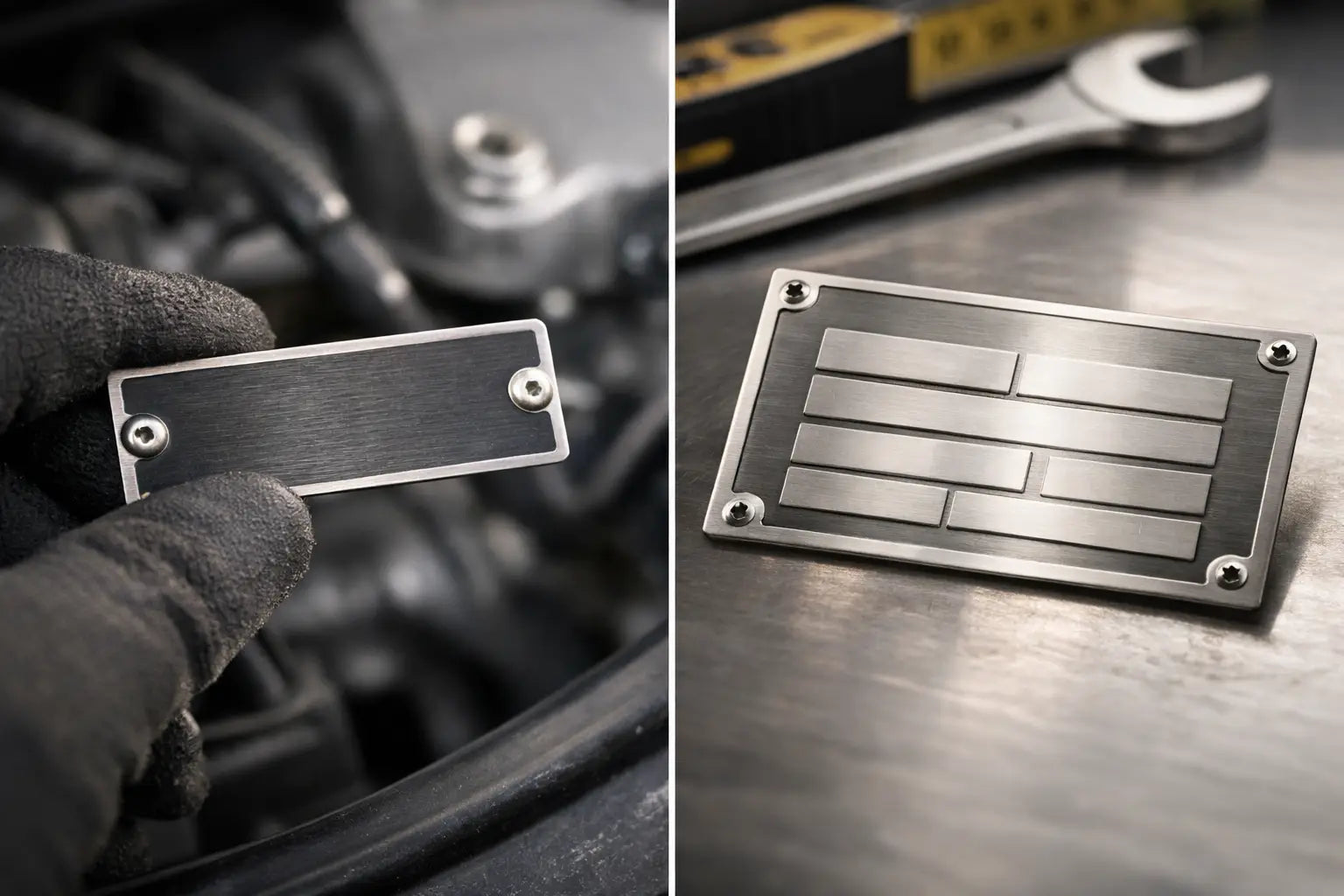

If a compliance plate fails on site, the problem is rarely just the plate. It can stall inspections, create traceability gaps, hold up asset registration, and leave teams scrambling for records that should have been attached to the equipment in the first place. That is why a proper compliance plate requirements guide matters - not as paperwork, but as a practical control for plant, vehicles, trailers, machinery and fixed assets across Australian worksites.
What a compliance plate needs to do
A compliance plate is there to identify, verify and support compliance. In practice, that means it has to carry the right information, remain legible over time, and stay attached in the conditions where the asset actually operates. A plate that looks fine in the office but fades, corrodes or peels on site is not doing its job.
The exact requirements depend on the application. A trailer VIN plate, a vehicle compliance plate, a machinery ID plate and a plant rating plate can all serve different functions and may be subject to different regulatory or customer specifications. Even so, the same core standard applies in operational terms: the plate has to be accurate, durable and fit for purpose.
For buyers, this is where mistakes usually happen. The issue is not always wrong information. It is often a mismatch between the plate design and the environment. Thin material, poor fastening, weak print contrast or the wrong adhesive can turn a compliant order into a replacement cycle.
Compliance plate requirements guide for Australian worksites
Australian conditions are hard on identification products. UV exposure, heat, salt air, washdowns, grit, vibration and chemical contact all shorten the life of plates that are not specified properly. A compliance plate requirements guide should therefore look beyond wording and include how the plate will perform over time.
Start with the application itself. Ask what the plate is identifying, who needs to read it, and what the consequences are if it becomes unreadable. A plate on workshop equipment used indoors has a very different risk profile from one fixed to a trailer, pumping system or mobile plant working across regional sites.
Then look at the operating environment. Outdoor exposure calls for stronger material performance and clear, high-contrast marking. High-abrasion areas may need thicker metal, more secure fixing methods or a protected mounting position. Where solvents, oils or regular cleaning are involved, resistance to chemicals becomes part of the requirement, not an optional extra.
That practical approach matters because compliance is rarely one-size-fits-all. Some buyers assume there is a single generic plate that will cover every asset. In reality, good plate selection is about matching data needs, material strength and mounting method to the asset and the worksite.
The information that usually belongs on a plate
What goes on a compliance plate depends on the asset type, the applicable regulation or standard, and any customer or internal asset management requirements. Common data fields include manufacturer details, serial numbers, VINs, model numbers, date of manufacture, load or rating information, and approval references where relevant.
The key point is accuracy and permanence. If the plate is carrying identification needed for registration, inspection, servicing or audit purposes, the information must be clear and consistent with supporting records. A single wrong digit on a serial number can create the same level of operational frustration as a missing plate.
Layout matters as well. Crowding too much information onto a small plate can reduce readability, especially once dust, wear or glare come into the picture. Where teams need to verify details quickly in the field, legibility is part of compliance. Clear spacing, sensible hierarchy and strong contrast make a real difference.
Material choice is not a minor detail
Material selection is where many compliance plate decisions are won or lost. Metal plates are commonly chosen for good reason. They offer durability, dimensional stability and a longer service life in punishing environments. Aluminium and stainless steel are both widely used, but the best fit depends on exposure, expected lifespan and budget.
Aluminium can be an efficient option for many industrial and transport applications. It is lightweight, corrosion resistant in many environments and suitable for a broad range of identification uses. Stainless steel is often the better choice where chemical exposure, heavy abrasion or harsh coastal conditions demand extra toughness. The trade-off is usually cost and, in some cases, processing time.
There is no value in over-specifying every plate, but under-specifying is usually more expensive in the long run. Replacement labour, downtime, failed inspections and rework all add up quickly. For compliance-critical assets, durability is not a premium feature. It is basic risk control.
Fixing methods matter as much as the plate itself
A durable plate still fails if it is attached badly. Adhesive fixing can work well in the right setting, particularly on clean, prepared surfaces with limited exposure to extreme heat, impact or contamination. In heavier industrial applications, mechanical fixing is often the safer option.
Rivets, screws or other permanent fastening methods can provide stronger retention on vehicles, trailers, mobile plant and equipment exposed to vibration or outdoor use. Surface preparation also matters. Dust, oil, rust and uneven mounting surfaces reduce adhesion and can affect long-term performance even when the plate itself is well made.
This is one of those areas where convenience can work against reliability. A quick install may save time on day one, but a failed plate creates more work later. If the asset is valuable, regulated or mobile, it pays to think through how the plate will stay put for years, not weeks.
Customisation without creating compliance risk
Custom plates are often necessary. Businesses may need specific wording, branding, approval details, asset references, barcode integration or a format that aligns with internal systems. Customisation is useful, but it needs control.
The safest approach is to treat custom artwork and data like any other compliance document. Check source data carefully, confirm dimensions, review spelling and numbering, and make sure the final layout is suitable for the available mounting area. It is also worth confirming whether the asset owner, fabricator, installer or compliance team has final sign-off responsibility.
Small errors become expensive once plates are manufactured and fitted. That is why dependable suppliers focus not just on production, but on getting the specification right before the order runs.
Common mistakes buyers make
The most common mistake is buying on appearance rather than application. A plate may look professional in a sample image but still be wrong for the worksite. Material grade, thickness, marking method and fixing method all affect whether it will last.
Another frequent issue is assuming readability equals durability. Freshly printed text can be easy to read when the plate arrives, but exposure changes that quickly. UV, abrasion and cleaning routines can all reduce legibility if the marking method is not suitable.
There is also a tendency to leave plate selection until the end of a project. That can create rushed artwork approvals, missed data fields and avoidable delivery pressure. Bringing compliance plates into the planning stage usually leads to better results, especially where multiple asset types or staged deliveries are involved.
How to choose the right supplier
A capable supplier should do more than process artwork. They should understand the operational use of the plate, ask practical questions about the environment, and help match the product to the job. For Australian buyers, local manufacturing and local material suitability also matter. Products that handle UV, dust, wind and hard industrial use are not all built the same.
Fast turnaround is valuable, but only if the product holds up once it arrives. The better benchmark is reliable delivery of plates that are accurate, durable and ready for the conditions they will face. That is the difference between simply purchasing a plate and solving an identification problem properly.
For many businesses, working with an Australian supplier such as Prime Tags makes that process more straightforward because the product range and service model are built around local compliance needs and real site conditions.
A practical compliance plate requirements guide for purchasing teams
If you are ordering compliance plates, keep the brief simple and exact. Confirm what the plate is for, what information must appear, where it will be mounted, and what conditions it needs to survive. Then check material, marking method, plate size and fixing method against that use case.
That process is not complicated, but it does require attention. Compliance plates sit in the background when everything is working. When they are wrong, they become highly visible very quickly. Getting them specified properly from the start saves time, reduces replacement costs and supports cleaner audits and inspections.
The best compliance plate is not the cheapest one on paper or the flashiest one in a catalogue. It is the one that stays readable, stays attached and keeps doing its job long after installation.