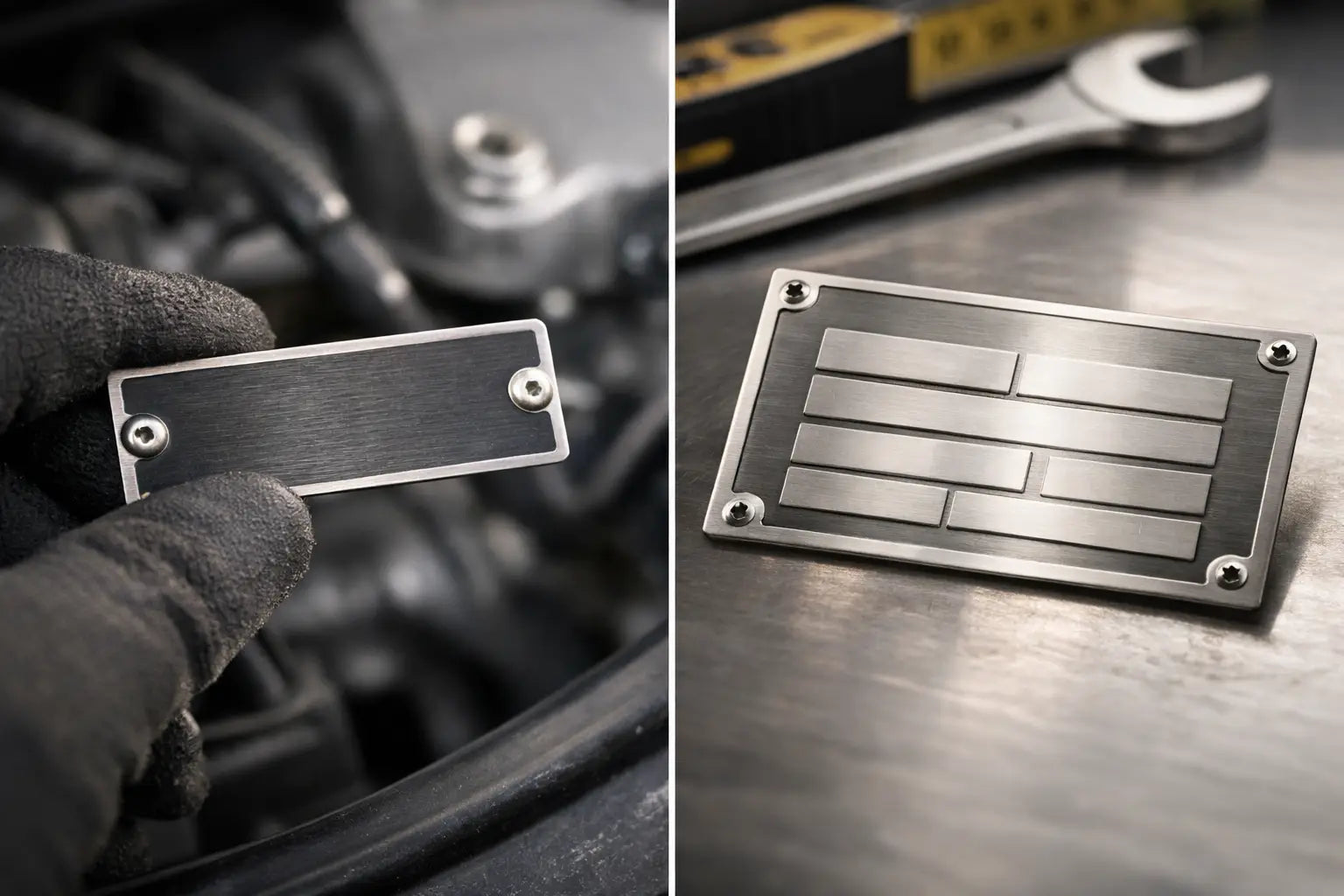

A flange can be correctly installed, pressure-tested and ready for service, yet still create a problem if its status is unclear. Flange tags Australia sites use are a practical control for identifying joints, line contents, inspection status and project information where it needs to be seen: at the connection itself.
For maintenance teams, construction supervisors and compliance administrators, the tag is not an afterthought. It helps prevent confusion during commissioning, shutdowns, isolations and routine inspections. The right tag remains legible after sun, dust, washdowns and repeated handling. The wrong one fades, tears or disappears just when someone needs to confirm what they are looking at.
What flange tags are used for
Flange tags are identification tags fitted around, through or adjacent to a flange connection. Their exact role depends on the site and the job. They may identify a pipeline or service, distinguish a process line, record flange management details, show a test or inspection status, or carry a work package reference during fabrication and installation.
On a busy plant, visual identification needs to work quickly. A tradesperson should not have to search through a drawing set or call the control room to establish which joint has been inspected, which line is awaiting a test, or which connection belongs to a particular system. A clearly printed, securely fitted flange tag provides a direct visual reference at the point of work.
This does not replace formal isolation procedures, engineering drawings, permits or inspection records. It supports them. The tag gives field crews a durable, practical marker that helps keep physical assets aligned with site documentation.
Why material choice matters on Australian worksites
Australian conditions are hard on identification products. UV exposure can bleach poor-quality printing. Wind and grit can wear tag surfaces. Heat, moisture, oils, cleaning chemicals and physical contact can all shorten the life of a tag that was only designed for light indoor use.
Material selection should begin with the environment, not just the desired price. For a short construction stage in a protected area, a lighter-duty option may be suitable. For an exposed mining operation, processing plant, water facility or transport yard, a tougher synthetic tag designed for outdoor use is generally the better decision.
A tag also needs enough body to stay readable and intact without becoming difficult to fit around the connection. If it is too thin, it can curl, split or tear at the fixing point. If it is unnecessarily thick or oversized, installation becomes awkward and the tag can catch on nearby equipment. The best result is a fit-for-purpose balance between strength, flexibility and clear presentation.
Prime Tags Australia uses 100% Australian materials selected for demanding local conditions. That matters when tags are expected to keep doing their job through long days in direct sun, airborne dust and regular site activity.
UV resistance is only part of the picture
A tag can survive sunlight but still fail because its printed information wears away, its hole stretches, or its attachment loosens. Consider the complete tag system: substrate, print method, layout, hole position, shape and attachment method.
For example, a tag carrying variable inspection data may need an area for permanent print plus a clear writable section. A tag used for ongoing asset identification may need high-contrast permanent text, a barcode or serial number. The use case determines the specification.
Specifying flange tags in Australia
Ordering flange tags should be straightforward, but a vague brief often leads to tags that look acceptable on delivery and perform poorly on site. Start by defining what the tag must communicate, where it will sit and how long it needs to remain in service.
The information on the tag should be limited to what crews genuinely need in the field. Overcrowded artwork makes critical details hard to read. Large line identifiers, status wording, asset numbers and dates are usually more useful than blocks of small text. Use a logical reading order so the most important instruction or identifier is visible at a glance.
Colour can assist with fast recognition, particularly when a site has established categories for services, status or departments. However, colour should support the message rather than carry it alone. Sunlight, dirt and low-light conditions can reduce colour distinction, so key wording and symbols should remain clear in high contrast.
Get the physical details right
Before approving a production run, confirm the flange dimensions, clearance around bolts and pipework, likely viewing distance, and fixing method. A tag that sits neatly on a sample flange may not fit a different size or arrangement used elsewhere on site.
Provide the supplier with the outside diameter or circumference where relevant, the intended fixing point, and whether the tag needs a slot, hole, notch or custom shape. If tags will be fitted with cable ties, allow for the tie width and ensure the tag hole is sized accordingly. If the tag needs to sit under a bolt or around a neck, the cut-out should be designed for that application rather than improvised in the field.
For larger projects, it is worth obtaining a sample before committing to volume. A physical test on the actual flange can reveal clearance issues, readability concerns and attachment problems that are not obvious in a proof file.
Print information that supports field decisions
The content of a flange tag should match its operational purpose. A commissioning tag may require a system reference, line number, test pack number, date and responsible party. A permanent service identification tag may instead carry the line designation, flow direction, medium or asset reference.
Where records are managed electronically, barcodes, QR codes or sequential numbering can reduce manual data entry and make assets easier to trace. The code still needs enough size and contrast to scan reliably once the tag is installed. A small code squeezed into a crowded layout may look efficient on screen but be frustrating for a technician using a mobile device in the field.
Customisation is especially valuable where multiple contractors, sites or asset groups use similar hardware. Company branding, project names, logo placement and colour standards can be included, but they should never compete with compliance or operational information. The site identifier must remain the first thing people can find.
Common causes of flange tag failure
Most failures are preventable. The usual issue is specifying a general-purpose tag for a demanding application, then expecting it to withstand conditions it was not designed for. Another is treating fitment as an afterthought, which can leave tags loose, obscured or vulnerable to snagging.
The following checks help avoid unnecessary replacement and rework:
- Confirm the expected service life, including whether the tag is temporary, project-based or permanent.
- Match the tag material and print method to UV, chemical, heat, abrasion and moisture exposure.
- Make the primary identifier large enough to read from the normal working position.
- Test the hole, slot or cut-out on the actual flange and chosen attachment method.
- Check that variable details, barcodes and dates remain legible after installation.
When fast turnaround matters
Flange identification is often needed under tight project timelines. A delayed tag order can hold up completion records, create confusion during handover or leave crews relying on temporary handwritten markers for longer than planned.
The fastest path is a clear purchase brief from the start. Include quantity, size, material requirement, artwork or variable data, colours, fixing details and required delivery date. If the application is unusual, send photos and measurements of the flange area. That gives the supplier enough information to recommend a workable format rather than guessing from a product name alone.
For repeat requirements, retain approved artwork and a simple specification record. This makes future orders faster and reduces variation between batches, projects and locations.
Before the next shutdown, commissioning stage or inspection program, walk the work area and identify where unclear flange status could slow a crew down. A properly specified tag is a small item, but it can remove a very real point of uncertainty when the job is live.