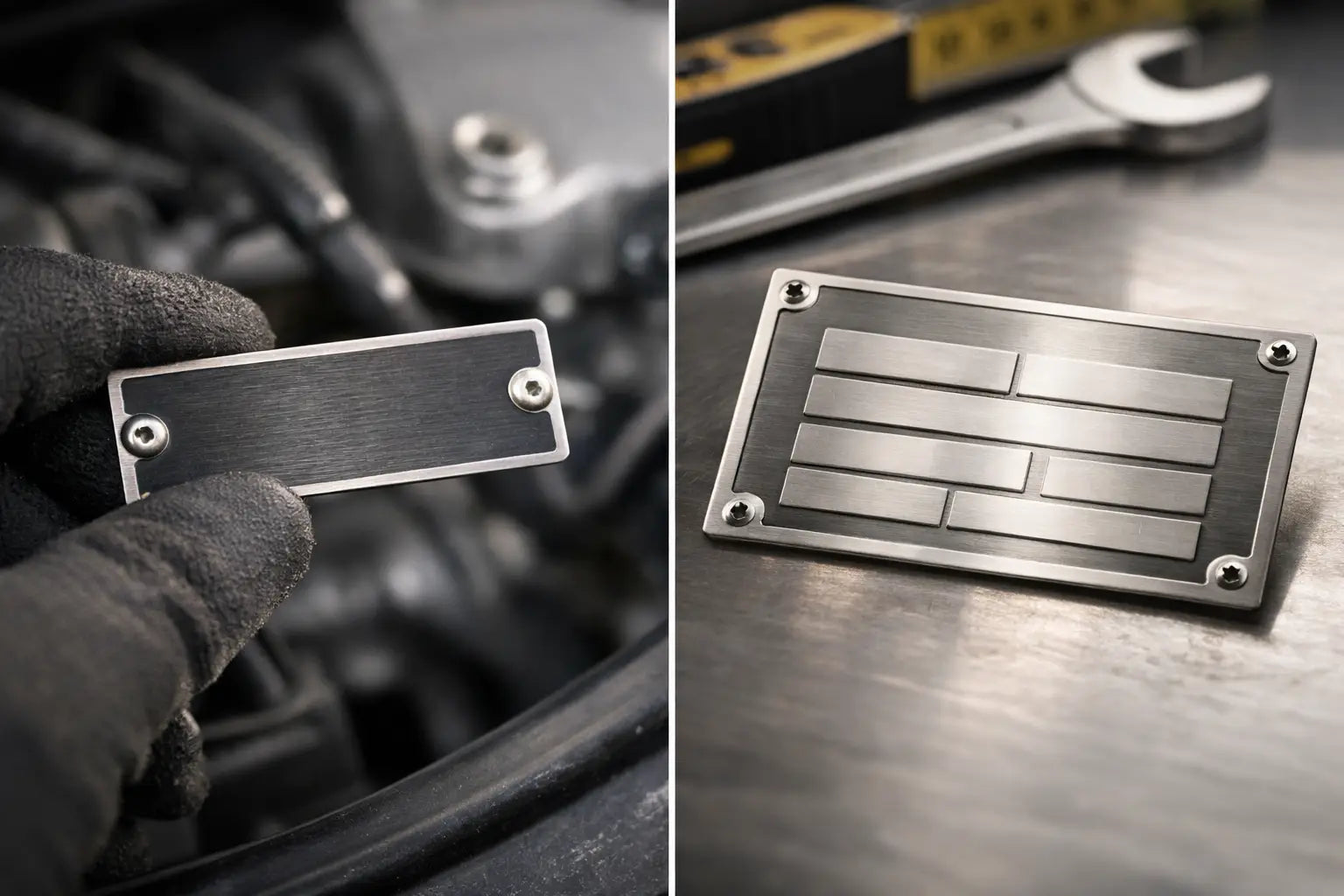

If your lifting gear register says a sling was inspected last month but the tag on the gear is faded, cracked or unreadable, you have a problem. Good tags for lifting gear registers are not just an admin extra - they are the link between the physical asset in the yard, workshop or site box and the compliance record your team relies on.
In practice, that link gets tested hard. Lifting gear moves between crews, gets dragged through grit, sits in UV, cops rain, oil and abrasion, and still needs to stay identifiable when an auditor, dogman, rigger or maintenance supervisor checks it. If the tag fails before the gear does, traceability starts to unravel.
Why tags for lifting gear registers matter
A lifting gear register only works when each item can be matched quickly and confidently to its record. That sounds simple, but on busy sites it often breaks down because tags are treated as a low-priority accessory instead of a compliance-critical component.
When tags remain clear and secure, teams can confirm asset ID, inspection status, service history and retirement timing without second-guessing. That helps reduce delays during pre-start checks, inspections and shutdown planning. It also cuts the risk of duplicate entries, missing records or gear staying in service when it should have been pulled out.
There is also a practical procurement issue here. Replacing failed tags over and over adds cost, but the bigger hit is operational. A cheap tag that becomes unreadable in six months can create more downtime and more administrative cleanup than a better tag that lasts through the actual service environment.
What a lifting gear tag needs to do
For lifting applications, a tag has one job above all else - stay attached and stay legible. Everything else follows from that.
That means the material needs to suit the environment, not just the artwork or data printed on it. A tag used indoors on occasional-use chain blocks may not need the same construction as a tag fitted to shackles, slings or rigging hardware used outdoors in mining, civil or marine-adjacent conditions. UV resistance, abrasion resistance and tear strength matter because they affect whether the tag is still readable at the next inspection interval.
The information on the tag also needs to support the register, not compete with it. Most sites do not need to cram every detail onto the tag itself. Usually, the critical requirement is a clear unique identifier that ties the item directly to the register. Depending on the application, that may sit alongside inspection date fields, WLL details, serial references, company name or colour coding. The right balance depends on how your team manages records.
Matching tags to the way your register works
Not every lifting gear register is set up the same way. Some businesses run tightly controlled digital asset systems with unique IDs and barcode scanning. Others still rely on spreadsheet-based registers backed by physical inspection records. Most sit somewhere in between.
That is why the best tags for lifting gear registers are designed around your actual process. If your team identifies gear by a short numeric code, the tag should make that code easy to read from arm's length. If your inspections rely on scanning, barcode quality and placement become more important. If your register is colour-driven for inspection periods or locations, tag colour and print contrast need more attention.
Trying to force a standard tag format onto a messy or mixed register system usually creates friction. The better approach is to make the tag support the way your crews, inspectors and compliance staff already work, while tightening up any weak points in traceability.
Material choice is where performance is won or lost
For industrial buyers, this is usually the section that matters most. Material selection is what separates a tag that looks fine in the carton from one that still performs after months on site.
Synthetic tags are often a strong option where flexibility, print clarity and weather resistance are needed. They suit many lifting and rigging applications because they can handle rough use without becoming brittle too quickly. For harsher conditions, heavier-duty constructions and more secure attachment styles may be the better fit, especially where tags are exposed to repeated flexing, grit or washdowns.
There is no single best material for every lifting asset. Webbing slings, chain slings, shackles, spreader bars and hoists all present different attachment and wear issues. A tag that works on one item may snag, abrade or fail early on another. That is why application-specific selection matters more than broad claims about being heavy duty.
Australian conditions raise the bar again. High UV, heat, dust and rough handling can chew through poor-quality materials quickly. For many buyers, locally made products using Australian materials are not just a preference. They are a practical way to reduce failure rates and improve consistency across repeat orders.
What to include on tags for lifting gear registers
The smartest tag layout is usually the one that gives your team the information they need fast, without overcrowding the tag.
At a minimum, most operations need a unique asset identifier that matches the lifting gear register exactly. That might be a serial number, equipment ID or coded reference. Beyond that, common fields include WLL, next inspection due date, last inspection date, owner or site name, and a barcode or QR code where digital systems are used.
More data is not always better. Small tags with too much text become hard to read, and small print disappears fast once dirt and wear get involved. If the register already holds the detailed service history, the tag should focus on identification and the key status points needed in the field.
Consistency matters as much as content. If one batch uses one numbering format and the next batch uses another, your register becomes harder to manage. The same goes for abbreviations, date formats and barcode placement. Standardising the layout across your lifting fleet makes inspections faster and reduces admin mistakes.
Common problems that shorten tag life
Most tag failures are predictable. They come from the wrong material, weak attachment, poor print durability or a design that ignores how the asset is actually used.
A common mistake is choosing tags based mainly on unit price. That can work for low-risk indoor assets, but it often falls apart in lifting applications where the tag is constantly knocked around. Another issue is poor contrast or undersized print. A tag can still be physically attached yet functionally useless if nobody can read it easily on site.
Attachment method is another weak point. If the tag is likely to twist, rub on metal edges or catch during handling, it needs to be designed around that risk. There is always a trade-off between security, flexibility and ease of replacement. A very secure fitting may be ideal for preventing loss, but if it makes scheduled replacement painful, teams may delay the job.
Custom tags versus off-the-shelf options
Off-the-shelf tags can be suitable if your register format is simple and your application is standard. They are often faster to specify and can work well for smaller fleets with straightforward identification needs.
Custom tags are usually the better choice when your business needs exact field layouts, company branding, site-specific numbering, barcode integration or a particular material and attachment combination. For larger fleets or multi-site operations, customisation often saves time later because the tags fit the register properly from day one.
That is particularly relevant where procurement teams are trying to standardise across different workshops or business units. A consistent custom tag can help bring order to mixed legacy systems without forcing a complete register overhaul at the same time.
Getting the supply side right
Even the best tag design is only useful if supply is dependable. Compliance products are rarely ordered for fun. They are needed because inspections are due, assets are arriving, or a site has identified a gap that needs fixing quickly.
Lead time, repeatability and quoting support matter just as much as the product itself. Industrial buyers need confidence that the next batch will match the last one, that custom details will be produced correctly, and that the tags will turn up when promised. Fast turnaround is valuable, but only if quality holds up.
This is where working with a supplier that understands lifting, rigging and broader compliance marking can make the process easier. Prime Tags Australia, for example, focuses on worksite-ready tag and label products built for harsh local conditions, which is the kind of practical alignment buyers often need when standard tags keep failing.
A better standard for register traceability
When you choose tags for lifting gear registers, you are really choosing how reliable your asset traceability will be under real site conditions. The right tag supports inspections, speeds up identification and holds its place in the system long after the paperwork is filed.
If a tag cannot survive the job, it cannot support compliance. Start with how the gear is used, how the register is managed and what the site will throw at the tag, then specify from there. That approach usually costs less trouble than replacing failed tags and cleaning up the records after the fact.