
A label that curls, fades or drops off after a few months is not a minor annoyance on site. It creates rework, slows inspections, risks failed audits and can leave assets unidentified when you need a clear record. Choosing the best labels for harsh environments means matching the label to the real conditions it will face - not just picking the cheapest option that looks fine on day one.
For Australian worksites, that usually means planning for more than sunlight and rain. UV exposure, heat, washdowns, abrasive dust, chemicals, salt air and rough handling all work against label life. If the label carries a barcode, serial number, inspection status or compliance detail, failure is more than cosmetic. It becomes an operational problem.
What makes an environment harsh for labels?
Harsh conditions vary from one site to the next, which is why there is no single "best" label for every application. A mine site in WA, a coastal utility depot in Queensland and a manufacturing plant in Victoria can all need durable labels, but not for the same reasons.
Outdoor exposure is the obvious one. Constant sun can bleach print and weaken lower-grade materials. Heat cycling can make labels expand and contract, which puts pressure on the adhesive. Wind-driven grit acts like sandpaper over time, especially on raised edges.
Then there is contact exposure. Some labels need to survive oil, grease, solvents, pressure washing or routine cleaning chemicals. Others are applied to equipment that flexes, vibrates or gets knocked around in service. A label on a smooth indoor cabinet has an easier life than one on a hose reel, scaffold component or mobile plant.
Surface type matters as well. Powder-coated metal, textured plastic, stainless steel, rubber hose and painted assets all behave differently. The best labels for harsh environments are rarely selected on face stock alone. The adhesive and the application surface are just as important.
Best labels for harsh environments by material
In industrial settings, material choice usually comes down to balancing durability, print clarity, flexibility and cost.
Polyester labels
Polyester is one of the strongest all-round options for industrial identification. It offers good resistance to UV, moisture, abrasion and many chemicals, which makes it suitable for asset labels, barcode labels, rating information and general equipment identification.
If you need fine print, serial data or scannable barcodes that stay readable over time, polyester is often the first place to look. It performs well on smooth, clean surfaces and gives a professional finish. The trade-off is that it is less forgiving on highly curved or flexible surfaces than softer label stocks.
Polypropylene and vinyl labels
Where flexibility matters, polypropylene or vinyl can be a better fit. These materials handle curves and uneven surfaces more easily, which helps on containers, drums, some machinery components and applications where the label may cop movement.
Vinyl is useful where you want a tougher, more conformable label, especially outdoors. It can hold up well in weather and on awkward surfaces. The trade-off is that not every vinyl construction will give the same print quality or chemical resistance as a premium polyester system, so the full construction matters.
Polyimide labels
For high-temperature applications, standard industrial labels may not last. Polyimide is designed for elevated heat and is often used where parts, components or equipment are exposed to extreme temperatures during operation or processing.
This is a specialised option rather than a general-purpose choice. If heat is your main concern, it can be the right answer. If your issue is UV, impact or moisture rather than temperature, another material may be more practical and cost-effective.
Metal plates instead of labels
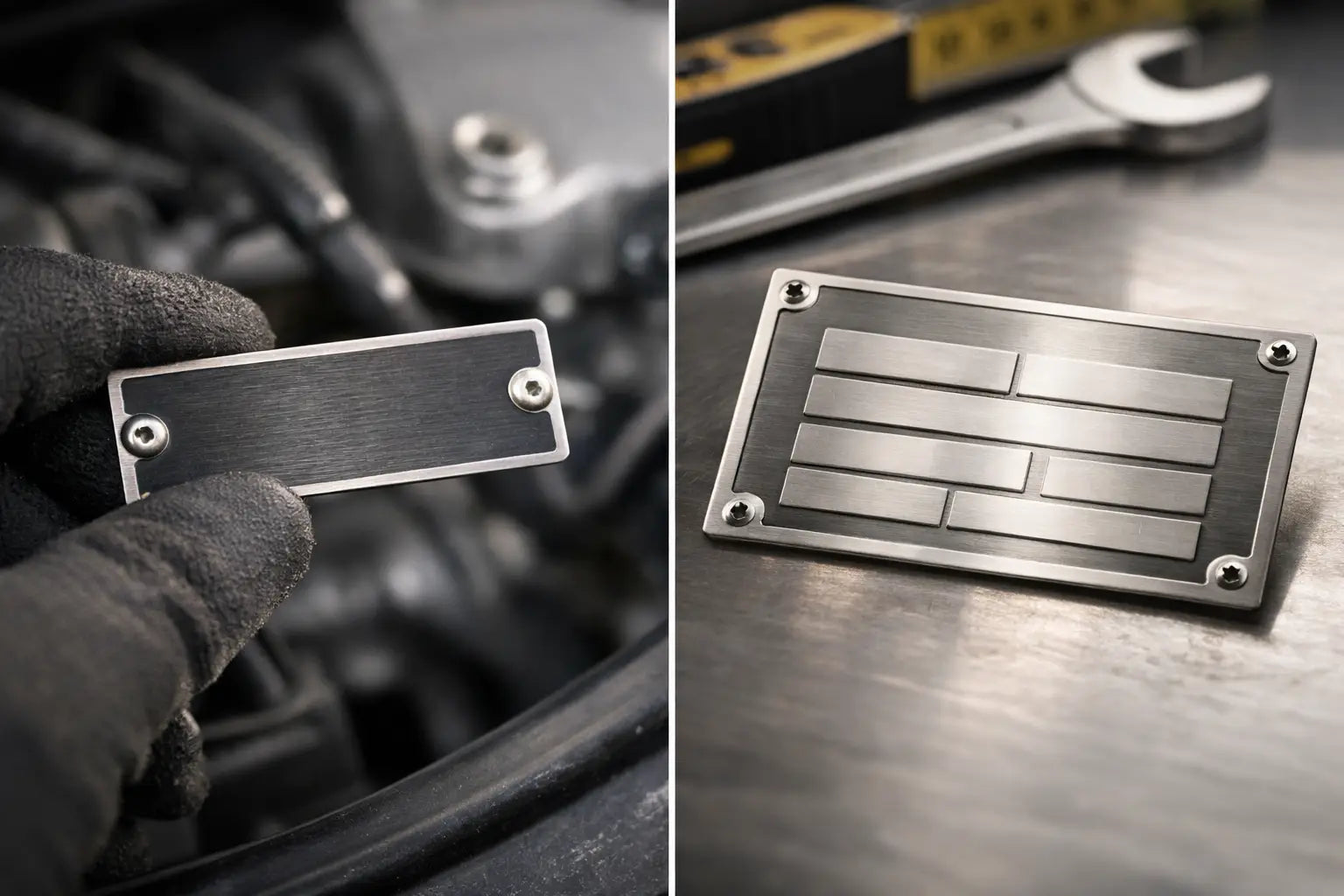
Sometimes the best label is not a label at all. If the identification is permanent, compliance-critical or exposed to very heavy abuse, a metal asset plate or compliance plate may be the smarter option. Aluminium and stainless solutions are often used where adhesive labels would be pushed beyond their limits.
That is especially relevant for plant identification, trailer plates, vehicle compliance information or harsh-duty assets expected to stay in service for years. The upfront cost is higher, but replacement frequency is lower.
Adhesives matter as much as the face stock
A tough-looking label with the wrong adhesive will still fail. In many industrial applications, adhesive selection is where performance is won or lost.
Permanent acrylic adhesives are widely used because they offer strong bonding, good weather resistance and stable performance across a broad temperature range. For many outdoor assets and general industrial surfaces, they are a dependable choice.
Rubber-based adhesives can give stronger initial tack, which helps on some low-energy surfaces, but they are not always the best long-term option in high heat or heavy UV. Again, it depends on the job. If the label needs to bite quickly onto a tricky surface, that may be useful. If it needs to stay in place for years in direct sun, a different adhesive may be the better call.
Surface preparation also counts. Dust, oil, oxidation and moisture can undermine even a high-grade adhesive. On site, labels are often blamed for failure that starts with poor application. A clean, dry surface and the right application pressure make a real difference.
Print method and readability over time
Durability is not just about the label staying stuck. The print has to remain legible.
For barcodes, asset IDs, inspection records and compliance data, fading or smudging defeats the purpose. Thermal transfer printing is commonly used for industrial labels because it produces durable, sharp text and barcodes when paired with the right ribbon and material. Laminated or top-coated constructions can add another level of protection where abrasion or chemicals are part of the environment.
If the label carries critical information, ask what happens after twelve months outdoors, after washdowns, or after regular handling with dirty gloves. That is the test that matters, not how crisp it looked when it came off the printer.
Matching the label to the application
The best labels for harsh environments are selected by use case, not by marketing claims.
For fixed asset identification on machinery, switchboards, pumps and tools, polyester labels with strong acrylic adhesive are often the most practical answer. They handle detailed print well and offer a solid balance of durability and cost.
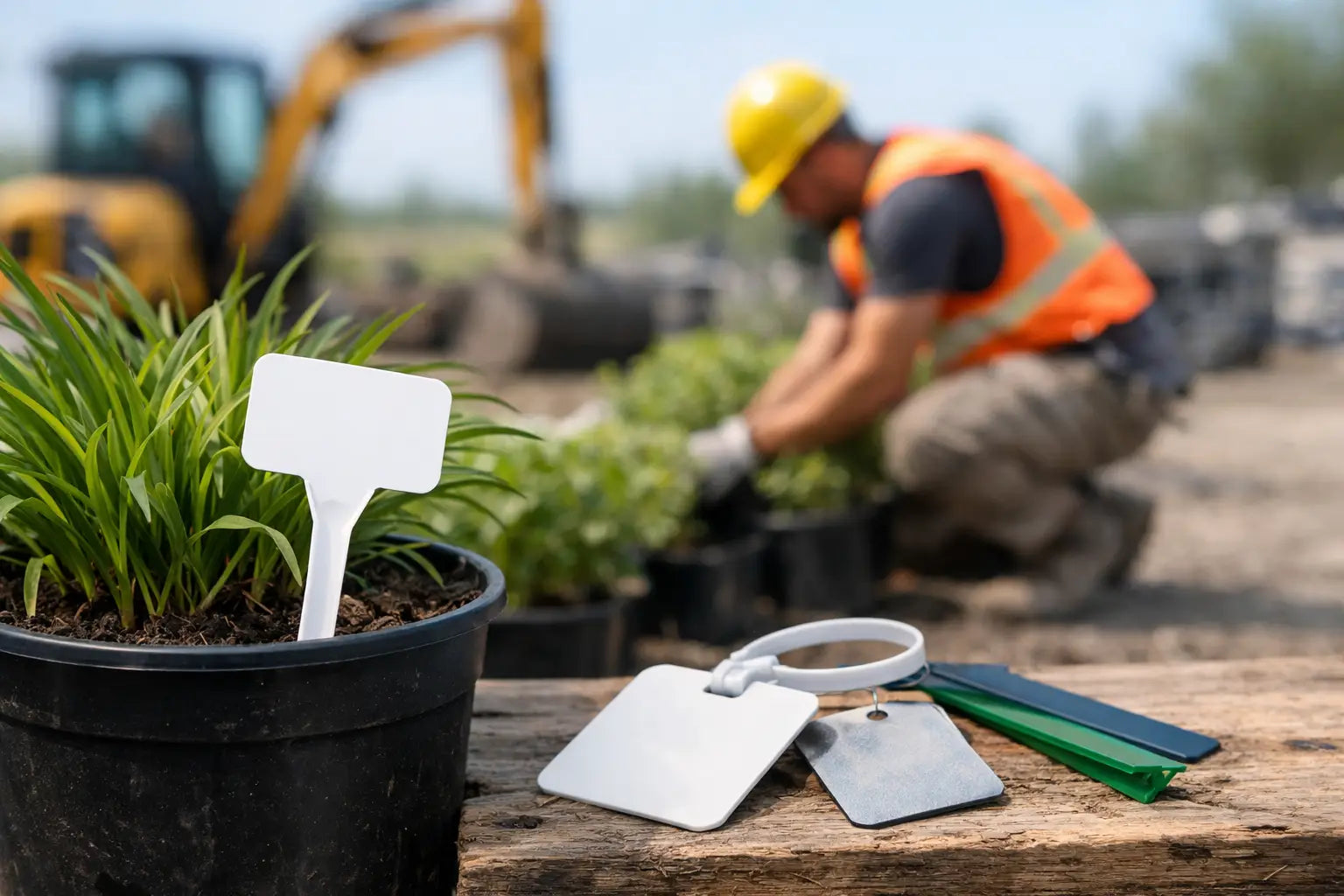
For hose labels, lifting and rigging identification, or equipment that flexes or gets dragged around, a more specialised solution is usually needed. In these cases, conformability and fastening method can matter more than having a standard adhesive label. The same applies to some inspection and safety applications, where a tag or plate is better suited than a flat label.
For outdoor compliance and fleet-style identification, UV stability is critical. Coastal and remote areas can be especially punishing because salt, heat and airborne grit speed up breakdown. Buyers in these sectors should be wary of generic labels sold as "weatherproof" without any clear material detail behind the claim.
For chemical plants, workshops and washdown areas, chemical resistance and topcoat performance become more important. A label that survives sun but not degreaser is still the wrong product.
Common mistakes buyers make
One of the most common mistakes is specifying by price only. A lower-cost label may look acceptable in the short term, but repeated replacement, relabelling labour and downtime usually wipe out any saving.
Another is choosing a standard office or warehouse label for a field application. Indoor labels have their place, but they are not built for UV, grime, moisture and temperature swings.
Buyers also sometimes focus on the material and forget the surface. A premium label on textured plastic or oily metal may underperform simply because the adhesive was wrong for the substrate. And if the asset is likely to be pressure cleaned, handled constantly or exposed to solvents, that needs to be part of the original specification.
How to choose with less trial and error
The quickest way to get the right result is to define the actual conditions clearly. Start with where the label will be used, what it will be stuck to, how long it needs to last and what could damage it. Then look at whether the information must remain machine-readable, inspection-ready or compliance-legible for the full service life.
If your operation uses a mix of assets, it may make sense to standardise across a small number of proven constructions rather than trying to force one label to do every job. That usually gives better long-term value and fewer field failures.
For buyers managing compliance, maintenance and procurement at the same time, local support also matters. Fast samples, custom sizing and clear advice on materials can save a lot of wasted time. That is one reason many Australian industrial teams work with suppliers like Prime Tags Australia when they need labels and identification products built for local conditions rather than generic catalogue stock.
A good harsh-environment label should disappear into the job. It stays put, stays readable and keeps doing its work long after cheaper options have peeled off or faded away.