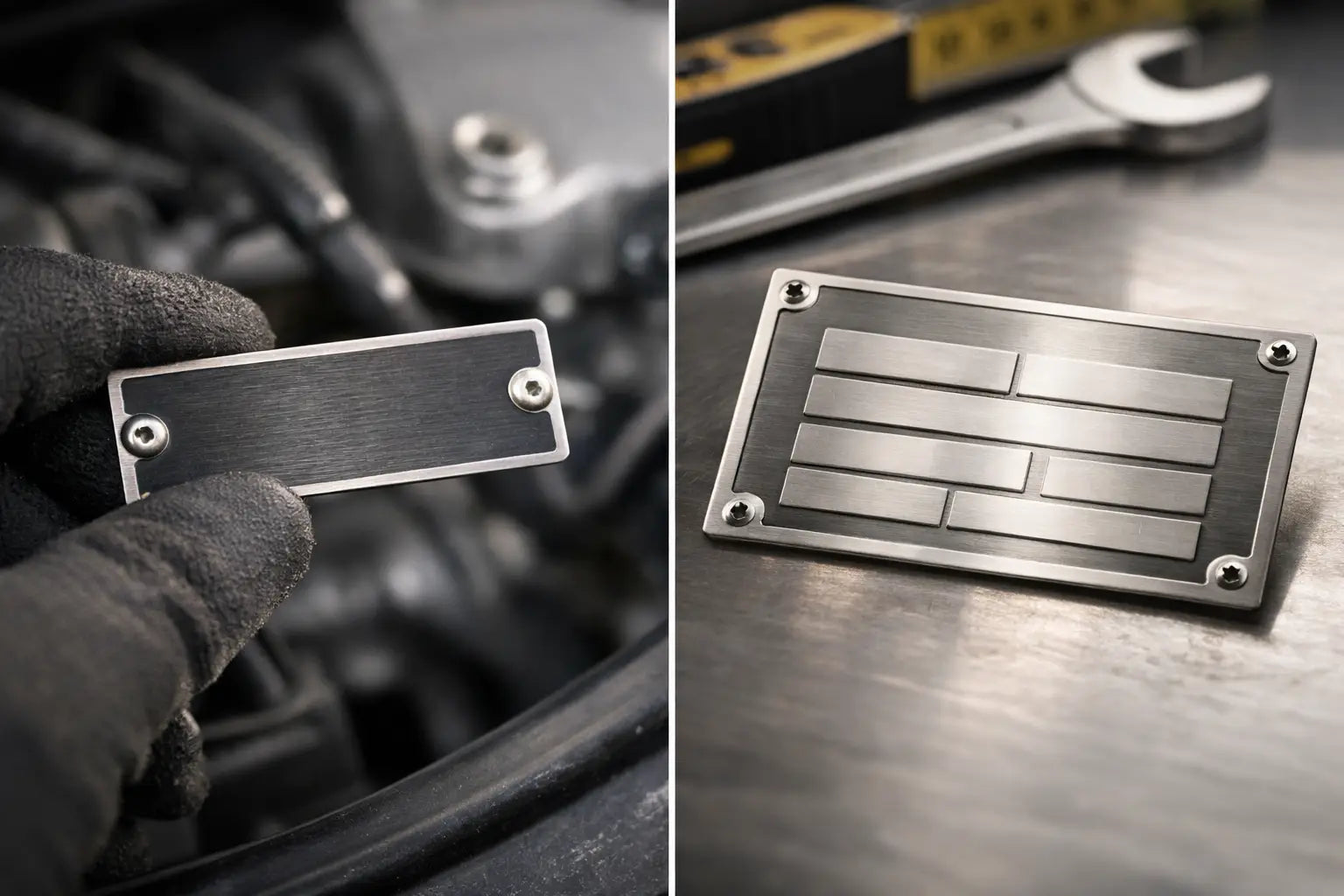

If an asset plate peels, fades or becomes unreadable six months after installation, it stops being an identification tool and starts becoming a maintenance problem. That is why asset plates Australian businesses use on plant, equipment, vehicles and fixed infrastructure need to be built for local conditions from the start - not adapted as an afterthought.
For maintenance teams, HSE managers and procurement officers, the real question is not whether you need asset identification. It is whether the plate will still be legible after UV exposure, washdowns, grit, vibration and everyday site abuse. A cheap plate can look fine on dispatch day. The test is what it looks like after a summer on site.
What asset plates Australian sites actually need
In practical terms, an asset plate is there to keep equipment identifiable, traceable and manageable. That can mean recording an internal asset number, serial number, barcode, QR code, ownership details or site-specific information tied to maintenance systems. On some sites, that plate supports inventory control. On others, it supports inspections, service history, compliance workflows or theft deterrence.
The application matters. A plate fitted to workshop tooling has different demands from one fixed to mobile plant, a switchboard, a trailer, a pump skid or field equipment in a mining or utilities environment. The more exposed the asset, the more the material, adhesive or fixing method, and print method matter.
This is where buyers often run into trouble. They order on unit price, assume all metal plates perform the same, and then spend more time replacing failed identification than they saved in the first place. When assets are spread across multiple sites, replacement costs are not just about the plate. They include labour, downtime, re-verification and admin clean-up.
Why material choice makes or breaks performance
The biggest difference between asset plates that last and those that do not usually comes down to material suitability. In Australian conditions, UV resistance is non-negotiable. Add heat, coastal air, dust, fuel splash, cleaning chemicals and abrasion, and weak materials are exposed quickly.
Aluminium remains a common choice for metal asset plates because it offers a good balance of durability, weight and corrosion resistance. Stainless steel may be the better option where the environment is especially harsh or where chemical exposure and physical wear are more severe. The trade-off is cost. Not every application needs the highest-grade plate available, but every application does need a plate matched to its real operating conditions.
Thickness also matters more than many buyers expect. Thin plates may suit low-impact indoor environments, but they are more vulnerable to bending, edge damage and premature wear in transport yards, workshops and outdoor industrial settings. If the asset is handled often, pressure-washed or exposed to vibration, a heavier-duty specification usually pays off.
Then there is the question of attachment. Adhesive-backed plates can work well on clean, smooth surfaces in the right application, but they are not the answer for every site. Mechanical fixing with holes and rivets or screws may be a better choice for high-wear environments, textured surfaces or assets exposed to moisture and temperature swings. It depends on the substrate, the install conditions and how permanent the identification needs to be.
The difference between readable and durable
A plate can be made from solid material and still fail if the marking method is poor. This is where readability over time becomes critical.
Printed information needs to stay clear enough for scanning, checking or visual identification long after installation. Fading text, worn barcodes and low-contrast layouts create delays in inspections and confusion in asset registers. On a busy site, no one wants to stand in the sun trying to work out whether the plate says 8, 3 or B.
For that reason, plate layout should be treated as part of the product, not a cosmetic extra. Clear numbering, practical font sizes, high contrast, and enough spacing for fast reading all matter. If barcodes or QR codes are included, they need to be sized and positioned for the scanning equipment actually used on site. What works in an office storeroom may not work in a dusty yard with handheld scanners and worn gloves.
Customisation is often where durable identification either becomes highly effective or unnecessarily complicated. The best result is usually straightforward: include only the data the site needs, structure it clearly, and match the plate to the asset class. Overloading a small plate with too much information reduces usability.
Compliance, traceability and operational control
Asset plates are not only about knowing what an item is. They also support traceability across maintenance, audit and compliance processes. In sectors such as mining, construction, manufacturing, utilities and transport, that traceability can affect inspection records, service intervals, equipment allocation and proof of ownership.
When asset identification is inconsistent, the knock-on effect is bigger than many teams expect. Records stop matching physical assets. Maintenance history becomes harder to verify. Audits take longer. Equipment can be missed, duplicated or incorrectly assigned. The plate itself is a small component, but it sits inside much larger operational systems.
That is why standardisation matters. A site that uses mixed sizes, different numbering formats and inconsistent plate quality makes life harder for maintenance and compliance teams. A site that uses clearly specified, fit-for-purpose asset plates creates cleaner workflows and fewer avoidable errors.
How to choose the right asset plate supplier
Industrial buyers do not need marketing fluff. They need confidence that the supplier understands harsh conditions, custom requirements and delivery pressures.
A good supplier should be able to help you narrow down material, thickness, fixing method and layout based on where and how the plate will be used. If every job gets the same default recommendation, that is a warning sign. Asset identification is not one-size-fits-all.
Turnaround time is another practical issue. Many buyers are not ordering plates for a future project with unlimited lead time. They are replacing failed identification, onboarding new assets, or meeting compliance deadlines. Delays create bottlenecks, especially when multiple departments are waiting on the same job.
Proofing and consistency also matter. If you are ordering custom sequential numbers, barcodes or site-coded data, accuracy is essential. One numbering error can cause unnecessary admin work across asset registers and maintenance systems. Reliable supply means more than shipping on time. It means getting the details right before production starts.
For Australian businesses, local manufacturing or local material sourcing can also make a real difference. It often supports faster lead times, better quality control and products designed for the conditions they will actually face. Prime Tags Australia operates in that space because buyers here need plates built for UV, grit, weather and industrial handling, not generic stock that looks acceptable in a catalogue.
Common buying mistakes with asset plates for Australian orders
One of the most common mistakes is treating all exposure conditions the same. Indoor warehouse racking, field-installed equipment and mobile plant do not place the same demands on a plate. Another is choosing the smallest possible plate to save cost, then finding there is not enough space for readable data.
Buyers also sometimes focus only on the face material and overlook installation realities. A plate may be durable, but if the mounting method is wrong for the asset surface, failure is still likely. Equally, a strong adhesive will not compensate for poor surface preparation during fitting.
There is also the issue of ordering too narrowly. If your site needs plates across multiple asset classes, it often makes sense to plan the system rather than buy reactively. A coordinated approach to numbering, sizing and layout makes future maintenance easier and reduces the chance of duplicate or inconsistent identification.
Getting long-term value from asset plates
The lowest unit price rarely delivers the lowest whole-of-life cost. Long-term value comes from durability, legibility, fit-for-purpose design and fewer replacements. It also comes from buying plates that suit your maintenance workflow instead of forcing your team to work around product limitations.
If the plate supports quick identification, survives the environment and arrives correctly produced, it does its job quietly for years. That is exactly what most industrial buyers want - no fuss, no repeat ordering because of avoidable failure, and no questions when auditors or maintenance crews need to verify an asset.
Asset plates Australian businesses can rely on are not complicated products, but they are critical ones. When they are specified properly, they help protect traceability, reduce rework and keep equipment records tied to the real asset in front of your team. For any site that takes compliance, maintenance and operational control seriously, that is money well spent.