
A lifting sling without a readable tag is a problem before the job even starts. On a busy site, nobody wants to argue over inspection status while a crane sits idle, a crew waits, and a lift plan gets held up. That is why inspection tags for lifting equipment matter - not as paperwork on plastic, but as a clear, durable control that helps keep lifting gear identifiable, traceable and fit for service.
For Australian operators, the challenge is rarely whether tags are needed. It is whether the tag will still be legible after sun, grime, abrasion and repeated handling. If the printed detail fades, the attachment point fails, or the tag material cracks, the equipment can become difficult to verify and easier to pull from service unnecessarily. That creates avoidable downtime, replacement cost and compliance headaches.
What inspection tags for lifting equipment actually do
At a practical level, inspection tags give your team a fast visual reference. They help identify an item, show inspection status, and support the records behind it. For lifting and rigging gear, that might include slings, chains, shackles, spreader bars, hoists or other rated equipment that requires regular inspection and clear identification.
A good tag does not replace a formal inspection register or maintenance system. It works with it. The tag on the asset and the record in your system should match, so the person on the hook-up point, in the workshop or on the yard can quickly confirm what the item is and whether it is within its inspection cycle.
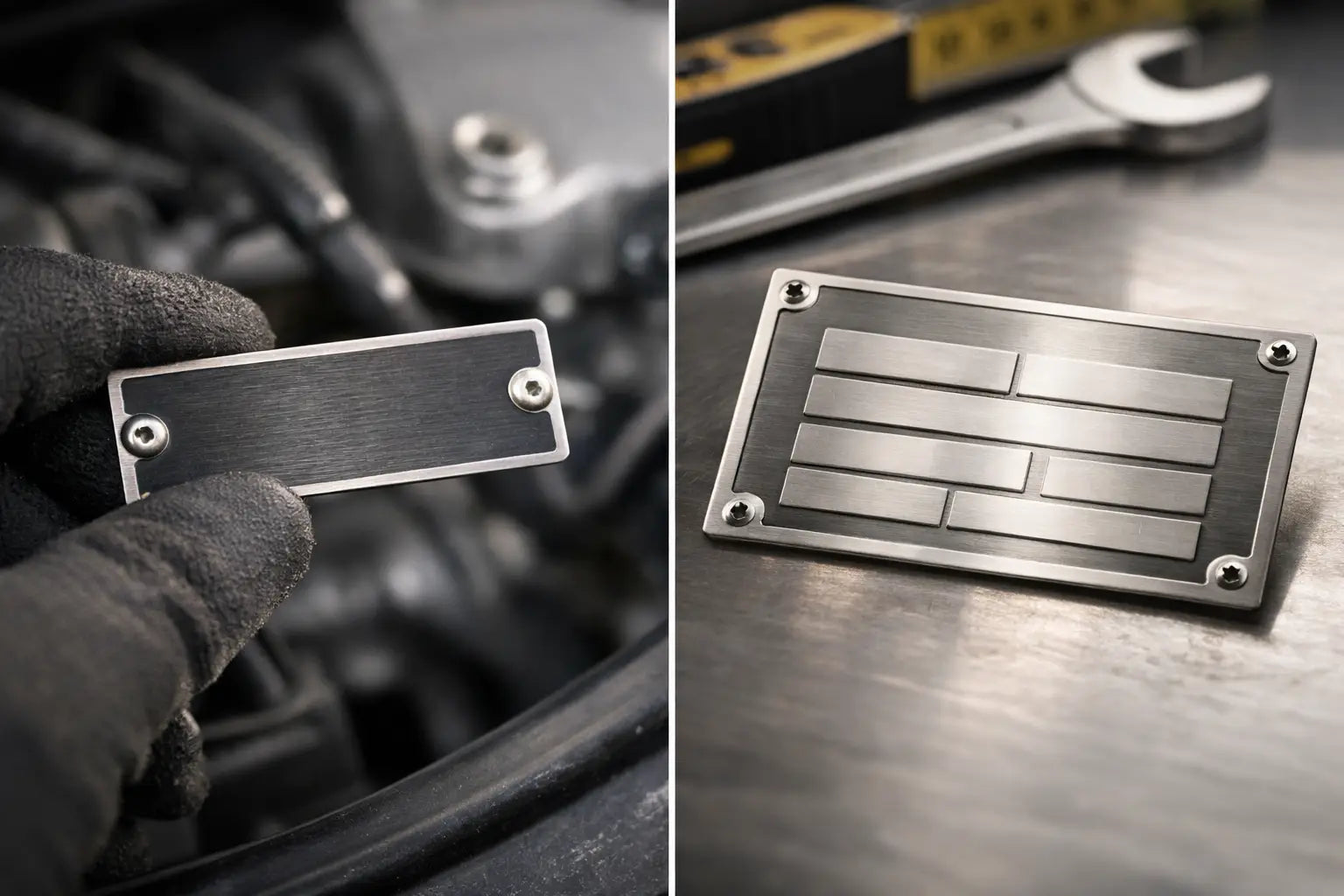
That sounds straightforward, but in the field there are trade-offs. A larger tag can carry more information, yet it may catch or wear faster on some gear. A softer material may flex well, but it might not hold up as long in abrasive conditions. A metal option can deliver durability, though it is not right for every application. The best result usually comes from matching the tag design to the asset, the environment and how the item is handled day to day.
Why tag durability matters on Australian worksites
Lifting gear does not live in a clean office cupboard. It gets dragged, loaded, washed down, exposed to UV, splashed with chemicals, and knocked around in service vehicles, workshops and laydown yards. In mining, construction, transport and industrial maintenance, tag failure is often caused by environment as much as use.
That is why material choice matters. A tag that looks fine on day one can become brittle, faded or unreadable well before the next inspection period if it is not designed for local conditions. Australian sites are hard on identification products. Heat, wind, grit and constant handling quickly expose weak materials and poor print quality.
For buyers, this is where the cheapest option often costs more. Replacing failed tags, re-identifying assets and dealing with uncertainty around unreadable equipment takes time. It can also lead to gear being quarantined simply because staff cannot verify what they are looking at. Tough, fit-for-purpose inspection tags reduce that friction.
What information should be on a lifting equipment tag?
The exact data depends on the equipment type and your site process, but the tag needs to support quick identification and reliable record matching. In most cases, that means the tag should carry a unique asset reference and enough inspection detail to link the item back to the register.
Some operations also include the last inspection date, next due date, department, site name or customer-specific coding. Others use serial numbers, QR or barcode data, and colour systems to support faster checks in the field. There is no single layout that suits every business. A workshop with a controlled internal fleet may want one format, while a contractor managing gear across multiple client sites may need more detail and clearer visual cues.
The key point is readability. If the layout is too cramped, the text too small, or the print method unsuited to rough handling, useful data becomes wasted space. Clear formatting and the right amount of information usually beat overloading a tag with every possible field.
Customisation is not just branding
For lifting gear, custom tags are often about control, not appearance. A tag can be tailored to your numbering system, inspection schedule, plant coding or site rules so teams can identify equipment quickly and consistently. That matters when different crews, contractors or depots all need to read the same asset information without second-guessing it.
Customisation also helps when standard tags do not suit the equipment. Attachment method, hole placement, size and material all affect how well a tag performs in service. If a tag spins, tears, snags or hides critical detail once fitted, it is not doing the job properly.
Choosing the right inspection tags for lifting equipment
Start with the asset itself. Soft slings, chain assemblies, shackles and lifting beams all behave differently in use, and the tag has to suit that. Then look at where the equipment operates. A fabrication workshop, coastal port, remote mine and municipal depot each place different demands on a tag.
You should also think about inspection frequency and replacement practicality. If tags are exposed to extreme wear but easy to replace during scheduled servicing, one solution may be acceptable. If access is difficult and the equipment changes hands constantly, longer-lasting materials are usually worth it.
The attachment method deserves close attention as well. A strong tag is only as useful as the way it is fixed to the equipment. If the connection point fails, the identification is gone. Buyers often focus on tag face material and print quality, but retention under vibration, movement and repeated handling is just as important.
Common buying mistakes
One common mistake is choosing a generic tag across every asset type for purchasing convenience. That can work for some fleets, but lifting equipment is not always suited to a one-size-fits-all approach. Another is prioritising upfront unit price over service life. If the tag fails early, the replacement cycle and labour cost usually wipe out any saving.
There is also a tendency to treat tags as an afterthought once lifting gear has already been specified and deployed. In practice, tagging should be considered part of the asset identification system from the start. When the tag format, numbering and records process are set up properly, inspections are easier to manage and less likely to create confusion later.
Inspection tags and compliance records need to work together
Tags on their own do not prove compliance. They support compliance by making equipment identifiable and inspection status easier to verify. The actual control comes from a sound process - scheduled inspections, competent checks, accurate records and clear removal-from-service rules where needed.
That said, weak tags undermine strong systems. If an item cannot be confidently identified in the field, your records become harder to rely on. That is where durable tagging delivers real operational value. It closes the gap between the register and the physical asset.
For many businesses, especially those managing mixed fleets across multiple sites, consistent tag formats also improve handovers between procurement, maintenance and operations. Everyone is looking at the same asset ID, the same format and the same inspection logic. That reduces avoidable disputes on the job.
Why local supply makes a difference
Lead time matters when tags are needed for new equipment, scheduled shutdowns or replacement of damaged identifiers. Delays can hold up mobilisation or leave inspected assets waiting for identification. Local supply helps cut that lag and makes custom adjustments easier when site requirements change.
There is also a material advantage in buying products built for Australian conditions. Tags made from Australian materials and specified for harsh local environments are better positioned to handle UV, heat and industrial wear than low-grade imports chosen mainly on price. For compliance-critical applications, that reliability is worth paying attention to.
This is where a specialist supplier such as Prime Tags Australia can make the buying process more practical. The value is not just in supplying tags. It is in getting the material, format and custom detail right for the way your lifting equipment is actually used.
Inspection tags are small, but they sit right at the point where compliance, maintenance and operations meet. When they are designed right, built strong and easy to read, your team spends less time guessing and more time getting the job done safely.