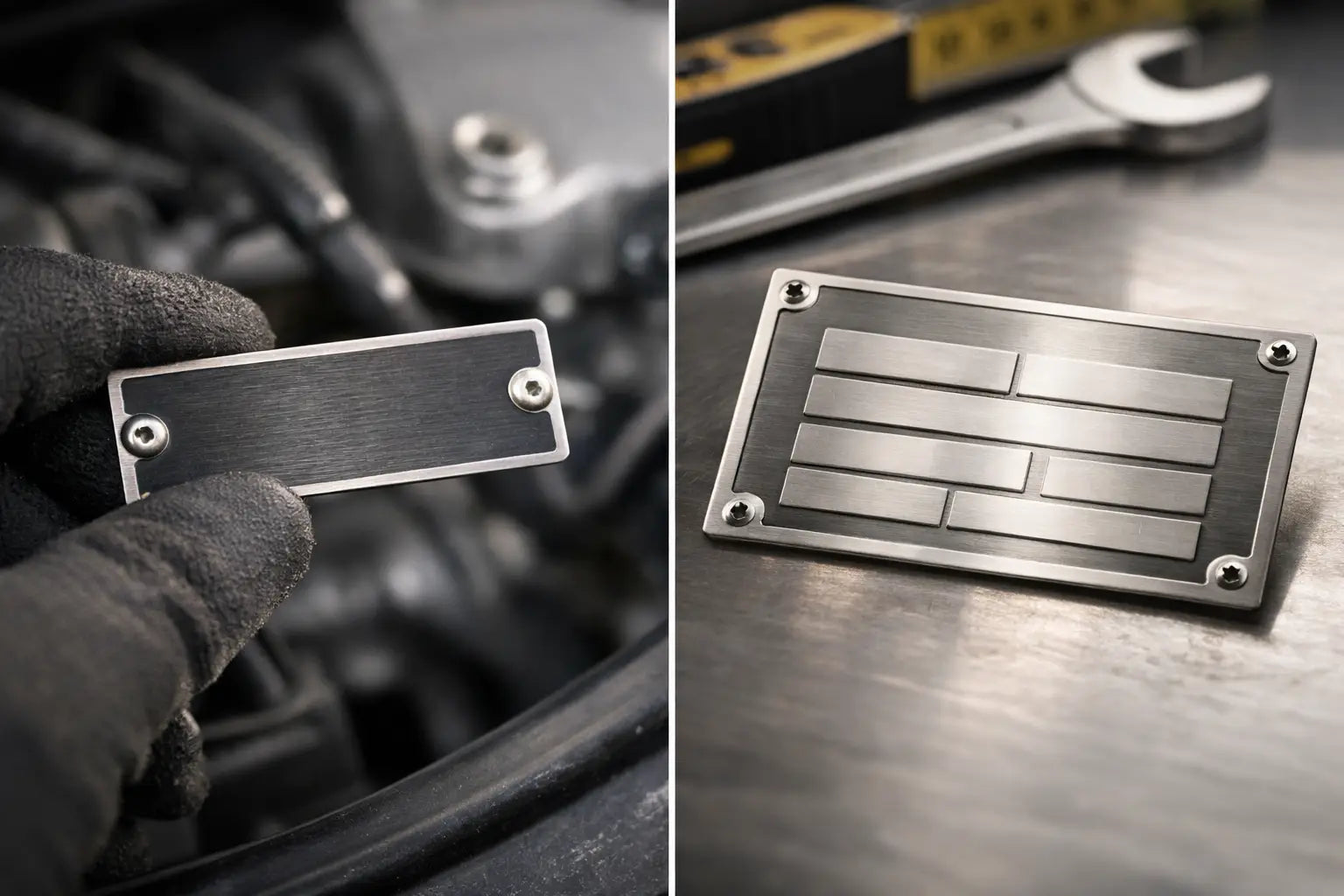

If a harness tag fails before the harness does, you have a compliance problem on your hands. That is why harness inspection tags Australia buyers specify are not just an add-on. They are a working part of your height safety system, carrying the inspection record that helps crews confirm status fast, track service intervals and avoid preventable downtime.
For sites managing multiple workers, contractors and inspection schedules, the tag has to do more than tick a box. It needs to stay legible in sun, grit, moisture and daily handling. It also needs to suit the way your team actually works, whether that means colour coding by year, adding serial numbers, matching internal asset registers or making room for specific inspection fields.
What harness inspection tags need to do on site
A harness tag has a simple job on paper - identify the item and support inspection traceability. On site, the job is tougher. The tag has to remain attached, readable and useful after repeated use, transport, storage and exposure to harsh conditions.
For most Australian workplaces, that means thinking beyond basic print. UV, dust, abrasion and moisture will quickly expose weak materials or poor fastening methods. A tag that smudges, cracks or drops off creates immediate friction for supervisors and inspectors. Even if the harness itself is still serviceable, an unreadable tag can force it out of use until records are checked and status is confirmed.
That is the practical value of getting the tag right from the start. Clear identification reduces guesswork. Durable construction reduces replacements. Consistent layout helps workers and auditors find what they need without chasing paperwork across the crib room, workshop and site office.
Choosing harness inspection tags in Australia
When sourcing harness inspection tags in Australia, the best option depends on your environment, your inspection process and how much information you need on the tag itself. There is no one-size-fits-all answer, but there are a few factors that separate site-ready tags from short-life stock.
Material durability matters more than buyers think
Material choice is usually where performance is won or lost. In controlled indoor environments, a lighter-duty tag may last reasonably well. On construction, mining, utilities and transport sites, that same tag can become brittle, fade or tear far too early.
Australian conditions are hard on identification products. Strong UV, temperature swings, rough handling and dirty equipment all shorten tag life. Buyers who focus only on upfront price often end up reordering sooner than expected, which pushes replacement costs and admin time back onto the business.
A tougher material generally costs more at the start, but it tends to make better operational sense where harnesses are in constant rotation. If the tag lasts through the inspection cycle and remains legible, the site avoids unnecessary rework.
Legibility is a compliance issue, not a design preference
Inspection data needs to be read quickly and accurately. That sounds obvious, but many tags fail here because they try to fit too much into too little space, use poor contrast or rely on print methods that do not hold up.
A good harness tag layout keeps the essential information clear. Asset ID, inspection date, next inspection field, company details or inspector reference all need to be easy to read at a glance. If your team uses internal numbering systems, barcodes or colour coding, those should support the process rather than clutter it.
This is where customisation earns its place. A standard tag can work for straightforward applications, but high-volume users often need a format that aligns with their own register, maintenance workflow or contractor management system.
Attachment method affects service life
Even a durable tag is no use if it does not stay put. The way the tag is fixed to the harness needs to suit the product design and the work environment. Some sites need a secure self-locking option. Others may require a softer or more flexible fixing point to reduce snagging or wear.
The trade-off is usually between security, ease of installation and replacement speed. A stronger permanent fixing may reduce accidental loss, but it can also make change-outs slower if your process involves frequent updates. A more flexible setup may be easier to manage, but only if it still stands up to daily use.
Why custom harness inspection tags Australia buyers order make sense
Generic stock tags can cover basic needs, but they often create extra admin where compliance systems are more detailed. That is why many businesses move to custom harness inspection tags Australia operations can standardise across teams, depots and projects.
Custom tags help when you need consistent numbering, pre-printed company details, site-specific wording or space for defined inspection intervals. They also make life easier for multi-site businesses trying to keep records aligned across different crews and asset pools.
There is also a procurement benefit. Standardising tag format across the business reduces mix-ups, simplifies reordering and makes onboarding new staff or contractors easier. People know where to look, what the fields mean and how to record information correctly.
For industries with mixed plant and PPE inventories, a custom tag program can also bring harness identification into line with other inspection products, such as lifting, rigging, hose or asset tags. That consistency is not just tidy - it helps reduce errors in fast-moving environments.
Common failures with harness inspection tags
Most tag problems show up in the field long before anyone raises them in a meeting. The common signs are predictable: fading print, torn edges, broken ties, inconsistent data fields and tags that simply do not match the site’s inspection process.
When that happens, the cost is not limited to buying replacements. Workers can lose time while status is checked manually. Inspectors may need to cross-reference external records. Supervisors end up managing avoidable exceptions instead of routine compliance.
Another common issue is ordering tags that are technically suitable but operationally wrong. For example, a tag may be durable enough, but too small for the information required. Or the print may be clear when new, but difficult to read after exposure to grime and wear. That is why product selection has to consider the real work environment, not just catalogue specs.
What industrial buyers should ask before ordering
Before placing an order, it pays to be clear on how the tag will be used. Start with the basics: where the harnesses are stored, how often they are inspected, what data must appear on the tag and who needs to read it quickly. Then look at site conditions. Indoor workshop use is very different from remote field work exposed to full weather.
It is also worth checking whether you need fixed information printed in advance or space for manual updates. Some buyers need both. If your team relies on asset numbers, department IDs or colour coding, build that into the tag specification early rather than trying to patch the system later.
Lead time matters too. Compliance products are often ordered when stock is already low, which leaves little room for delay. Fast turnaround is not just a service perk in this category - it can affect whether equipment stays available and inspection programs stay on track.
For businesses that need a mix of standard and bespoke products, working with a supplier that understands industrial identification makes the process easier. Prime Tags Australia fits that space well because the focus is on worksite-ready materials, practical customisation and dependable turnaround for Australian conditions.
A better standard for harness tags
The best harness tags are the ones nobody has to think about twice. They stay attached, stay readable and fit the inspection process without creating extra admin. That is the standard serious sites should expect.
If your current tags are fading, failing or forcing manual workarounds, the issue is not minor. It is a signal that the identification part of your compliance system needs tightening up. Better harness inspection tags will not solve every safety challenge on site, but they will remove one weak point that should never have been there in the first place.
When the tag is designed right, built strong and delivered to suit the job, your team can get on with inspection, maintenance and safe use without second-guessing the basics.