
When a flange is buried in a pipe rack, coated in dust and exposed to full sun, identification stops being a nice-to-have and becomes a control measure. A flange without a clear, durable tag slows inspections, creates confusion during maintenance and increases the chance of the wrong component being touched at the wrong time. On Australian sites, where heat, UV, grit and weather can destroy cheap materials quickly, flange tagging needs to be treated as an operational requirement, not an afterthought.
Why flange identification matters
In most industrial environments, flanges sit inside systems that carry risk. That might be water, gas, chemicals, compressed air, steam or process media that supports a larger operation. Maintenance teams, contractors and inspectors need to identify those connection points quickly and accurately. If the tag is faded, broken or missing, the job takes longer and the margin for error narrows.
That has a direct impact on compliance, maintenance efficiency and site safety. During shutdowns and routine servicing, teams rely on visible identifiers to confirm the right asset, line or inspection point. In fire protection systems, utilities and process plants, flange tags can support traceability across drawings, work orders and asset registers. When the identification system is consistent, the whole site runs with less friction.
There is also the issue of replacement cost. A low-grade tag might look acceptable when it arrives, but if it cracks after a few months outdoors or the print starts to disappear under UV exposure, the site pays twice. First for the original tag, then again for replacement labour, reordering and lost time. For procurement and maintenance teams, that is a poor outcome even when the unit price looked attractive upfront.
What a flange tag needs to do
A good flange tag does one job very clearly - it stays attached and remains readable for the life you expect from it. That sounds simple, but in practice it depends on material choice, print method, attachment style and the conditions on site.
Durability comes first. Many flange locations are exposed to weather, washdowns, vibration and general handling. Tags need to resist fading, tearing, embrittlement and abrasion. If the tag is installed near corrosive environments, coastal air or process contamination, the material also needs to maintain legibility without becoming brittle or distorted.
Clarity matters just as much as toughness. A flange tag should be readable at a glance and carry only the information needed for that application. That may include line numbers, asset IDs, service type, inspection status, isolation references or customer-specific codes. Overloading a small tag with too much information usually reduces its value. The better approach is to design the layout around how people actually use it on site.
Attachment is another practical consideration. A flange tag that rotates constantly, catches on nearby hardware or breaks away too easily will not last. The right format depends on whether the tag needs to sit flat, hang free, resist tampering or be removed and replaced during a maintenance cycle.
Choosing flange tags for Australian conditions
Australia is hard on industrial identification products. UV intensity alone is enough to expose weak materials very quickly. Add wind, grit, salt, rain, heat and rough handling, and the gap between a worksite-grade tag and a cheap import becomes obvious.
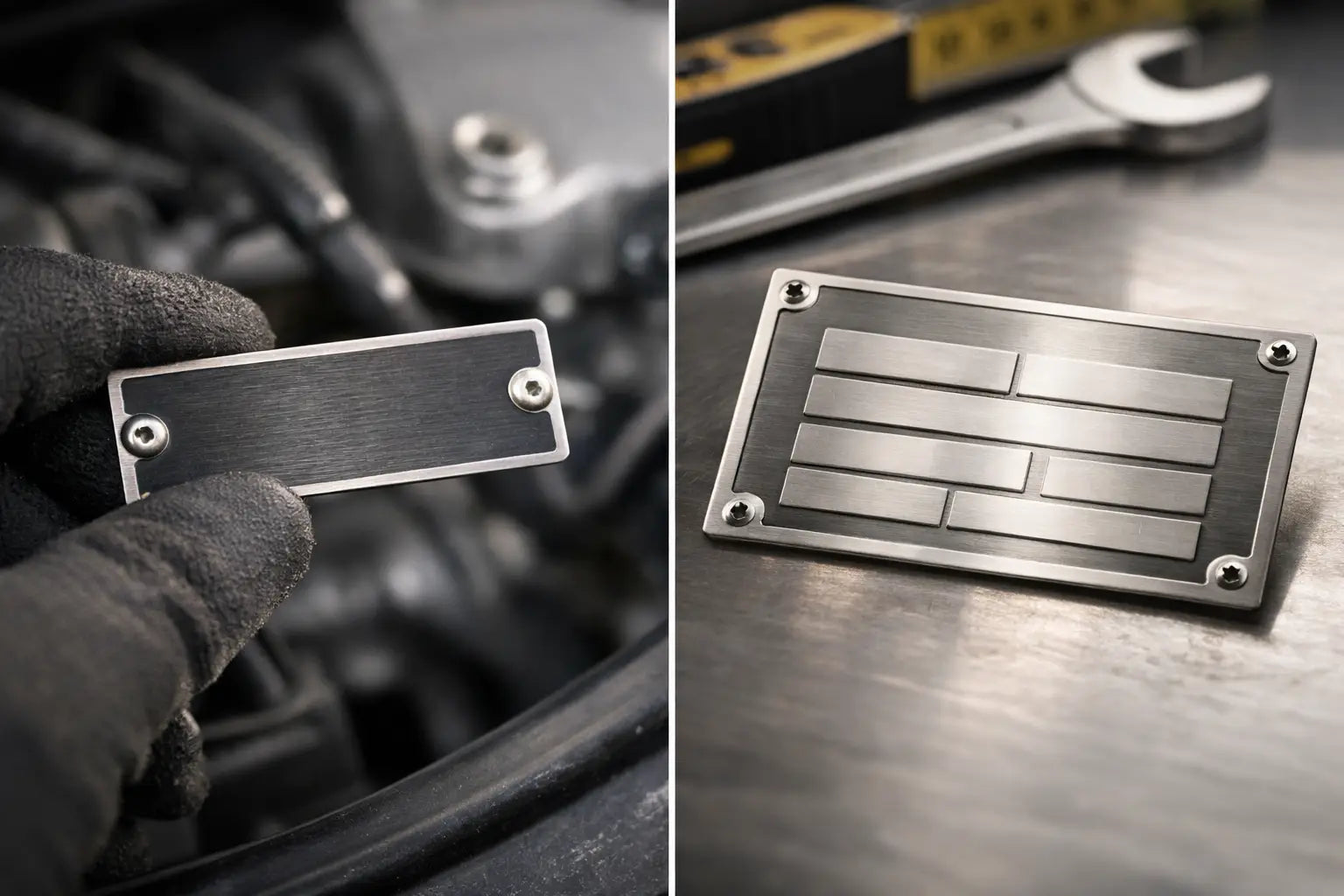
That is why material selection should never be based on appearance alone. Polymeric tags can work well where flexibility and impact resistance are needed, especially in outdoor areas where cracking is a common failure point. Metal options may suit applications that need a more permanent result or greater resistance to heat and abrasion. The right answer depends on the asset, the environment and whether the tag is meant to be temporary, semi-permanent or long term.
Print performance also deserves attention. If the text or numbering is not engineered to last, the base material becomes irrelevant. The key is a marking method that remains legible under UV exposure, dirt build-up and frequent handling. For compliance-driven applications, a tag that loses its identification before the next inspection interval is not doing its job.
This is where many buyers get caught. They compare tags on size and price, but the real difference shows up months later in the field. A flange tag that survives actual site conditions reduces replacements, avoids confusion and supports cleaner records over time.
Where flange tags are commonly used
Flange tags are used across more than one type of operation, and the information they carry can vary a lot by sector. In manufacturing plants, they often help identify pipework and process connections tied to maintenance schedules or shutdown planning. In utilities, they can support line identification and asset management across water, gas or treatment infrastructure. In mining and heavy industry, they may be used in harsh outdoor settings where fast visual confirmation is critical.
Fire protection is another common area. Where flange points form part of a larger inspected system, durable identification can help technicians and compliance teams confirm service locations more efficiently. Construction and plant hire environments can also benefit, especially when temporary or staged systems need clear references during installation, commissioning or removal.
The common thread is simple. If a flange forms part of an asset or system that needs inspection, maintenance, tracking or compliance control, reliable identification helps keep work moving.
Custom flange tag design is usually worth it
Standard tags can be fine for straightforward jobs, but many sites get better value from custom flange tags built around their own numbering systems and operational needs. That might mean specific dimensions, hole placement, colour coding, sequential numbering, barcodes or text fields aligned with the site asset register.
Customisation is not about making the tag look different for the sake of it. It is about reducing ambiguity. If maintenance teams, contractors and auditors all use the same reference structure, the tag becomes part of a larger control system rather than just a physical label hanging off a component.
There is a trade-off, of course. Bespoke tags require planning upfront. Artwork approval, data accuracy and production lead times all need to be managed properly. But for sites ordering at scale or trying to standardise across multiple assets, custom tags usually save time later. They reduce manual workarounds, improve consistency and make future reordering much easier.
For that reason, buyers should think beyond the immediate job. Ask whether the flange tag format will still make sense after the next shutdown, the next contractor changeover or the next compliance audit. If the answer is no, a tailored design is often the better investment.
Common mistakes when buying flange tags
The most common mistake is buying on unit price alone. Cheap tags can look similar in a catalogue, but poor material performance, weak print durability and unreliable attachments show up quickly on active sites. What looks like a saving at purchase often becomes repeated replacement work.
Another issue is under-specifying the environment. Indoor plant rooms, exposed pipe bridges, coastal facilities and washdown zones all place different demands on a tag. If the supplier is not asking where and how the flange tag will be used, there is a good chance the product recommendation is too generic.
Layout errors are also common. Small tags with crowded text, weak contrast or inconsistent numbering are harder to use in the field. People should not need to wipe down a tag, squint at it or cross-check three other documents to confirm what they are looking at.
Then there is lead time. For shutdowns, projects and urgent replacements, timing matters. A strong product offer means little if the tags arrive after the work window has passed. That is why many Australian buyers prefer a supplier that understands industrial timelines, offers clear quoting and can deliver dependable turnaround without cutting corners on quality.
What to ask before you order flange tags
Before placing an order, it pays to be clear on a few practical points. Start with the environment. Is the flange indoors or outdoors? Is it exposed to UV, chemicals, washdowns or abrasion? Then confirm the purpose of the tag. Is it for asset ID, inspection tracking, service identification or system traceability?
Next, think about readability. How much information genuinely needs to appear on the tag, and from what distance will it be read? Finally, consider lifecycle. Does the tag need to last for months, years or the full service life of the asset? Those answers shape the right material, print method and format far better than size alone.
For industrial buyers, this process should be straightforward. A capable supplier will help narrow the specification quickly and recommend a solution that suits the site, not just the shelf.
Prime Tags Australia works with this kind of requirement every day - supplying tough, custom identification products built from Australian materials for demanding local conditions.
A flange tag does not need to be complicated, but it does need to last, stay legible and make sense in the field. When identification holds up, maintenance is cleaner, compliance is easier and your team wastes less time second-guessing what should be obvious.