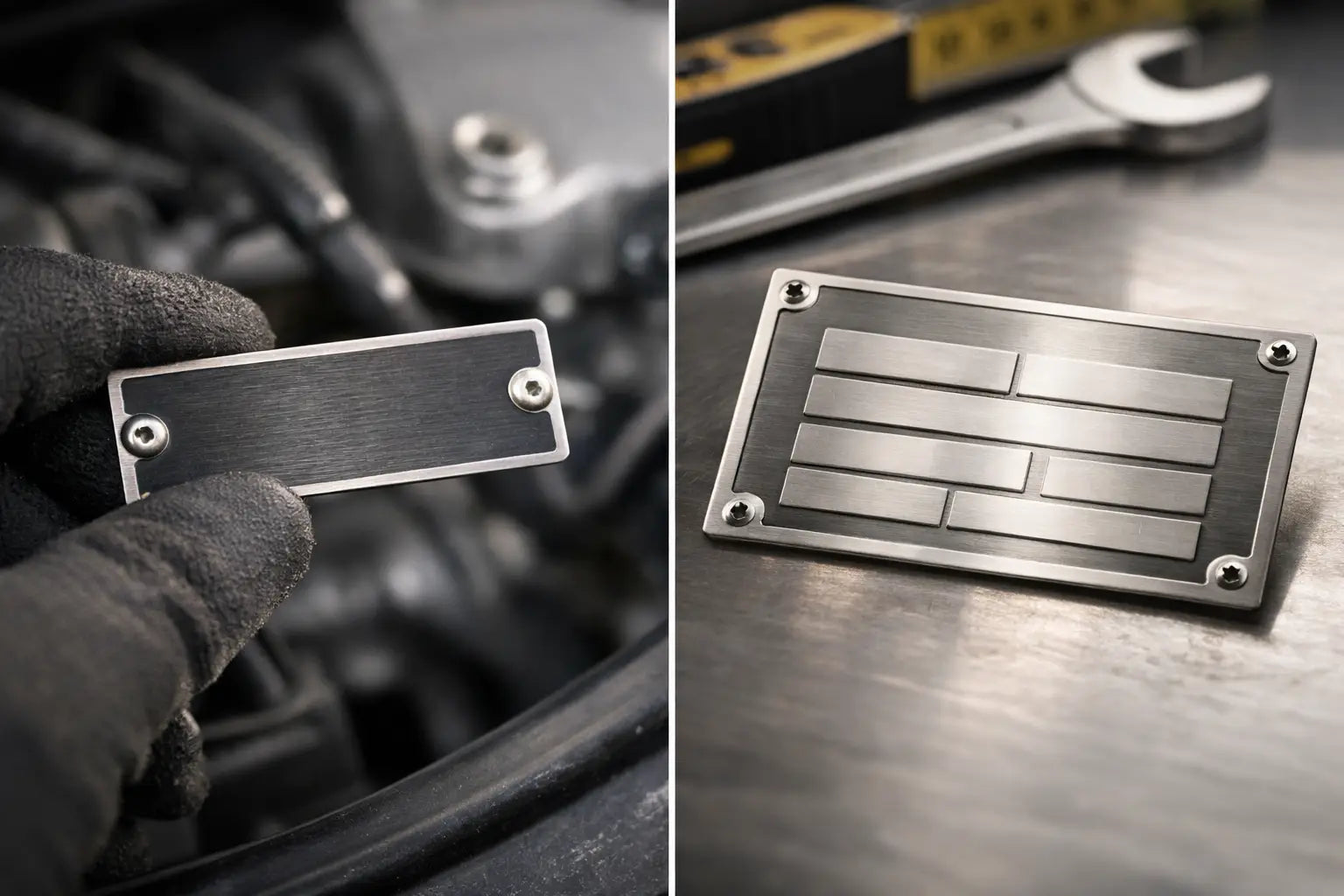

A tag that cracks in the sun or a plate that adds cost where it is not needed creates the same problem - rework, replacement, and risk. When buyers compare metal plates vs poly tags, the real question is not which one is better overall. It is which one will stay readable, attached, and fit for purpose in your specific operating conditions.
For Australian sites, that decision matters. UV, heat, salt, washdowns, grit, chemicals, vibration, and rough handling all shorten the life of the wrong identification product. If the item carries compliance data, inspection status, asset details, or traceability information, failure is more than an inconvenience. It can slow maintenance, complicate audits, and create avoidable replacement costs.
Metal plates vs poly tags in real site conditions
Metal plates and poly tags both earn their place on industrial sites, but they solve different problems. Metal plates are the harder-wearing option when permanence matters most. Poly tags are the practical choice when flexibility, speed, and lower unit cost matter more.
A metal plate is typically selected when the information needs to stay with the asset for the long term and keep performing under constant exposure. Think plant and equipment identification, trailer and vehicle compliance, fixed asset marking, or heavy-duty environments where abrasion and weathering are constant. Metal handles impact, heat, and prolonged outdoor use well, particularly when the marking method is chosen properly for the application.
Poly tags are more versatile where tagging needs change over time or where attachment method and handling flexibility are important. They work well for inspection tagging, temporary status control, service records, lifting gear identification, hose tags, valve tags, and many day-to-day compliance tasks across workshops, construction sites, utilities, and processing plants.
The point is simple. If the tag needs to bend, strap on easily, and remain cost-effective across larger volumes, poly is often the better fit. If it needs to act more like a permanent plate than a tag, metal usually comes out ahead.
Durability: where the gap really shows
Durability is usually the first filter, and for good reason. Australian conditions punish weak materials quickly.
Metal plates have the advantage in long-term structural durability. They resist tearing, stretching, and general physical wear better than polymer tag materials. In applications where the plate may be bolted, riveted, or permanently fixed to machinery, vehicles, cabinets, frames, or plant, metal gives a stable and reliable base. It is also well suited to environments with prolonged UV exposure and high heat, especially where printed flexible materials may degrade faster over time.
That said, not every site needs maximum rigidity. Poly tags perform extremely well when made from quality industrial-grade material. They resist moisture, many chemicals, and day-to-day site abuse while staying lighter and easier to handle. In many compliance applications, they provide more than enough service life. For inspections, asset tracking, lockout-related tagging, and routine identification, a properly specified poly tag can be the more efficient option without compromising function.
The key trade-off is this: metal is generally stronger over the long haul, while poly offers durable performance with more flexibility and lower replacement cost. If your tags are routinely bent around fittings, attached with cable ties, or handled during regular service intervals, that flexibility is not a weakness. It is often exactly what the job needs.
Compliance and legibility over time
For compliance-driven buyers, durability means very little if the information becomes hard to read. Legibility is what carries the value.
Metal plates are a strong choice where identification must remain fixed and readable for years. Serial numbers, VIN details, asset data, equipment ratings, or manufacturer information often sit better on a plate because the format supports permanent marking and fixed mounting. Once installed correctly, the chance of accidental removal or distortion is reduced.
Poly tags suit applications where visible status, inspection dates, technician details, or service intervals need to be easy to read at a glance and easy to update through replacement cycles. For many industries, replacing a worn inspection tag at scheduled intervals is normal practice. In those cases, a lower-cost, purpose-built poly tag is the sensible option. You are not paying for permanent plate-level performance where a controlled replacement cycle already exists.
This is where buyers can over-specify. Not every compliance item needs metal. If the record is routinely renewed, updated, or retired as part of maintenance, poly may give you a cleaner and more practical system.
Attachment method changes the decision
One of the most overlooked factors in the metal plates vs poly tags decision is how the product will be fitted.
Metal plates are best where you can screw, rivet, weld, or otherwise permanently mount them to a fixed surface. That makes them ideal for machinery, transport assets, switchboards, cabinets, and fixed infrastructure. If there is a clean mounting point and the asset is expected to stay in service for years, plate mounting makes sense.
Poly tags are easier to deploy where the item has no flat mounting surface or where the tag needs to hang, loop, or fasten around a component. Cables, chains, valves, hoses, harnesses, slings, and portable equipment often suit poly because the tag can move with the asset instead of fighting against it.
This practical difference matters on busy sites. A product may be durable on paper, but if it is awkward to fit or easy to knock off, it is the wrong product.
Cost is not just the purchase price
Procurement teams are right to look at unit cost, but the cheapest line item is not always the lowest operating cost.
Metal plates usually come in at a higher upfront price than poly tags, particularly when material thickness, custom marking, and fixing methods are part of the job. In return, you often get longer service life and fewer replacements in permanent applications.
Poly tags are usually more economical for larger quantities, rotating compliance programs, and jobs where tags may be replaced as part of normal maintenance. If a tag is expected to be renewed during annual inspections, exposed to routine wear, or used on moveable items, a lower-cost poly option can reduce spend without sacrificing control.
The right question is not, “Which is cheaper?” It is, “What will this cost over the life of the asset or inspection cycle?” For some sites, metal reduces replacement frequency. For others, poly avoids overcapitalising on a tag that is designed to be renewed anyway.
Best-fit applications for each material
Metal plates are typically the better choice for fixed asset identification, compliance plates, trailer and vehicle identification, machinery data plates, and long-term outdoor installations. They are built for permanence and suit applications where the information should stay attached to the asset for years.
Poly tags are often the better fit for inspection systems, service tags, lifting and rigging identification, hose and valve marking, temporary status tagging, and assets that need a flexible attachment method. They are also a strong option where buyers need custom colours, variable data, or fast rollout across multiple categories.
There is also a middle ground. Some operations use both. A fixed metal plate carries permanent asset data, while a poly tag handles inspection status or operational control. That approach is often the most efficient because each product does the job it is best suited to.
How to choose without overcomplicating it
If you are deciding between metal and poly, start with four practical questions. How long does the information need to remain in place? What conditions will it face? How will it be attached? Will the tag be updated or replaced during normal maintenance?
If the answer points to permanent identification on a fixed asset in harsh conditions, metal is usually the safer call. If the tag needs to flex, attach easily, stay visible, and be cost-effective across planned replacement cycles, poly is often the smarter buy.
For buyers managing multiple asset classes, standardising the decision by application can save time and reduce mistakes. Plates for permanent equipment. Poly for inspection and service-based tagging. That kind of system is easier to purchase, easier to apply, and easier to maintain across a site or fleet.
Prime Tags Australia works with this exact challenge every day because not every worksite needs the same answer. The best result comes from matching the material to the job, not forcing one product type across every application.
A good tag or plate should disappear into the operation - always there, always readable, never the reason a job slows down. When you choose on function instead of habit, that is usually what you get.