
Salt does not need to submerge a tag to damage it. At coastal plants, ports, water treatment facilities, marinas and offshore support yards, airborne salt spray settles on equipment every day. Add high UV, windblown grit, washdowns and constant handling, and ordinary labels can fade, lift or become unreadable well before their job is done. Industrial tags for coastal sites need to be selected as a site control, not as a minor consumable.
When an inspection date, isolation point, asset number or lifting limit disappears, the cost is more than replacing a label. Maintenance teams lose time confirming equipment details. Inspectors face incomplete records. Operators may be unable to identify the status or safe use of critical plant. The right material, marking method and fixing arrangement help keep essential information visible where the work happens.
Why coastal conditions cause tag failure
Coastal exposure is rarely just a corrosion issue. Salt-laden moisture can sit in crevices, around fasteners and on uneven surfaces. It can attack unsuitable metals, undermine adhesives and leave a film that makes poor-quality print harder to read. Equipment positioned near the shoreline, on jetties or in open yards usually sees the heaviest exposure, but enclosed workshops are not automatically protected. Open roller doors, ventilation systems and frequent movement of plant can carry salt and dust well inside a facility.
UV is the second major pressure point. A tag can remain physically attached while its printed information bleaches out. Dark inks, coloured warning fields and small barcode elements are often the first details to lose clarity. Where tags are used for safety, inspection or compliance, partial legibility is not good enough.
Abrasion also matters. Forklift contact, hose movement, gloves, tools, cleaning brushes and windblown sand can wear down a surface quickly. A tag chosen only for corrosion resistance may still fail if its printing is exposed or its corners catch during routine work.
Choosing industrial tags for coastal sites
The best tag depends on the asset, the information required and the way the tag will be fixed. There is no single material that suits every coastal application. A fixed pump in a salt-exposed plant room has different requirements from a flexible hose on a wharf, a harness used by maintenance crews or a trailer that operates between a port and a construction site.
Start with the required service life. A short-term project identification tag can justify a different solution from a permanent asset plate or a tag that must remain readable through recurring inspections. Then assess the exposure honestly: direct salt spray, shaded condensation, UV, chemical washdown, mechanical contact and heat can all change the material choice.
Metal tags and plates for permanent identification
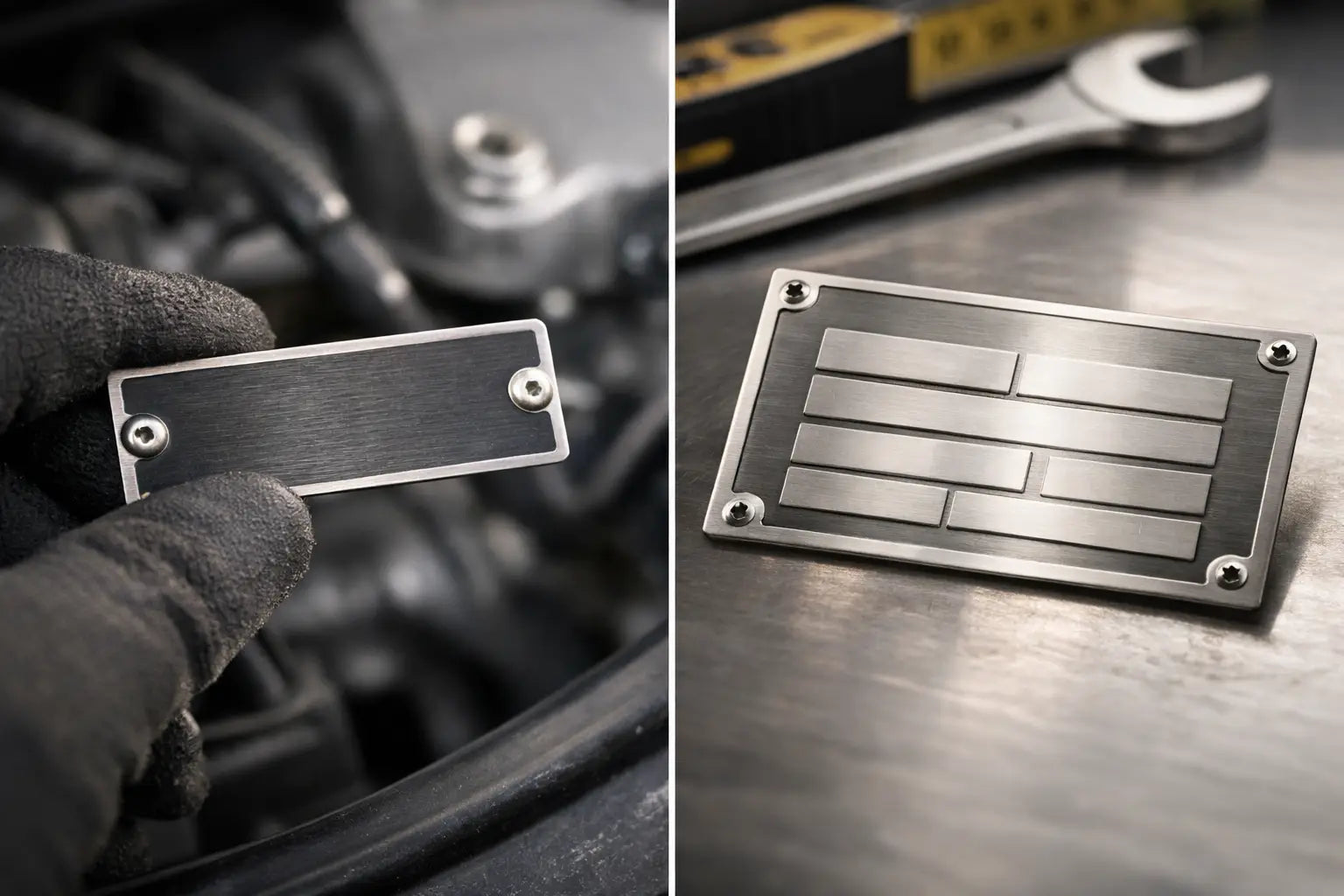
Metal asset plates, compliance plates and engraved-style identification tags are often the practical choice for fixed equipment that needs long-term traceability. They suit pumps, switchboards, valves, motors, plant frames, trailers and machinery where asset numbers, serial details, ratings or owner information must remain in place for years.
For coastal locations, material selection and marking depth matter. A tag should be specified for the surrounding environment, including the risk of corrosion at drilled holes and under fasteners. Clear, high-contrast information and a layout with enough spacing around critical numbers make the tag easier to read after exposure and cleaning.
A metal plate is not always the answer. On curved surfaces, mobile equipment or items where drilling is not suitable, a flexible tag or purpose-designed adhesive label may provide a better result. The key is to match the product to the application rather than defaulting to the most familiar option.
Self-locking and grip tags for field assets
Self-locking tags and grip tags are useful where the identifier needs to be fitted around a cable, valve wheel, hose, handrail, chain or component without tools. They are commonly used for inspection status, isolation information, equipment ownership and temporary or recurring maintenance controls.
In coastal work areas, choose a tag body that will not become brittle under UV or lose its fastening strength after repeated exposure. The locking mechanism needs to stay secure without damaging the item it identifies. Tag size matters too. A small tag may be neat, but it can be difficult to read from a safe working position or after salt residue builds up.
For tags exposed to regular movement, position them away from pinch points, sharp edges and areas of frequent rubbing. A well-specified tag can still be worn out early if it is fitted where a hose clamp, chain or access cover repeatedly strikes it.
Labels for hoses, extinguishers and inspection points
Adhesive labels are effective when the surface is clean, stable and suitable for bonding. They can provide clear identification for hoses, fire equipment, cabinets, panels and smaller assets, particularly where a low-profile finish is needed. However, adhesive performance depends heavily on preparation.
Salt film, oil, oxidisation, dust and moisture can prevent proper adhesion. Before applying a label, clean and dry the surface using the site-approved process, then allow appropriate curing time before putting the item back into harsh service. Applying a label to a damp, salt-contaminated surface is a common cause of early lifting.
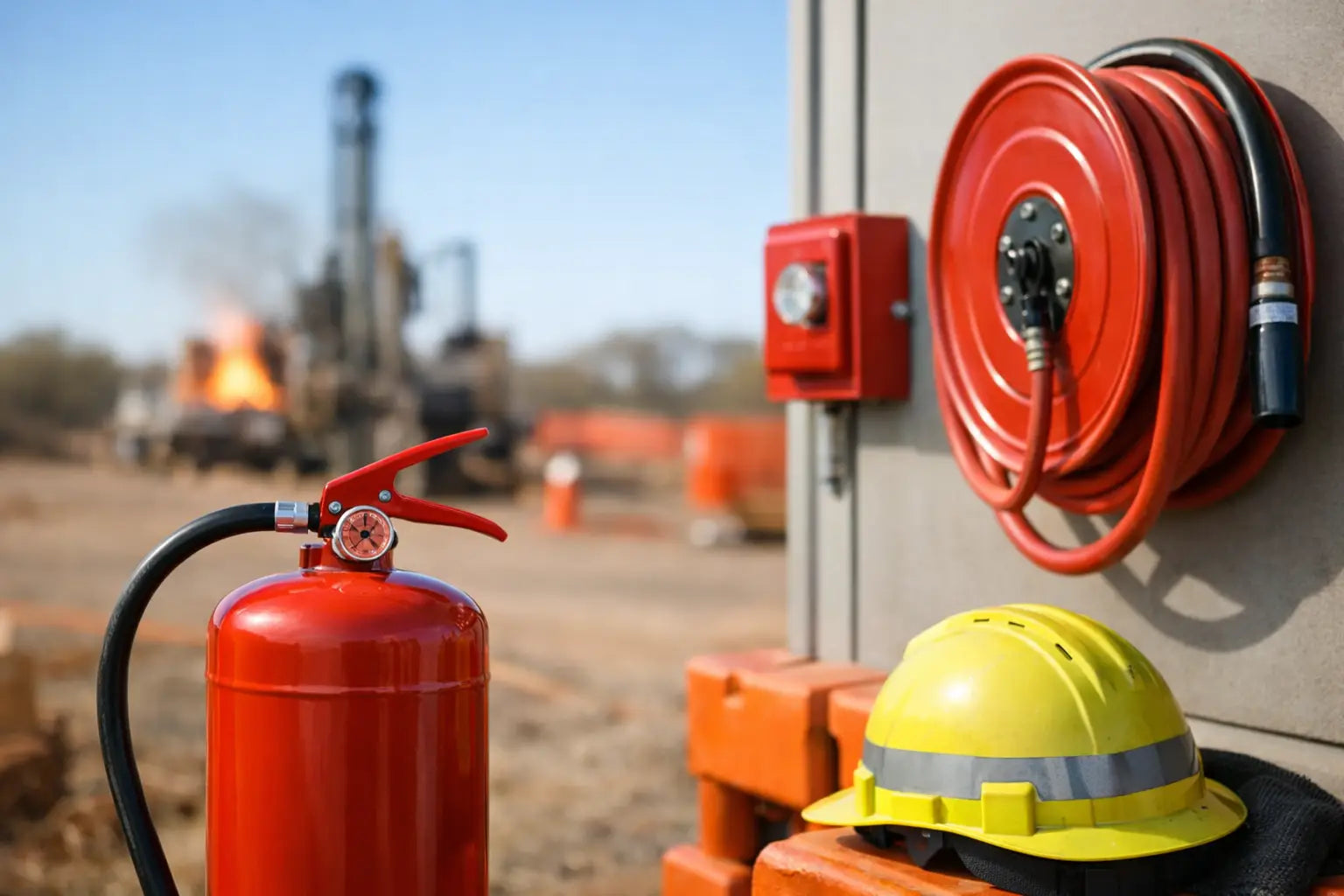
For fire protection equipment and inspection points, legibility should support the site’s inspection program. Dates, service details, asset numbers and responsible-party information need enough room to be read quickly. Do not cram critical details into a small format simply to save space.
Get the marking method right
The tag material is only half the decision. Information needs to remain readable throughout its intended life. Surface printing may be suitable for protected or short-term uses, while permanent identification often calls for a more durable marking approach.
Consider the type of data being carried. Large asset numbers and simple status wording tolerate some surface wear better than QR codes, barcodes, small serial numbers or detailed maintenance fields. If scanning is required, test the code under actual site conditions, including glare, salt residue and the mobile devices used by your team.
A practical layout usually puts the most important information first: asset ID, safe working load, inspection status or equipment type. Secondary details can sit below. Use clear contrast, readable text size and plain terminology that matches the site’s existing register and permit systems. A tag that says one thing while the maintenance system uses another naming convention creates avoidable confusion.
Fixing methods can create or prevent problems
At coastal sites, fasteners are part of the identification solution. If a corrosion-prone fastener fails, a premium tag is lost with it. If drilling creates an entry point for corrosion in an asset enclosure, the fitting method may cause more trouble than the tag solves.
For permanent metal plates, assess whether rivets, screws, weld-on fittings or another approved method is appropriate for the substrate. For flexible tags, confirm the locking tail, cable tie or attachment point will withstand vibration and movement. Adhesive labels need a smooth, compatible surface and enough bond area for the size of the label.
Avoid placing tags where they trap water, cover mandatory manufacturer information, obstruct operating controls or interfere with inspection access. A tag should remain accessible for reading and replacement without requiring unnecessary dismantling.
Build coastal tag checks into maintenance routines
Even durable tags need inspection. Include tag condition in regular maintenance and compliance checks, especially on equipment close to saltwater or exposed to weather. Look for fading, cracked material, corroded fasteners, lifting edges, unreadable barcodes and mismatches between the tag and the asset register.
Replacement should be controlled, not improvised. Keep the approved artwork, tag specification and asset data available so a damaged tag can be reproduced accurately. This is particularly important for lifting and rigging tags, harness tags, hose labels, fire equipment labels and compliance plates, where incorrect details can create a safety or audit issue.
It also pays to standardise formats across the site. Consistent tag colours, sizes, terminology and information hierarchy help crews identify equipment faster. Standardisation does not mean every tag is identical. It means each category has a clear purpose and a specification suited to its environment.
Specify for the real site, not the catalogue photo
A coastal tag solution should account for where the asset actually operates, how often it is handled and what information must stay visible. Provide the supplier with photos of the fitting location, dimensions, surface type, required wording and expected exposure. That makes it easier to select the right material, attachment method and layout before production begins.
Prime Tags can produce custom industrial identification solutions using Australian materials suited to demanding local conditions, from asset plates and flange tags to self-locking tags, hose labels and compliance marking. Fast, accurate quoting is easier when the application details are clear from the outset.
The practical test is simple: after months of salt, sun, cleaning and worksite use, can the next person read the information and act on it without guessing? If the answer is yes, the tag is doing its job.