
A label that fades, peels or stops scanning is not a minor consumable issue. It can slow maintenance, weaken traceability and leave critical equipment without a clear identification record. Knowing how to choose asset label materials means looking beyond the artwork and price per label. The right choice starts with where the asset lives, what it faces and how long the information must remain readable.
For Australian industrial sites, a label may need to withstand intense UV, heat, rain, washdowns, dust, fuel, grease and daily handling. A material that performs well in an indoor storeroom may fail quickly on plant, tools, vehicles or equipment exposed to the elements. Select for the real operating environment, not the best-case one.
Start with the asset's working environment
Before choosing a material, define what the label will encounter over its service life. Exposure is usually the biggest factor in whether a label remains legible and attached.
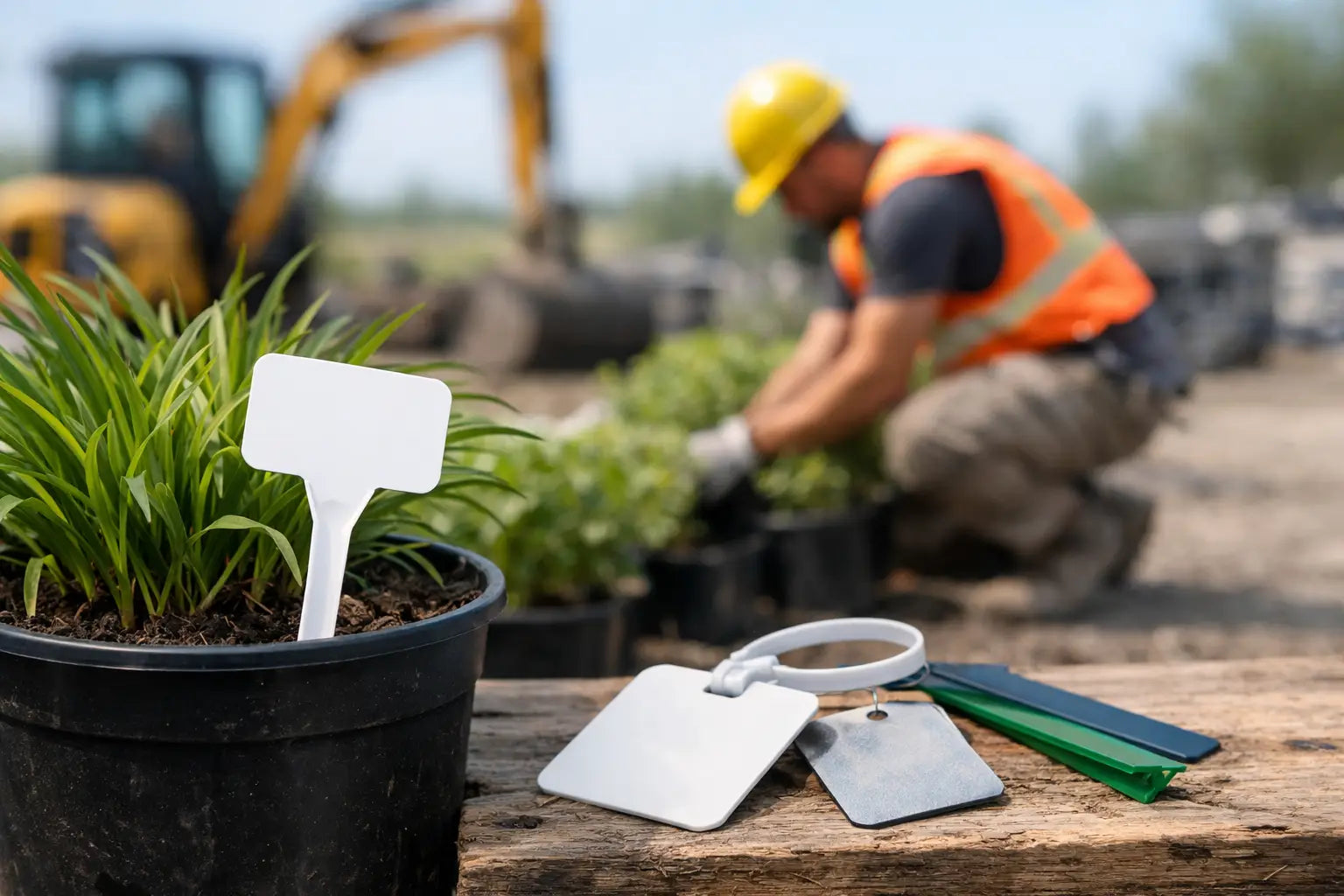
An asset kept in a clean indoor workshop may only need a durable synthetic label with a strong adhesive. The same label may not be suitable for a generator, pump, trailer, mobile plant item or outdoor electrical enclosure facing direct sun and weather. For external assets, UV resistance, moisture resistance and adhesive performance become central requirements rather than optional extras.
Also consider the less obvious conditions. Mining and construction equipment can be exposed to abrasive grit, vibration and impact. Manufacturing assets may see oils, solvents, cutting fluids or high temperatures. Food, fire protection and utilities environments can involve regular cleaning or washdown. Each factor affects both the face material and the adhesive holding it in place.
A practical question is this: if the label fails, what happens next? If replacement is simple and the label is used only for low-risk stock control, an economical material may be appropriate. If the label carries a serial number, barcode, inspection status, safety instruction or compliance information, failure can create unnecessary operational and audit risk. That application usually justifies a more durable construction.
How to choose asset label materials by surface
The material must suit the surface as well as the environment. Adhesion depends on the condition, shape and composition of the asset, so there is no single label material that suits every job.
Smooth, clean metal and powder-coated surfaces are generally the easiest applications for adhesive labels. A quality polyester label can provide a professional, durable result where the surface is prepared properly. Remove oil, dust, moisture and residue before application. Even a high-performance adhesive cannot compensate for a contaminated surface.
Curved surfaces need more flexibility. Vinyl labels are often a practical choice for drums, pipes, cylinders, curved guards and other uneven equipment. Their flexibility helps the label conform rather than lifting at the edges. On heavily textured, rough or porous surfaces, however, adhesive labels can be less predictable. Concrete, rough timber, heavily corroded steel and some low-energy plastics may require a test sample, a specialised adhesive or a mechanically fixed plate.
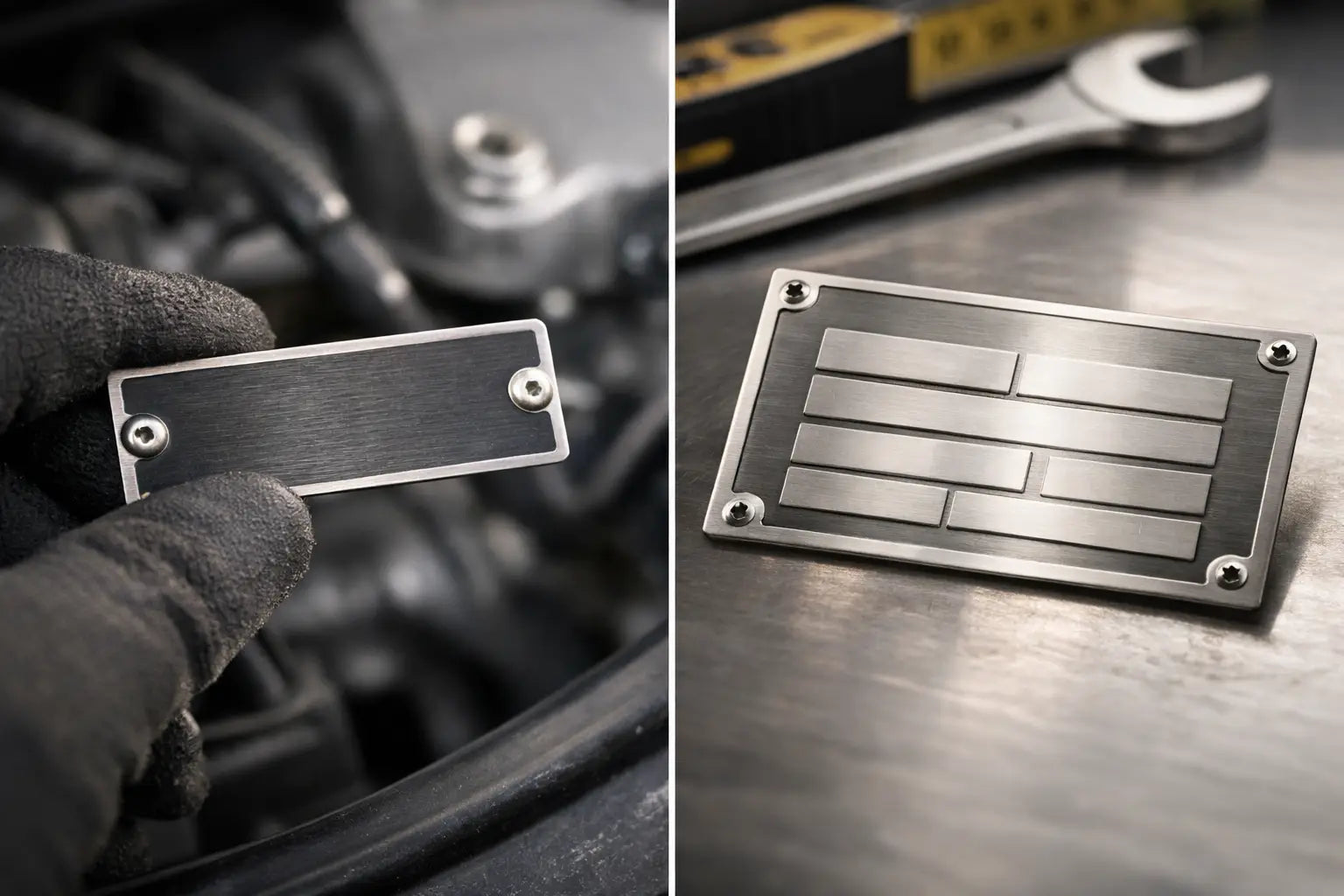
For high-value assets or equipment with a long service life, metal asset plates are often the better answer. Aluminium and stainless steel plates can be fixed with rivets, screws or other suitable methods, avoiding reliance on adhesive where heat, weather, rough handling or difficult surfaces are involved. The trade-off is a more involved installation process, but the long-term durability can reduce replacements and protect critical identification.
Match the material to the information it carries
Not all asset information has the same purpose. A simple ownership label has different requirements from a barcode that must scan repeatedly, or a compliance plate that needs to remain clear for years.
Barcode and QR code labels need sharp print definition, adequate contrast and enough protection to preserve scan quality. Scratches, fading and chemical damage can make a code unreliable even when the human-readable text still looks acceptable. Consider the scanner type, scan distance and expected use. A tiny barcode on a dusty outdoor asset will create more trouble than it saves.
If the label includes serial numbers, asset IDs, inspection data or variable information, make sure the print method suits the expected lifespan. Permanent information should not rely on a marking method that rubs away under normal use. Where permanent identification is essential, engraved, etched or otherwise permanently marked metal plates may be the safer option.
Legibility also matters. Select a size that can be read and scanned in the installed location, not just at a desk. Allow for dirt, gloves, poor light and access restrictions. High-contrast text and simple layouts generally outperform crowded designs in industrial settings.
Understand the main material options
Material selection is a balance between durability, flexibility, appearance, application method and budget. The following options cover many common industrial asset identification requirements.
Polyester labels
Polyester is a strong all-round choice for many equipment, electrical, workshop and indoor-to-moderate outdoor applications. It offers good resistance to handling and can support crisp printing for serial numbers and barcodes. It is best suited to clean, relatively smooth surfaces where a pressure-sensitive adhesive can make reliable contact.
Polyester is not automatically the answer for every outdoor or high-abuse application. Confirm the expected UV, chemical and temperature exposure before specifying it for exposed plant or equipment.
Vinyl labels
Vinyl is valued for flexibility. It can conform well to curved or irregular surfaces and is commonly considered for pipes, drums, cylinders and shaped equipment. The final performance depends on the vinyl grade, laminate, adhesive and environment, so flexibility should not be confused with unlimited durability.
Vinyl can be a sensible option where conformity is the main challenge. For harsh abrasion or long-term permanent marking, a metal plate may provide better value over the life of the asset.
Polypropylene labels
Polypropylene can suit lower-demand applications where moisture resistance and economical identification are needed. It is often used for indoor labelling, short-to-medium term identification and controlled environments. It may be less suitable where labels face prolonged sun, harsh chemicals, high heat or constant abrasion.
The benefit is cost efficiency when the application genuinely does not require a premium material. Avoid false savings by using it on equipment that will spend its working life outdoors.
Aluminium and stainless steel plates
Metal plates are built for demanding jobs. Aluminium provides a lightweight, durable option for equipment plates, machinery identification and external applications. Stainless steel is particularly suited to severe environments where corrosion resistance, strength and long-term permanence matter.
Metal is not always necessary for a desktop printer, office asset or short-life item. But for trailers, mobile plant, industrial machinery, outdoor equipment and compliance-critical identification, it can be the most dependable choice. Permanent marking and mechanical fixing help keep key information in place when labels would otherwise be exposed to lifting, scraping, heat or washdown.
Do not treat the adhesive as an afterthought
A durable face material is only useful if it stays attached. Adhesive selection should account for surface energy, temperature at application, operating temperature, moisture and chemical contact.
Apply adhesive labels to a clean, dry surface wherever possible. Cold, wet or oily conditions can reduce initial bond strength. Freshly painted or powder-coated assets may also need sufficient curing time before labels are applied. If labels are being fitted across multiple sites or by different crews, provide a clear application instruction so preparation is consistent.
Where the application cannot be controlled, choose a solution with more tolerance built in. That may mean a stronger adhesive, a thicker material, an overlaminate for protection or a fixed metal plate. Testing a sample on the actual asset is one of the most practical ways to avoid a costly batch mistake.
Consider lifespan, replacement access and total cost
Price per label matters, but it is rarely the only cost. A cheap label that needs replacing every few months creates labour, downtime and inconsistent asset records. It can also leave equipment temporarily unidentified if the replacement is delayed.
Set a realistic service-life target. A label on a temporary hire item may only need to last for the project. A label on a fixed switchboard, pump or fleet vehicle may need to remain clear for many years. The longer the expected life and the harder the asset is to access, the stronger the case for premium synthetic materials or metal plates.
This is where customisation matters. The right size, material, adhesive, print layout and fixing method should be specified together. A well-designed label system makes inspections and maintenance easier because staff can locate, read and scan the information without guesswork.
Build a practical specification before ordering
A clear specification saves time and prevents unsuitable substitutions. Record the asset type, surface material, surface condition, indoor or outdoor location, expected contaminants, operating temperature, required lifespan and the information to be displayed. Include whether the label must scan, meet an internal compliance process or be permanently fixed.
For larger rollouts, trial the chosen material on representative equipment before committing to the full run. Check adhesion after normal cleaning, exposure and handling. Confirm that barcodes scan with the devices your team actually uses. A sample that looks right on day one is not enough.
Prime Tags can help match custom asset labels and plates to the practical conditions they will face, from flexible labels for curved assets through to durable metal identification for demanding equipment. The strongest result comes from providing the real application details upfront.
Choose a material that suits the asset's hardest working day, not its first day in the workshop. When the label remains attached, readable and scannable, your asset system keeps doing its job without creating another maintenance task.