

In the heart of the Pilbara, where the mercury hits 45°C and the grit of the red earth gets into everything, "compliance" isn't just a word on a spreadsheet. It’s the difference between a safe shift and a catastrophic failure. When you’re managing a mine site, a refinery, or a heavy manufacturing plant, the labels on your equipment are your frontline defense.
But what exactly are the safety label requirements in Australia? Are you ticking the right boxes, or is your site one audit away from a shutdown?
At Prime Tags, we live and breathe industrial compliance. We know that in Australia’s toughest conditions, a label that fades or peels is worse than no label at all: it’s a liability. This guide breaks down the legal essentials for safety labeling on products and equipment, focusing on the standards that keep your site Designed Right, Built Strong, and Delivered on Time.
The Legal Foundation: Why Compliance Matters
In Australia, the Work Health and Safety (WHS) Act and Regulations form the legal backbone of workplace safety. For site managers and safety officers, the law is clear: you have a primary duty of care to ensure that risks are identified and managed.
Safety labels and signs are mandatory tools for risk communication. If a product or piece of machinery poses a hazard, that hazard must be clearly labeled using standardized formats. Failure to do so doesn't just invite injury; it invites heavy fines, legal action, and reputational damage.
The core requirement? Your safety labels must be legible, durable, and visible.
AS 1319-1994: The Gold Standard for Safety Signage
When it comes to safety signs and labels in the occupational environment, AS 1319-1994 is the rulebook. This standard outlines exactly how signs should look, the colors they must use, and where they should be placed.
To be legally compliant on an Australian industrial site, your labels must fall into one of the following categories defined by AS 1319:
1. Danger Signs
These are for life-threatening hazards. They feature the word "DANGER" in white text inside a red oval, which is set against a black rectangle. These are used when a hazard is likely to be life-threatening if the message is ignored.
2. Warning Signs
Warning signs alert personnel to hazards that are not life-threatening but could still cause injury. These are characterized by a yellow background with black text and a black-bordered triangle containing a hazard symbol.
3. Caution Signs
Lower-level risks are managed with caution signs. These typically use yellow and black to draw attention to potential tripping hazards or areas where personal protective equipment (PPE) may be required.
4. Mandatory Signs
These tell you what you must do. Think "Hard Hats Must Be Worn" or "Ear Protection Required." These feature a blue circle with a white symbol.
5. Prohibition Signs
These tell you what you cannot do. They feature a red circle with a diagonal slash over a black symbol on a white background.
6. Emergency Information and Fire Signs
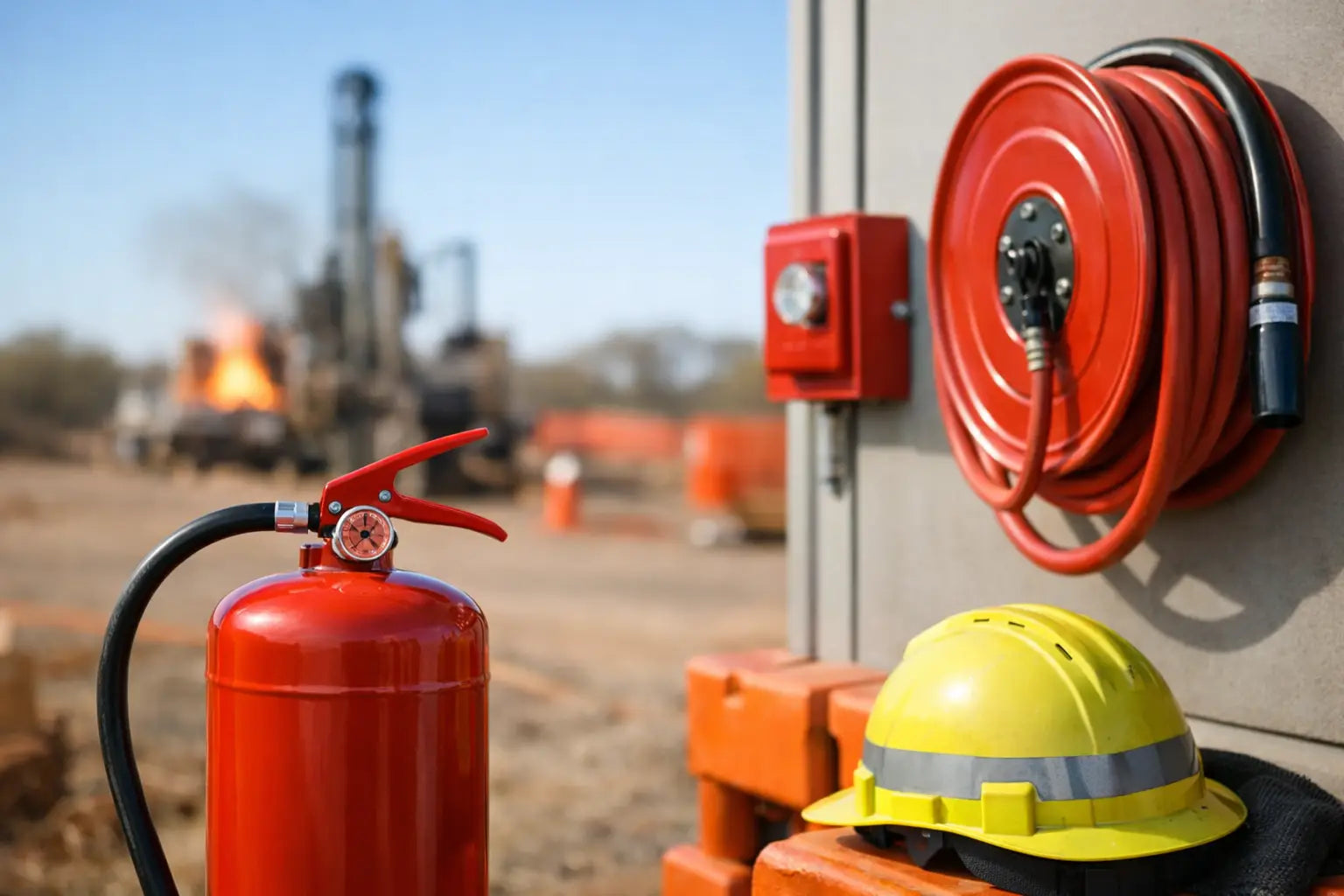
These provide directions to emergency facilities (green background) or fire-fighting equipment (red background).

Product-Specific Labeling: Compliance Plates and Asset Tags
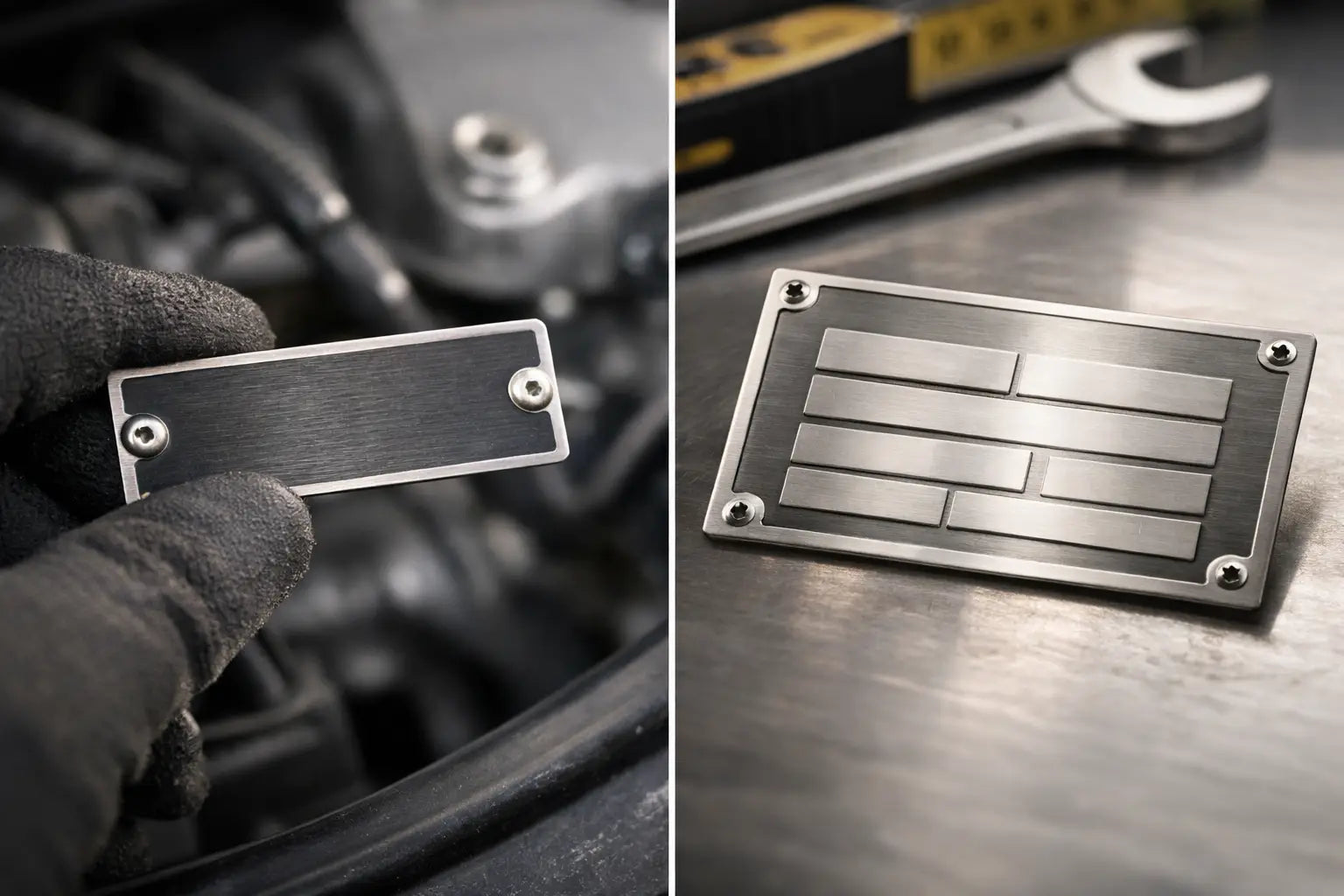
While AS 1319 covers general signage, specific products and industrial machinery require their own set of data to remain legally compliant. This is where Compliance Plates and Asset Plates become critical.
Under various Australian Standards (like AS/NZS 3760 for electrical equipment or AS 1905.1 for fire doors), products must display:
- Manufacturer Information: Who made the machine?
- Model and Serial Numbers: For traceability and maintenance.
- Load Ratings and Limits: Critical for lifting and rigging equipment.
- Date of Manufacture: To track the service life of the asset.
- Certification Marks: Proof that the product meets specific Australian Standards.
If you are operating heavy machinery without a visible, legible compliance plate, you are operating outside the law. Our custom safety tags are designed to house this data permanently, ensuring your gear stays on the right side of the inspector.
The Durability Requirement: If It Fades, It Fails
Here is the catch that many procurement officers miss: AS 1319 requires that signs be "suitable for the intended application."
In the context of an Australian mine site, "suitable" doesn't mean a printed sticker from an office supply store. It means a label that can withstand:
- Extreme UV Exposure: The Australian sun destroys standard inks in months.
- Chemical Splash: Resistance to oils, greases, and cleaning agents.
- Abrasion and Grit: Labels that won't scratch off when hit with dust or debris.
- Temperature Fluctuations: From freezing desert nights to scorching midday heat.
A label that is legally required but becomes unreadable due to fading is a non-compliant label. This is why we specialize in heavy-duty, UV-stable, and weather-resistant materials. We build tags that outlast, perform, and protect.

Lockout/Tagout (LOTO): A Legal Necessity
One of the most high-stakes areas of safety labeling is isolation. During maintenance, machinery must be locked out and tagged. This isn't just a best practice: it’s a mandatory safety procedure under WHS regulations.
Legally required information on a LOTO tag includes:
- The Danger Warning: Clearly stating the equipment is isolated.
- The Authorized Person: Who placed the tag?
- The Date and Time: When was the isolation performed?
- The Purpose: Why is the equipment down?
Our lockout/tagout tags are built for this exact purpose. They are tough enough to resist tearing and bold enough to be seen from a distance, ensuring that "Warning" means exactly what it says.
Why "Made in Australia" Matters for Your Compliance
When you buy cheap imports, you’re gambling with your site’s safety. Many overseas labels aren't tested for the high UV index found in Australia. They crack, they peel, and they fail.
Prime Tags products are made with 100% Australian materials. We understand the "grit" of the local industry. When you partner with us, you get:
- Lowest Price Guarantee: We will beat any price by 15%. High safety shouldn't mean high costs.
- Fast Turnaround: We offer daily shipping Australia-wide because we know shutdowns and inspections don't wait.
- Proven Durability: Our tags are built for Australia’s toughest conditions. Period.

Checklist: Is Your Site Legally Compliant?
Before your next safety audit, walk your site and ask these three questions:
- Are all hazards identified? Every chemical tank, high-voltage switch, and moving part must have an AS 1319-compliant sign.
- Are the labels legible? If you have to squint to read a serial number or a danger warning, it’s time to replace it.
- Are the plates permanent? Use metal asset plates or heavy-duty poly tags for equipment that lives outdoors.
For more details on specific standards, check out our guide on AS 1319 and Fire Door Compliance.
The Bottom Line
Safety labeling is about more than just sticking a label on a box. It’s about communication, legal protection, and most importantly, keeping your people safe.
Don't settle for "good enough." Choose labeling solutions that are tough, dependable, and 100% compliant. Whether you need custom flange tags for a shutdown or heavy-duty asset labels for your fleet, we have the grit to get it done.
Keep your site compliant. Protect your assets. Trust Prime Tags.
Contact us today for a quote or to discuss your specific project needs. Remember: if you find a lower price, we’ll beat it by 15%. That’s our guarantee to the Australian industry.