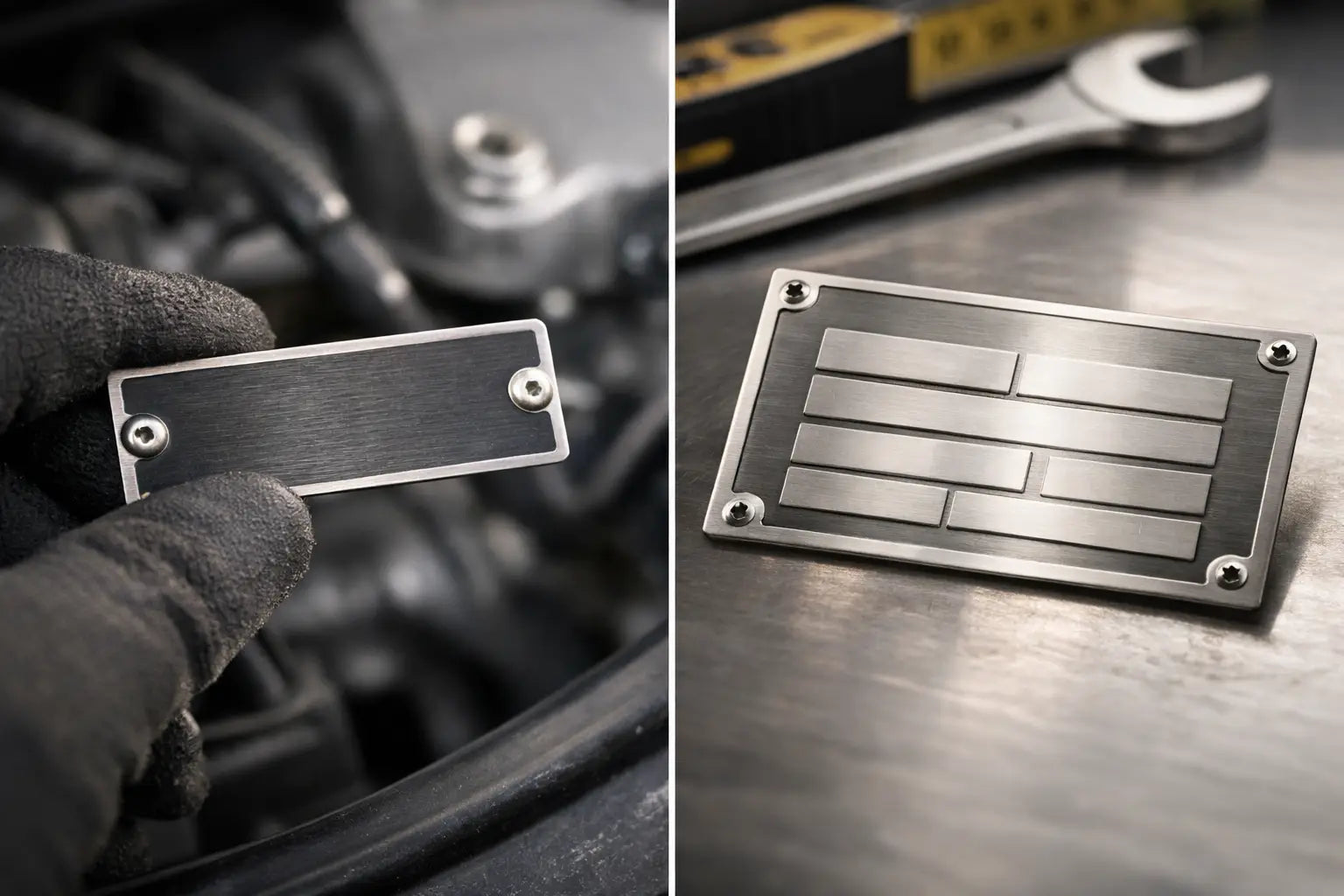

A trailer plate that fades, cracks or goes unreadable is more than a nuisance in the yard. It can slow registrations, create inspection headaches and leave owners chasing avoidable replacements. If you are comparing the best compliance plates for trailers, the right choice usually comes down to one thing - how well the plate holds up while staying clear, legible and fit for purpose in Australian conditions.
What makes a trailer compliance plate worth buying
Not all plates fail in the same way. Some lose print under UV exposure. Others corrode around the mounting points, distort under vibration or become hard to read once mud, grit and road grime build up. For workshops, manufacturers and fleet operators, that means the best option is rarely the cheapest plate on paper. It is the plate that keeps doing its job after months or years on the road.
A good trailer compliance plate needs to balance durability, legibility and correct customisation. If the material is strong but the stamped or printed data is unclear, you still have a problem. If the information is accurate but the plate stock is too thin for the application, it may not survive transport, loading or washdowns. That is why serious buyers tend to assess the full setup, not just the face value of the plate.
Best compliance plates for trailers - the features that matter
Material choice is the first decision
For most Australian trailer applications, metal remains the practical standard. Aluminium is commonly preferred because it gives a strong balance of corrosion resistance, weight and long-term readability. In coastal environments or operations exposed to regular moisture, that resistance matters. Steel can suit some applications, but it depends heavily on finish and exposure. If protection breaks down, corrosion becomes the weak point fast.
The best compliance plates for trailers are usually made from materials that can handle UV, wind, grit and physical wear without becoming unreadable. On a box trailer used occasionally around town, the demands are lower. On plant trailers, heavy transport units or trailers working near mines, quarries and construction sites, plate performance gets tested properly. In those cases, material quality is not a nice extra. It is the job.
Legibility has to last
A compliance plate only works if the information can still be read when someone needs it. That sounds obvious, but plenty of lower-grade products look fine when new and deteriorate quickly once exposed to weather and abrasion. Printed detail should stay sharp. Engraved, etched or stamped information needs to remain clear even after extended use.
This is where buyers should be careful about low-cost options that rely on surface-level print methods without enough protection. If the plate data starts lifting, fading or blurring, replacement costs and admin follow. For fleet and manufacturing businesses, those repeat issues add up quickly.
Attachment method matters more than many buyers expect
A strong plate can still fail if the mounting method is poor. Riveted plates are common because they offer a secure mechanical fix. Adhesive options may suit some lower-impact or controlled applications, but on trailers exposed to vibration, pressure washing and outdoor storage, attachment needs closer scrutiny.
The plate should sit securely on a suitable surface without flexing or working loose over time. If the trailer design creates regular impact, mud build-up or rubbing against loads and equipment, placement becomes just as important as the plate itself.
Choosing the right plate for your trailer type
There is no single best plate for every trailer. A light-duty domestic trailer, a tradesman’s plant trailer and a fleet of commercial transport trailers all face different conditions. The right choice depends on use, environment and the level of wear expected.
A small general-purpose trailer may do well with a standard aluminium plate carrying clear, permanent information and a simple secure fixing method. A commercial trailer in constant use may need thicker stock, stronger marking methods and tighter attention to mounting location. If the trailer is routinely exposed to chemicals, salt, abrasive dust or extreme sun, that should shape the material and finish from the start.
This is where customisation becomes valuable. Buyers often need specific sizing, data layout, hole placement or marking format to suit production processes or replacement requirements. Off-the-shelf works in some cases. In others, it creates compromises that are not worth the trouble.
Compliance data is not the place for shortcuts
The plate itself is only half the equation. The other half is getting the information right and presenting it clearly. Workshop teams and procurement staff know how quickly mistakes in VIN details, manufacturer information or load-related data can create delays. Rework is costly, especially once trailers are already in production or ready for dispatch.
The best compliance plates for trailers are supplied with clear attention to exact data requirements, readable layout and consistency across runs. That matters whether you need a one-off replacement plate or a larger batch for ongoing manufacturing. Clean formatting helps inspections and reduces confusion for customers, service teams and registration processes.
If you are ordering in volume, consistency matters as much as durability. Plates should match approved data, remain readable across the batch and arrive ready to fit. When a supplier gets that right, admin pressure drops significantly.
Why Australian conditions change the buying decision
Trailer hardware that performs well in a mild indoor setting can fail early outside. Australian conditions are hard on identification products. UV exposure is relentless. Regional roads throw dust and grit at everything underneath and around the chassis. Coastal air brings corrosion risk. Industrial sites add abrasion, impact and chemical exposure.
That is why imported generic plates do not always stack up once installed locally. A plate that looks acceptable in a catalogue may not be designed for sustained outdoor use here. For compliance-critical products, buyers are better served by materials and production methods selected for local conditions rather than lowest-cost supply.
Prime Tags Australia focuses on products made from Australian materials for exactly this reason. For trailer builders, fleet operators and workshops, that local-spec approach tends to deliver better life, clearer identification and fewer replacement headaches.
What to ask before ordering trailer plates
A supplier does not need to overcomplicate the process, but they should be able to answer practical questions clearly. Start with the base material, the marking method and how the plate is expected to perform outdoors over time. Ask whether the product suits high-UV and high-abrasion environments. Confirm how data is supplied, checked and produced.
It is also worth asking about thickness, fixing options and lead times. Procurement teams often get caught between urgency and compliance, especially when trailers are due for delivery. Fast turnaround helps, but not if it comes at the expense of accuracy or durability. The better suppliers understand that balance and build their service around it.
For repeat orders, check whether the supplier can maintain version control and consistent output. If your trailer range includes multiple models or plate formats, that level of control saves time and prevents avoidable errors.
When cheaper plates cost more
There is always pressure to reduce unit cost. That is normal in procurement. But trailer plates are a classic example of a product where the cheapest option can create a bigger bill later. Early fading, poor adhesion, corrosion and unreadable data all trigger replacement, labour and administrative costs. If a plate issue affects handover or compliance checks, the operational impact grows again.
A better plate usually costs more for a reason. Thicker material, better marking quality and stronger manufacturing standards improve service life. Over a full fleet or production run, that often works out cheaper than constant replacements and patch fixes.
This is not about buying the most expensive product available. It is about buying the plate that suits the real environment. For low-use trailers stored undercover, a simpler option may be perfectly adequate. For hard-working commercial trailers, under-specifying the plate is false economy.
The practical standard for the best compliance plates for trailers
If you strip the decision back, the best compliance plates for trailers are the ones that stay legible, stay attached and stay fit for purpose under actual working conditions. That means durable metal construction, clear permanent data, secure mounting and the ability to match the exact requirements of the trailer and operator.
For Australian buyers, local conditions should never be treated as an afterthought. A plate needs to cope with sunlight, weather, transport movement and site wear without giving up its primary job. If it cannot do that, it is not really compliant in practice, even if it looked fine on day one.
The smartest buy is usually the one that causes the least trouble after installation. Get the material right, get the data right and work with a supplier that understands industrial use, not just basic labelling. That approach keeps trailers moving, records clean and replacement work off your schedule.
When you are choosing trailer plates, think beyond the first invoice. A plate that lasts and reads clearly years down the track is the one that earns its place.