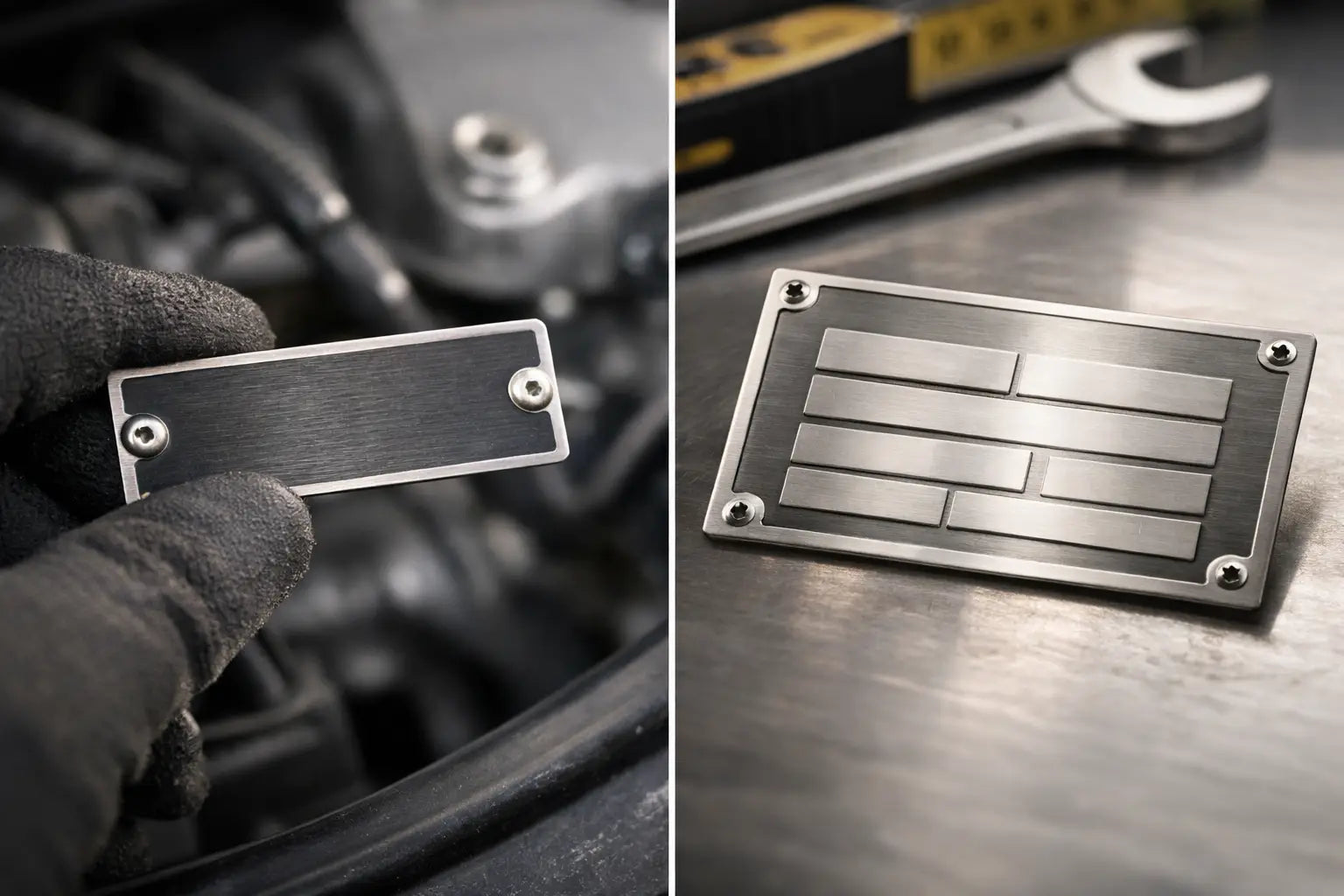

A lifting tag that fades, cracks or comes loose is not a minor purchasing issue. It creates uncertainty at the point of use, slows inspections, and can leave operators guessing about identification, traceability or service status. If you are working out how to specify lifting tags, the right approach is to start with the job the tag has to do on site, then match the material, data and fixing method to that reality.
For Australian operations, that usually means thinking beyond a basic printed tag. Mining, construction, transport yards, workshops and manufacturing plants all expose tags to UV, grit, abrasion, weather and handling damage. A tag might be attached to a chain sling, shackle, spreader bar, lever hoist or other lifting gear that is regularly moved, dragged, washed down or stored outdoors. If the specification only covers size and wording, it is incomplete.
How to specify lifting tags for real site conditions
The first question is simple: what item is being identified, and what information must remain legible for the life of the tag? Some buyers jump straight to dimensions, but a lifting tag specification should begin with the application. A tag used for a frequently handled sling set has different demands from a tag fixed to a rarely moved lifting beam. The more abuse the item sees, the more conservative the specification should be.
It also matters who will read the tag and when. If the tag is mainly for workshop control, a tighter layout may be acceptable. If it will be checked during pre-starts in poor light, dusty conditions or from arm's length, legibility becomes a bigger factor. Small text and crowded fields might fit on paper, but they do not perform well in the field.
A practical specification usually covers five things at minimum: material, size and shape, data content, marking method, and attachment method. Leave any one of those vague, and you increase the chance of receiving a tag that technically matches the order but does not hold up in service.
Start with the environment, not the artwork
Lifting and rigging tags are exposed to more punishment than many standard asset labels. They flex, knock against steel, and cop pressure from weather and contaminants. That is why material selection should be one of the first decisions, not an afterthought.
For harsh Australian conditions, durability matters more than a neat-looking finish on day one. If the equipment lives outdoors, UV resistance is essential. If it is used in coastal or corrosive environments, the tag needs to cope with that as well. If abrasion is likely, a flimsy plastic option may be a false economy even if the upfront price looks attractive.
This is where there is no one-size-fits-all answer. A lighter-duty synthetic tag may suit some indoor applications or short inspection cycles. A tougher metal or heavy-duty engineered tag may be the better call where long service life, repeated handling and rough storage are expected. The right specification reflects actual use, not best-case assumptions.
Specify the data that matters on the job
A lifting tag should carry information that supports identification, inspection and control. That sounds obvious, but many orders still come through with generic wording and little structure. The result is a tag that looks compliant but does not help much when someone needs to verify an item quickly.
The exact data depends on your equipment type and internal requirements, but you should define what must appear on every tag and what can vary between units. Typical fields may include asset ID, serial number, working load limit, inspection status, batch reference, company name or site identifier. If variable data is required, say so clearly in the brief and provide it in a usable format.
It is also worth deciding how permanent the information needs to be. If core identification must stay fixed for the life of the asset, the marking method should reflect that. If part of the information changes over time, you may need to separate permanent identification from inspection recording rather than trying to force both functions into one crowded tag.
The best way to specify lifting tags without rework
Most tag problems show up long after approval, when the order arrives and someone realises the hole is too small, the text is too fine, or the attachment supplied does not suit the gear. Good specification work reduces that risk before production starts.
Size is a common example. A compact tag may seem efficient, but not if the required text becomes too small to read. A larger tag improves visibility, but if it catches on equipment or interferes with handling, that creates another issue. The right size depends on the item, where the tag sits, and how much information must be displayed clearly.
Shape and hole placement matter too. If the tag twists constantly in service, the information may be hard to read and the fixing point may wear out faster. If the hole is undersized or positioned poorly, installation becomes awkward or impossible. These are not design niceties. They affect usability, longevity and replacement rates.
Choose the right fixing method
Attachment is often where lifting tag specifications fall short. A strong tag fitted with the wrong fastener still fails in service. The fixing method should suit both the equipment and the environment.
If the gear sees vibration, repeated movement or rough handling, the attachment has to stay secure without damaging the tag or the equipment. If easy removal is required for maintenance or replacement, that needs to be balanced against tamper resistance. In some applications, a simple loop works. In others, a more secure fixing is the smarter option. The point is to specify it, not leave it open to interpretation.
Think about installation on site as well. If the chosen method requires special tools, additional labour or awkward access, that should be considered upfront. A tag that is technically suitable but frustrating to fit will often be installed inconsistently across a fleet.
Make durability part of the brief
If you want a tag that lasts, spell out the performance expectations. Do not assume a supplier will infer them from the product name alone. State whether the tag will be used outdoors, exposed to UV, subject to washdowns, abrasion or chemical contact. Mention if it will be used in mining, marine, transport or heavy industrial settings. Those details directly influence material and production choices.
You should also be clear about whether the tag needs to remain legible for months or years. A temporary identification solution and a long-term compliance tag are not the same product. Being precise here saves time and avoids replacement cycles that cost more than the original order ever did.
For buyers managing multiple sites, consistency matters as much as toughness. A standard specification helps ensure every location receives tags built to the same standard, with the same data logic and attachment method. That makes audits, inspections and reordering much simpler.
What to include in your lifting tag specification
A workable lifting tag specification should read like an operational requirement, not just a purchasing note. Include the equipment type, intended use environment, preferred material, dimensions, hole size and position, required variable and fixed data, marking method, and the attachment method or compatible fitting size. If you need sequential numbering, barcodes or site-specific coding, include that as well.
Artwork approval is only one part of the process. It is just as important to confirm how the tag will be manufactured and how it will perform once fitted. Samples can be useful, especially if the tags are being rolled out across different asset classes or exposed to severe conditions. A quick check in hand often reveals issues that are easy to miss on a screen.
This is where working with a supplier that understands industrial use cases can make the process smoother. Prime Tags Australia, for example, focuses on tags built for local conditions, which matters when UV, grit and heavy handling are part of normal operations rather than exceptions.
Common mistakes buyers make
The most common error is specifying too little. A request for lifting tags with a logo, a load rating and a hole might sound adequate, but it leaves too much open. The next issue is prioritising unit cost over service life. Cheap tags that need frequent replacement are rarely cheap in practice.
Another mistake is combining too much information into a small format. If operators cannot read the tag quickly, the value drops fast. Finally, some buyers overlook consistency across fleets and sites. A good specification is not just about one order. It creates a repeatable standard.
When you are deciding how to specify lifting tags, think like the person who has to inspect, handle and rely on them in the field. If the tag stays legible, stays attached and says exactly what it needs to say, you have specified it properly. That is what keeps identification clear, compliance supportable and replacement headaches to a minimum.