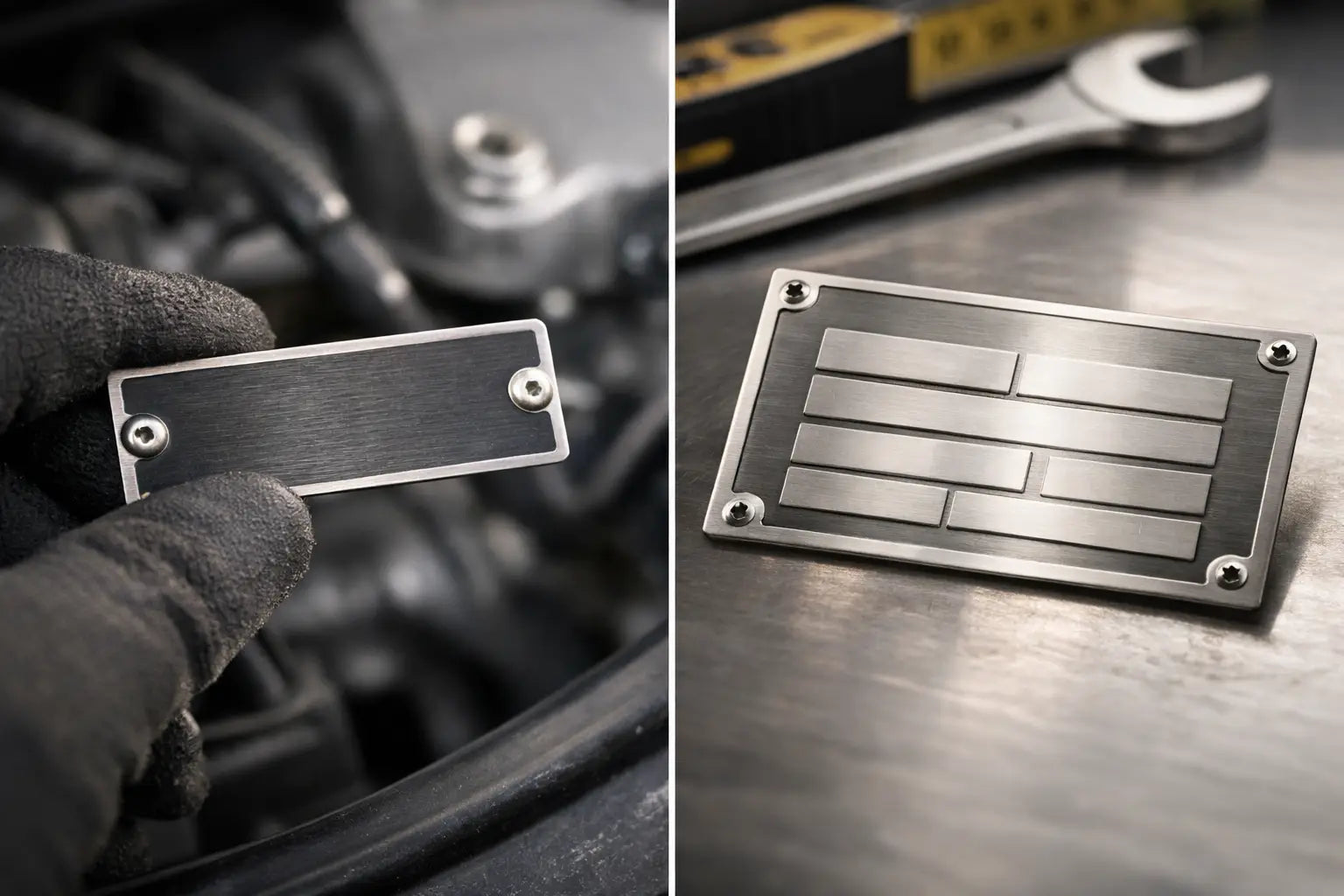

When a shutdown is booked, a fleet is due for inspection, or a new asset register has to be rolled out across multiple sites, waiting weeks for tags is not a minor inconvenience. It holds up work, creates compliance gaps and forces teams into short-term fixes that usually cost more later. That is why choosing the right fast turnaround tag supplier matters - not just for speed, but for durability, accuracy and confidence on site.
A rushed order is rarely just about a rushed order. In most industrial settings, tags sit inside a bigger operational chain. Lifting gear needs inspection records. Fire equipment needs clear service identification. Plant assets need traceability. Vehicles and trailers need plates that match exact specifications. If tags arrive late, arrive wrong, or fail early in service, the problem lands with maintenance, procurement, HSE and operations all at once.
What a fast turnaround tag supplier should actually deliver
Speed on its own is easy to promise. The harder part is delivering fast without cutting corners on materials, print quality, attachment method or job accuracy. A capable fast turnaround tag supplier should be set up to move quickly because its production, quoting and proofing processes are already organised around industrial demand.
That means clear artwork handling, practical advice on material selection, and the ability to manufacture tags that suit the environment they will be used in. A fire door tag inside a controlled building has different demands to a hose label exposed to UV, grime and regular washdowns. A metal asset plate for fixed equipment has different needs again. Fast service only helps if the end product is fit for purpose.
For most buyers, the real measure is not whether a supplier can produce one urgent batch. It is whether they can do it consistently across repeat orders, custom variations and larger project quantities. That is where experience shows.
Why lead time problems usually start before production
Buyers often assume delays happen on the factory floor. In practice, many lead time issues begin much earlier. Unclear specifications, back-and-forth on layouts, unsuitable materials, or missing variable data can drag a simple order out by days.
A reliable supplier helps prevent that. They ask the right questions at the start - what the tag is for, where it will be used, what data must appear, whether numbering or barcoding is required, and how it will be attached. That upfront clarity reduces rework and keeps the job moving.
This is especially important for custom compliance products. A trailer VIN plate, inspection tag or lifting tag is not something you want interpreted loosely. If your supplier is vague during quoting, there is a fair chance the finished product will create more work than it saves.
Fast does not mean flimsy
Industrial buyers have seen this before: a tag supplier turns a job around quickly, but the product fades, cracks, warps or becomes unreadable well before its service life should be up. On paper, the lead time looked good. On site, it becomes a replacement problem.
That is why material selection matters just as much as production speed. Australian conditions are hard on identification products. UV exposure, grit, moisture, heat and abrasion all take a toll. If the material is not suited to the application, the job will fail even if it arrived on time.
A good supplier will be direct about this. Some jobs need flexible tags. Some need rigid plates. Some need self-locking designs for quick installation. Others need a stronger fixing method because the tag will be exposed to vibration or rough handling. There is no single best option for every worksite. The right option depends on the asset, the environment and how the tag will be used over time.
Where speed matters most in tag supply
Some product categories carry more urgency than others. Inspection and service tags often need quick replenishment because scheduled work cannot drift. Asset labels can become urgent during audits, shutdowns, commissioning or inventory projects. Compliance plates are time-sensitive when vehicles, trailers or equipment cannot be released until identification is complete.
In these situations, buyers need more than a supplier with a broad catalogue. They need one that understands operational pressure. There is a difference between selling tags and supporting critical work. The first is transactional. The second requires product knowledge, responsive quoting and dependable dispatch.
That is also why local manufacturing matters. For Australian businesses, a supplier using Australian materials and producing for local conditions can often provide better control over quality and lead time than one relying on long offshore supply chains. It reduces uncertainty and makes urgent jobs easier to manage.
How to assess a supplier before the pressure is on
The worst time to test a supplier is when your site already has a deadline breathing down its neck. It is smarter to assess them before the urgent order lands.
Start with the basics. Can they quote clearly? Do they understand your application without needing three rounds of explanation? Can they handle custom numbering, barcodes, branding or site-specific fields? Do they talk in practical terms about lifespan, exposure and attachment method?
Then look at how they balance service and product performance. If the conversation is all about speed but says nothing about durability, that is a warning sign. The same applies if they offer custom work but seem unsure about compliance-driven use cases. Industrial tags are not generic print items. They are working components in a safety and identification system.
Samples can be useful here. They let buyers assess print legibility, material thickness, flexibility and overall finish before committing to a larger order. For recurring product lines, that can save a lot of time and frustration later.
The trade-off between standard stock and custom orders
There is always a balance between standardisation and customisation. Standard stock items are often quicker because they are already set up for production. If your site can use common formats without losing important information, that may be the fastest and most economical path.
Custom tags, however, are often worth it when they improve traceability, reduce manual write-on fields, align with internal systems or meet a specific compliance requirement. The key is working with a supplier that can produce bespoke products efficiently rather than treating every variation as a special problem.
This is where an experienced Australian supplier stands out. They know when a standard item will do the job and when a custom layout, material or fixing method is the better call. That advice matters because the cheapest or fastest option at the ordering stage is not always the best operational decision.
Why procurement should care about reordering, not just first delivery
A lot of supplier decisions are made around the first order. That is understandable, but it misses a bigger issue: reordering. If tags are part of regular maintenance, servicing or asset identification, you need a supplier that can reproduce the job accurately and quickly next time as well.
Consistency in artwork, numbering formats, materials and sizing saves time across the life of the account. It also reduces the risk of mixed tag types appearing across sites, departments or contractors. For businesses managing multiple locations, that consistency supports both compliance and presentation.
Prime Tags Australia works well for buyers in this position because the offering is built around repeatable industrial supply, custom capability and practical turnaround expectations rather than one-off promotional print thinking. That difference shows up when jobs need to be reordered fast and still arrive right.
What the best supplier relationship looks like
The strongest supplier relationship is simple. You send through the requirement, the supplier understands the application, confirms the details, recommends the right construction, and gets the order moving. No vague language. No overpromising. No surprises when the goods arrive.
That kind of service reduces pressure on procurement and site teams because they are not chasing updates or checking whether a product will survive outdoors for six months. They know the tags are built for the job and delivered in a timeframe that supports operations.
For serious industrial buyers, that is what a fast turnaround tag supplier should mean. Not just quick dispatch, but dependable support, durable products and fewer headaches between quote request and installation.
If you are reviewing suppliers, ask the hard questions early. The right one will answer them plainly - and when the urgent job comes through, that is exactly who you want on your side.