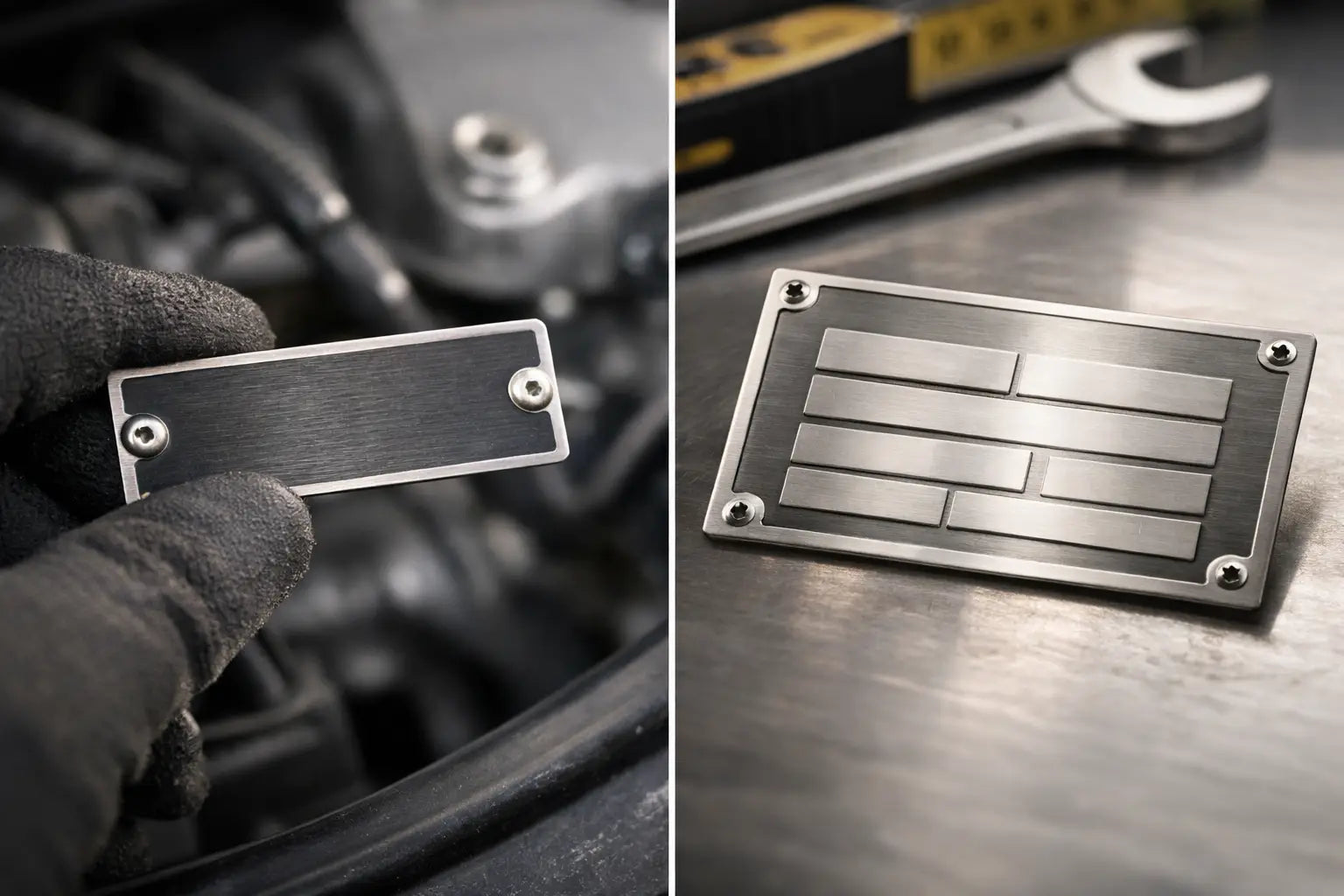

A tag that fades in three months is not a saving. It is a replacement job, a compliance risk and another delay for a site team that already has enough on its plate. That is why the question of local suppliers vs imported tags matters well beyond unit price. For Australian businesses managing assets, inspections and safety systems, the right choice affects uptime, traceability and how well products hold up in real site conditions.
For procurement teams, maintenance managers and HSE leads, this decision usually comes down to four things - durability, lead time, customisation and total cost. Imported tags can look attractive on paper, especially when the quoted price is low on a high-volume order. But once you factor in freight, delays, rework and short service life, the gap can close quickly.
Why local suppliers vs imported tags is not just a price debate
Industrial tags are not decorative items. They carry asset data, inspection status, service dates, load information, compliance details and safety instructions. If that information becomes hard to read, detached from equipment or damaged by weather, the problem is operational, not cosmetic.
Australian sites are hard on identification products. UV exposure, heat, dust, salt, washdowns, vibration and rough handling all shorten the life of poor-quality materials. A tag that performs well in a warehouse or mild climate may not last on a mine site, transport fleet, construction project or utilities asset in regional Australia.
That is where local supply has a practical advantage. Local manufacturers and distributors tend to understand the conditions the tags are actually facing. Material selection, print method, adhesive choice and attachment options are more likely to be matched to the job rather than treated as a generic stock product.
Lead times can make or break a job
Imported tags often come with longer supply chains and less room to move. If stock is offshore, buyers are exposed to international freight schedules, customs delays and production queues that are outside their control. That may be manageable for routine replenishment, but it becomes a problem when a shutdown date is fixed or a compliance rollout has no slack in it.
Local suppliers are usually better placed to respond quickly. If you need a revised layout, a different hole size, sequential numbering or a material change, the turnaround is typically faster because the product is closer to the customer and the communication loop is shorter. That matters when a maintenance plan changes mid-project or a site discovers it needs more tags than first expected.
Fast supply is not only about convenience. It helps reduce downtime, keeps inspections on schedule and avoids workarounds like handwritten temporary tags that rarely hold up for long.
Custom work is where local supply often pulls ahead
Many industrial buyers do not need an off-the-shelf tag. They need a tag that fits a specific asset class, a particular work process or an internal compliance system. That could mean barcodes, QR codes, serialisation, department colours, engraved data, logo placement or wording that matches a company procedure.
Imported products can handle some of that, but customisation often becomes slower and harder once multiple approvals and offshore production are involved. Small changes may require a new production run, and communication mistakes are more common when the supplier is not working closely with the end use environment.
A local supplier can usually quote, proof and produce custom tags with fewer steps. For buyers ordering across categories such as asset labels, inspection tags, lifting tags, hose labels or compliance plates, that flexibility saves time and reduces the risk of getting a product that is technically correct but impractical on site.
Durability in Australian conditions
This is where the real difference often shows up. Imported tags are not automatically poor quality, and local tags are not automatically superior. It depends on the material, the manufacturing standard and whether the product is suited to the environment. But for Australian industrial use, local sourcing often comes with a stronger focus on outdoor durability and worksite abuse.
UV resistance is a common failure point. So is brittleness in heat, print wear, laminate lifting and attachment failure. A cheap imported tag may still scan and look fine when it leaves the carton, but after months of sun, grit and handling, the label face can degrade fast. When critical data disappears, the replacement cost is only part of the issue. The larger cost is the time spent identifying assets again, reissuing records and fixing avoidable compliance gaps.
This is why many buyers now assess tags on service life rather than purchase price alone. A tougher tag that lasts years in the field is often better value than a cheaper one that needs replacing every season.
Compliance risk is easy to underestimate
For industries with audit requirements, poor tag performance creates a paper trail problem. Inspection dates, asset IDs, test history and equipment status need to stay legible and attached to the correct item. If they do not, teams can end up spending extra hours verifying information manually or replacing records that should have remained visible in the first place.
With local suppliers, there is often a clearer conversation around intended application and compliance needs. That does not remove the buyer's responsibility to choose the right product, but it does improve the chances of selecting a tag that is built for the specific use case.
The real cost of imported tags
The unit price on imported tags can be lower, especially on bulk orders. That is the main reason buyers consider them. In the right situation, imported supply can make sense - for non-critical applications, stable demand, long planning windows or indoor environments where exposure is limited.
But low unit price is not the same as low total cost. Freight, duties, longer ordering cycles, higher minimums and the cost of carrying extra stock all need to be counted. So do the softer costs - delayed projects, mismatched specs, poor print durability and the labour involved in replacing failed tags.
If your team has to reorder early, relabel assets or chase approvals because the initial product was not right, the original saving can disappear. For compliance-critical applications, that risk is usually not worth taking unless the imported product has been properly tested in the same kind of environment.
When imported tags may still be a reasonable choice
A balanced view matters here. Imported tags are not always the wrong decision. If the application is simple, the environment is controlled and the product is standardised, an imported line may be acceptable. Some buyers also use imported stock for basic internal identification where failure carries little consequence.
The key is matching the product to the risk. If a tag is going on lifting gear, fire equipment, mobile plant, hoses, harnesses or outdoor assets, failure has broader consequences. If it is for temporary warehouse use or short-term internal marking, the equation may be different.
That is why smart buyers separate mission-critical tags from low-risk labels rather than forcing one sourcing model across every category.
How to assess local suppliers vs imported tags properly
The most useful comparison starts with the worksite, not the catalogue. Ask how long the tag needs to last, what it will be exposed to and what happens if it fails. Then look at material grade, print method, attachment style, turnaround time and support for customisation.
Samples are worth requesting, especially for outdoor or high-abrasion use. Trial them in the field. Check for fading, cracking, delamination and readability after real handling. If the supplier cannot clearly explain what the product is made from and where it is suited, that is a warning sign.
It also pays to ask about repeatability. Can the supplier produce the same tag format next month or next year with matching data fields and consistent quality? For asset management and compliance programs, consistency matters just as much as toughness.
For many Australian businesses, this is where a local manufacturer with proven industrial experience stands out. Prime Tags Australia, for example, focuses on tags and labels made for harsh local conditions, with custom options and lead times that suit operational deadlines rather than generic retail supply chains.
The better buying decision comes down to risk, not marketing
If your tags are carrying critical information in harsh conditions, buying on headline price alone is risky. Local suppliers usually offer stronger control over quality, faster changes, better support and products better matched to Australian conditions. Imported tags can still have a place, but only when the application is low risk and the limitations are understood upfront.
The practical test is simple. Buy the option that will still be doing its job after the weather, dust, handling and inspection cycle have had their turn. That is usually the better spend, even if the invoice says otherwise.