
A faded asset label is rarely just a cosmetic problem. On a mine site, in a workshop or across a utility network, it can slow inspections, confuse maintenance records and create avoidable compliance risk. Choosing the best labels for industrial assets means looking past price per sticker and focusing on what will still be readable, attached and traceable after months or years in harsh Australian conditions.
What makes the best labels for industrial assets?
The right label does three jobs at once. It identifies the asset clearly, survives the environment and supports the way your team actually works - whether that means barcode scanning, scheduled inspections, shutdown planning or audit checks.
That is why there is no single best option for every site. A label that performs well in a clean indoor plant may fail quickly on mobile equipment exposed to UV, washdowns, grit and impact. Likewise, a low-profile barcode label can be ideal for warehouse racking, while heavy machinery may need a thicker construction or even a metal plate where abrasion is constant.
For most industrial buyers, the decision comes down to five factors: substrate, adhesive, print durability, data format and compliance requirements. Get those right and label life improves. Get them wrong and replacement cycles become part of the maintenance problem.
Match the label to the asset, not just the budget
Asset identification often gets grouped into one purchase order, but industrial assets are rarely uniform. Electrical switchboards, pumps, hoses, extinguishers, lifting gear, trailers and site vehicles all face different wear patterns. Treating them the same usually leads to over-spec in some areas and under-spec in others.
Indoor fixed assets in controlled conditions can often use durable synthetic labels with strong permanent adhesive and printed serial or barcode data. These work well where there is limited chemical exposure, moderate handling and low abrasion.
Outdoor plant and equipment usually need more. UV resistance matters, adhesive performance matters and the top surface must resist scratching if the label is scanned or handled regularly. If the asset is washed down, exposed to oils or located near salt, standard office-grade materials are out of the question.
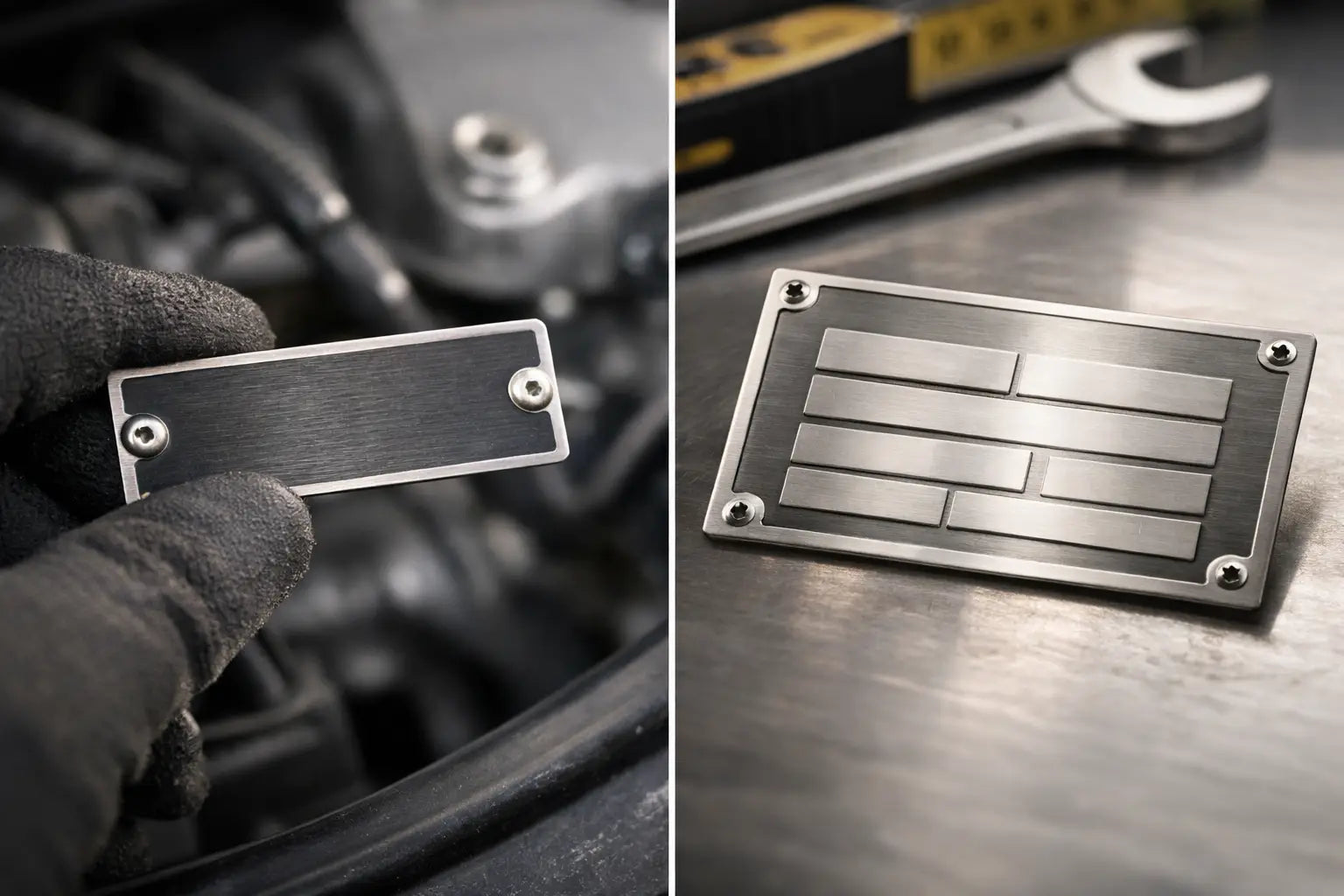
For rough-service applications, metal asset plates are often the better long-term choice. They cost more upfront, but they hold legibility in places where film labels are likely to wear through. That trade-off makes sense when the asset is high value, long life or compliance critical.
Synthetic labels for general asset tracking
Polyester and other industrial synthetic constructions are a strong fit for many asset management programs. They give you crisp print, good barcode performance and reliable adhesion on properly prepared surfaces. For indoor equipment, tools, plant rooms and controlled processing areas, they often deliver the best balance of durability and cost.
The key point is specification. A thin synthetic label with the wrong adhesive is still the wrong product. For industrial use, you want a material designed for mechanical wear and a print method that will not rub off after repeated contact.
Metal plates for harsh and long-life assets
If the asset is expected to remain in service for years under punishing conditions, metal plates deserve serious consideration. They are well suited to fixed infrastructure, heavy plant, transport equipment and any item where identification must remain legible despite UV, grime and physical abuse.
They are not always the answer. Metal plates need mechanical fixing or a mounting method suited to the asset, and that can add labour. On curved or small assets, they may be impractical. But where failure is costly, they are often the safer choice.
Material matters more than most buyers expect
The best labels for industrial assets are built from materials that suit the site. In Australia, UV is one of the biggest reasons labels fail early. Add dust, wind, rain, heat, washdowns and chemical exposure, and poor material choice becomes obvious fast.
Polyester is commonly used because it offers good dimensional stability, print quality and resistance for many industrial settings. Vinyl can work where flexibility is needed, such as curved surfaces, though it depends on the exact application and expected lifespan. Polycarbonate overlays may be used where extra surface protection is needed.
Then there is the question of surface energy. Smooth painted metal, powder-coated cabinets, textured plastics and oily machinery housings all behave differently. A label that bonds well to one may lift on another. This is why testing matters, especially for mixed fleets or older assets where contamination is hard to eliminate fully.
Australian-made materials are often a practical advantage here, not just a marketing line. Products built for local conditions are more likely to account for the UV and environmental stress that imported general-purpose labels often underestimate.
Adhesive selection is where good labels often fail
If a label falls off, the print quality no longer matters. Adhesive choice is one of the biggest factors in field performance, yet it is often treated as secondary.
Permanent acrylic adhesives are common for industrial asset labels because they offer strong bond strength and good ageing properties. They generally perform well across a wide range of substrates, but surface prep is still essential. Dust, grease, oxidation and moisture can all reduce bond strength significantly.
For difficult surfaces, a more aggressive adhesive may be needed. That includes textured plastics, powder-coated finishes or equipment exposed to vibration. The trade-off is that aggressive adhesives can be harder to remove cleanly if assets are redeployed or reclassified.
Application conditions matter too. If labels are being applied in cold mornings, high humidity or on surfaces heated by the sun, performance can vary. Good labels still need correct installation. In practice, that means a clean surface, firm pressure and enough dwell time for the adhesive to cure properly.
Print method and data layout affect real-world usability
A label can survive the environment and still fail the job if it cannot be scanned or read quickly. That is why print method and layout should be treated as operational issues, not just design choices.
For asset programs using barcodes or QR codes, print resolution matters. Fine detail that looks sharp on a proof can become hard to scan if the substrate, laminate or code size is poorly matched. Harsh sites usually benefit from high-contrast printing, sensible quiet zones and code sizes that account for dirt and viewing distance.
Human-readable text matters just as much. Asset numbers should be large enough for technicians to read without stopping the task. If the label includes inspection intervals, ownership data or equipment class, the hierarchy needs to be clear. Overloading a small label with too much information usually reduces usability.
Serialisation and customisation are also worth planning early. Consistent numbering, department coding and site identifiers make future audits easier. Prime Tags Australia sees this regularly with businesses that start with simple asset numbering and then need labels to support broader maintenance and compliance systems later on.
Compliance and traceability are not add-ons
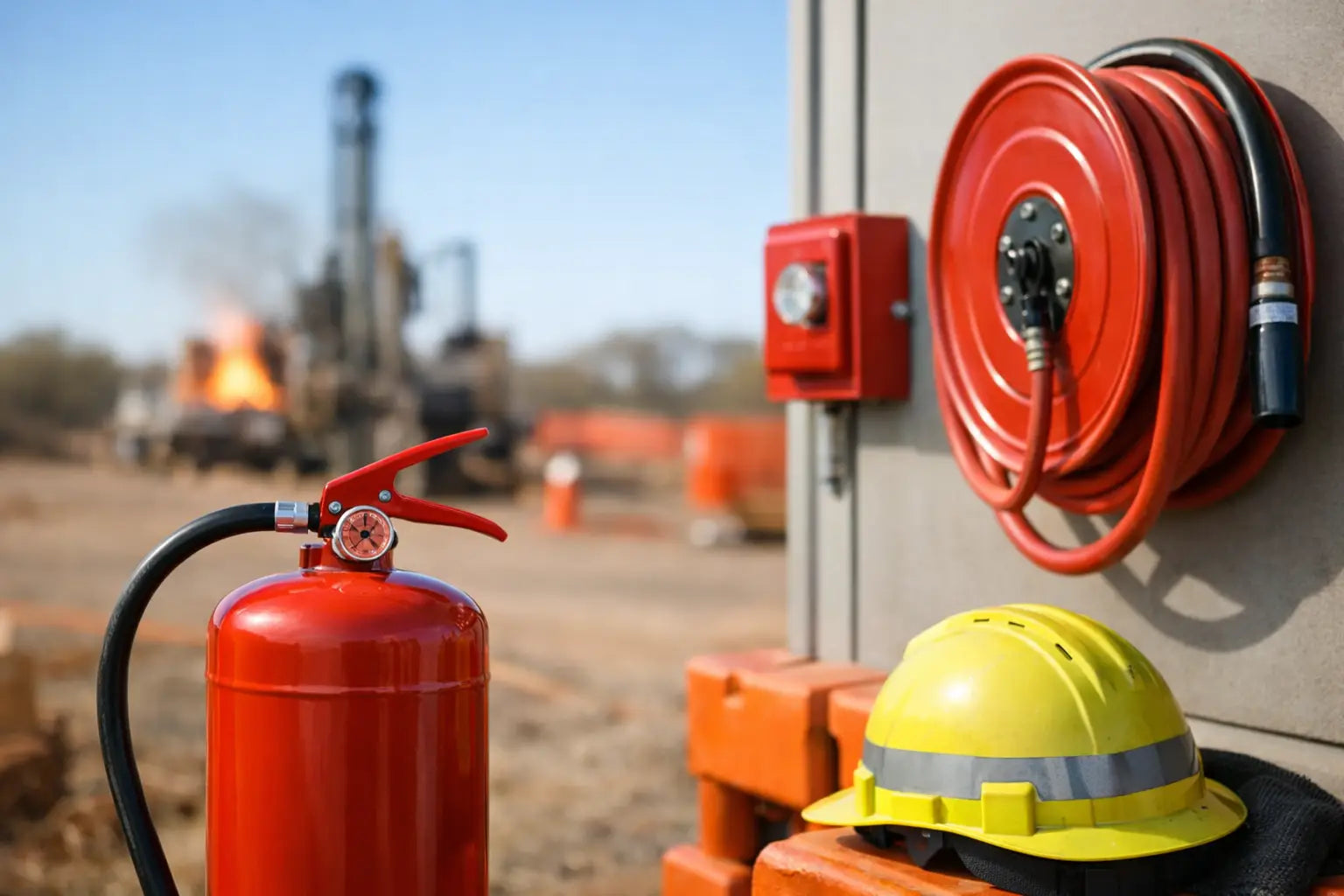
In many industries, asset labels are tied directly to inspection records, service history and statutory obligations. Fire equipment, lifting gear, vehicles, electrical assets and site infrastructure all have different marking requirements, and the label or plate needs to support that recordkeeping.
This does not always mean one label does everything. In some cases, the best setup is a permanent asset ID label paired with a separate inspection tag or compliance plate. That approach can reduce replacement cost and keep the core identifier intact while service information changes over time.
The practical question is simple: what information must stay with the asset, and for how long? Once that is clear, the right format becomes easier to choose.
How to choose the best labels for industrial assets on your site
Start with the environment. Is the asset indoors or outdoors, fixed or mobile, clean or abrasive, exposed to chemicals or frequent washdowns? Then look at the surface itself - smooth metal, textured plastic, painted equipment, rubber hose or something else.
Next, consider lifespan. If the asset is short-term or low value, a high-quality synthetic label may be entirely suitable. If it is a major plant item expected to remain in service for years, a heavier-duty construction or metal plate may save money over time.
Then focus on function. If teams scan it, the code must work reliably. If auditors read it, the text must stay legible. If the asset carries compliance obligations, the marking method must support traceability rather than merely identify ownership.
Finally, ask for samples and test them properly. A label that performs on paper is not proven until it has handled your substrate, your environment and your installation process.
The best asset label is the one that keeps doing its job long after the purchase order is closed. On an Australian worksite, that usually means choosing tougher materials, better adhesives and clearer data than the minimum spec suggests. If the label has to survive heat, grit, UV and daily handling, it pays to buy for the real conditions, not the catalogue description.