
A faded plate on a pump, switchboard or trailer is not a small problem. When an asset can’t be identified quickly, maintenance slows down, audits get messy, and the risk of using the wrong equipment goes up. That is why industrial name plates matter well beyond simple labelling. On Australian worksites, they need to hold their detail through UV, abrasion, moisture, chemicals and day-to-day handling without turning brittle, peeling off or becoming unreadable.
What industrial name plates actually need to do
In theory, a name plate just carries information. In practice, it often carries accountability as well. It may identify a machine, display a serial number, show electrical ratings, mark a compliance detail, or tie an asset back to a maintenance system. If the plate fails, the information fails with it.
That changes the buying decision. Price matters, but not in isolation. A cheap plate that fades in six months usually costs more once replacement labour, downtime and procurement time are counted. For sites managing large plant fleets, electrical assets, transport equipment or safety systems, consistency matters just as much as durability. Plates need to be easy to read, easy to match to internal records, and built to suit the actual environment they’ll face.
Why industrial name plates fail early
Most early failures come back to one issue - the plate was not matched properly to the application. A warehouse asset label and a mine-site equipment plate do not face the same conditions, even if both look fine on day one.
UV is one of the biggest problems in Australia. Materials that perform acceptably indoors can fade hard outdoors, especially on exposed assets. Add grit, washdowns, fuel splash, salt, vibration or repeated handling, and weak materials show their limits fast. Adhesives also get overestimated. Some are perfectly suitable on smooth, clean indoor surfaces, but less reliable on textured, dirty, oily or high-heat equipment.
Poor data layout is another common issue. If critical information is crammed into small text, hidden under glare, or printed with low contrast, the plate may technically still be there but practically useless. Industrial identification has to work in real conditions, not just on a proof.
Choosing the right material for the job
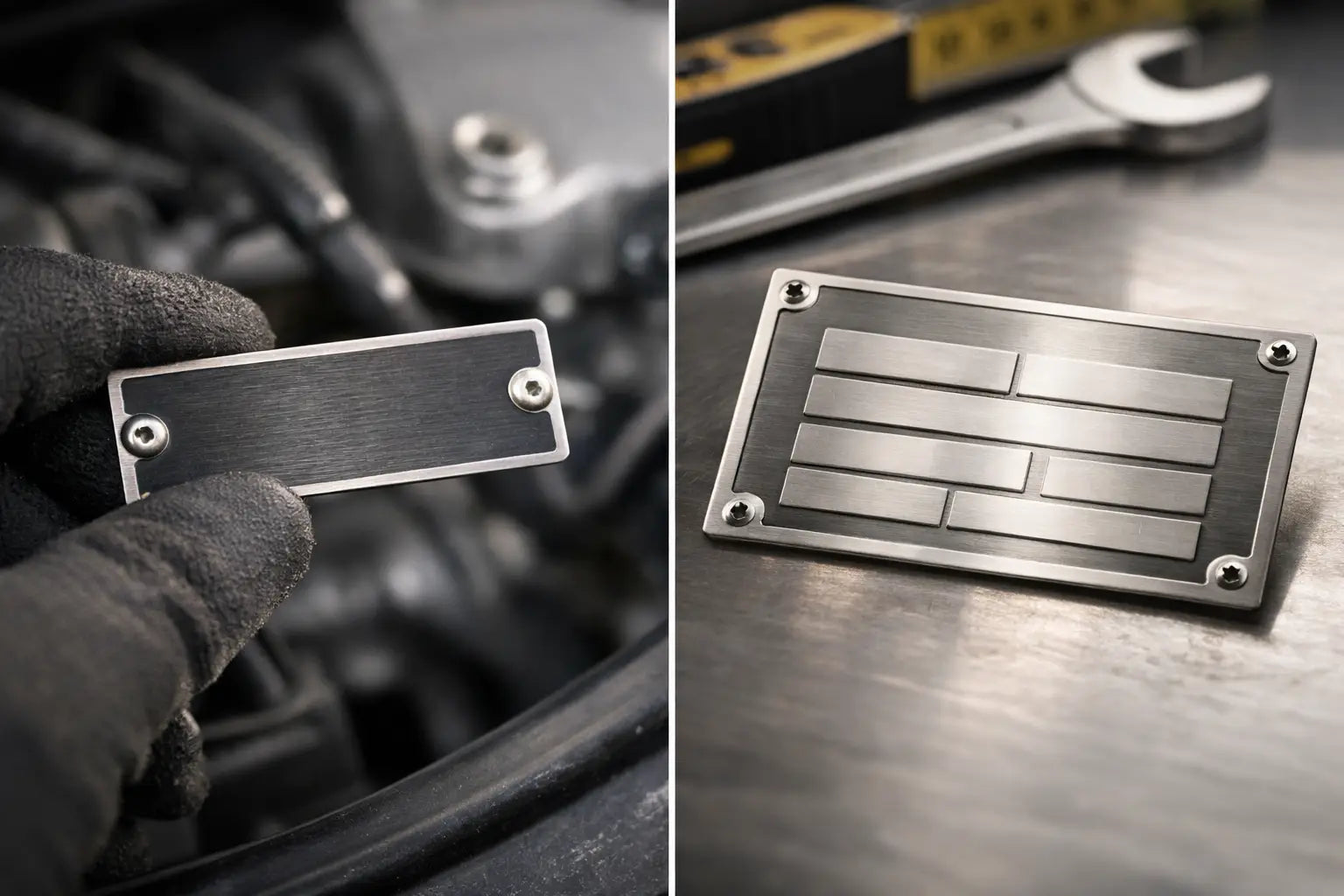
Material selection should start with the site conditions, not the catalogue page. Metal name plates are often the first choice where long-term durability is non-negotiable. They suit harsh environments, resist wear well, and maintain a more permanent appearance for asset identification, compliance marking and equipment branding. Aluminium and stainless options are common depending on exposure, corrosion risk and budget.
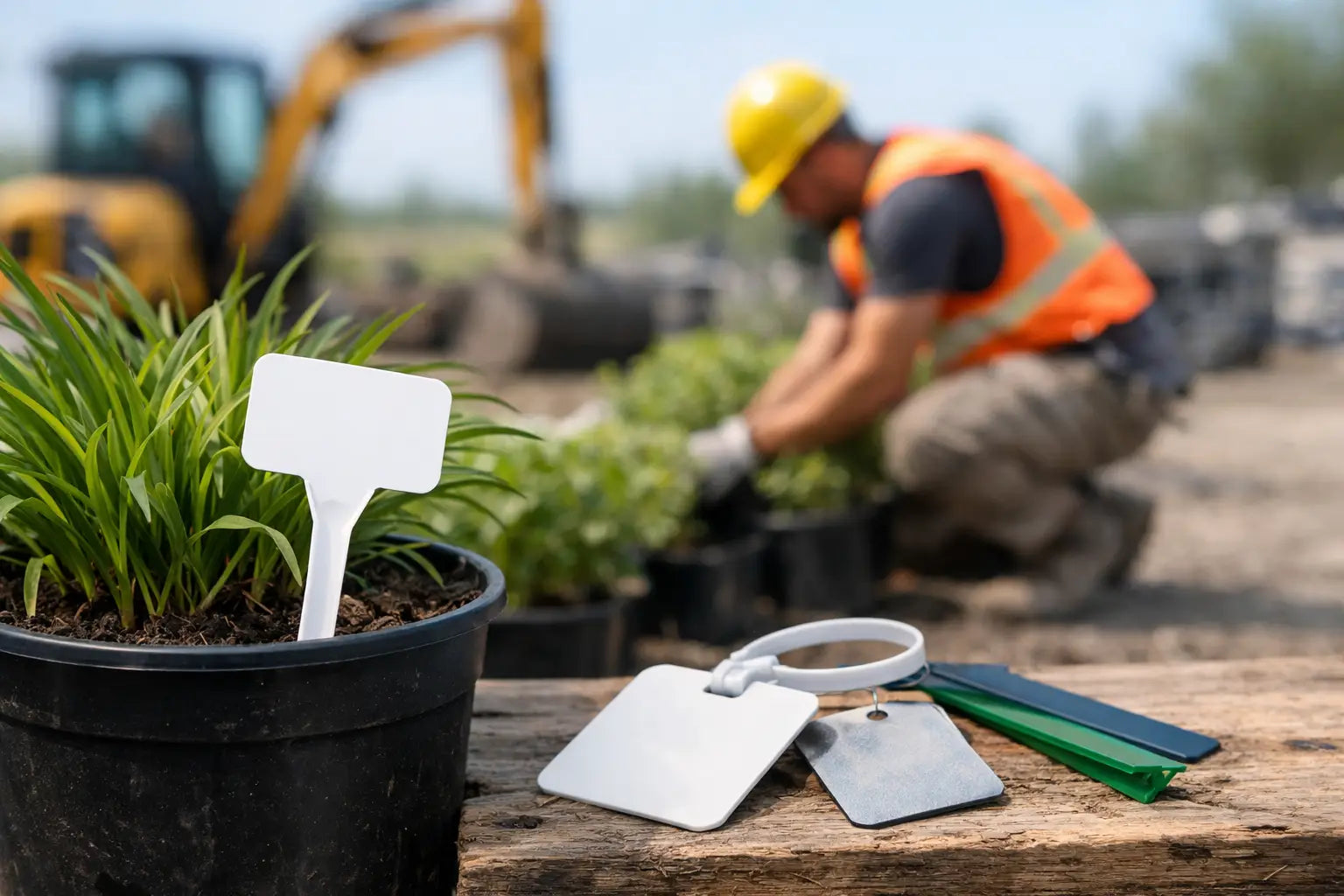
Plastic and polymer plates still have a place, particularly where weight, flexibility or cost need to be balanced. They can perform well in the right setting, but the specification has to be honest about the exposure level. If an asset lives outdoors, gets pressure cleaned, or is handled constantly, tougher materials generally make more sense.
Finish matters too. Engraved, etched or chemically treated plates usually offer better long-term legibility than surface-only print in high-wear settings. That said, there is no single best option for every site. If the plate needs variable data, barcodes or fast turnaround in mixed quantities, another production method may suit better. The right answer depends on what the plate needs to survive and how critical the information is.
Fixing methods are not an afterthought
A durable plate is only durable if it stays attached. This sounds obvious, yet fixing method is still treated as a minor detail too often.
Adhesive-backed industrial name plates can work well where surfaces are smooth, clean and stable, and where drilling or riveting is not practical. They are often quicker to install and can be a tidy option for indoor equipment, cabinets and controlled environments. But adhesives have limits. Heat, dust, rough powder-coated surfaces and contamination can all shorten service life.
Mechanical fixing is often the safer call for heavy industrial use. Rivets, screws or pre-drilled mounting holes give more confidence on vibrating plant, mobile assets and exposed equipment. If theft, tampering or repeated washdown is a concern, a mechanically fixed plate is usually worth the extra installation time.
The best specification often comes from looking at the mounting surface first. Flat or curved, painted or raw, smooth or textured - these details affect whether the plate performs properly once it leaves the workshop.
The information on the plate matters as much as the plate itself
A tough plate with poor information design still creates risk. Industrial buyers should think carefully about what needs to appear on the plate, who needs to read it, and how it connects to broader asset management or compliance systems.
For some applications, that means basic identification such as asset number, equipment type and serial reference. For others, it may include rated capacity, voltage details, manufacturer information, inspection intervals, VIN data or site-specific coding. If barcodes or QR codes are being used, the print quality and spacing must support reliable scanning after exposure to dirt and wear.
There is also a practical balance to strike. More data is not always better. Overloading a plate can reduce readability, especially if text size drops too far. The best industrial name plates are clear, purposeful and laid out for fast recognition by maintenance teams, inspectors and operators.
Customisation is where a good supplier earns their keep
Standard plates cover some needs, but many industrial environments rely on custom sizing, variable data, specific hole placement, branding requirements or exact compliance wording. This is where supplier capability becomes critical.
A supplier should be able to work through the use case properly, not just take an order. That includes material advice, artwork setup, numbering formats, barcode generation, fixing options and quantity planning. For procurement teams, responsiveness matters here. Delays caused by back-and-forth clarification or poor proofing can hold up larger projects and create unnecessary rework.
This is one reason many Australian buyers prefer dealing with a specialist that understands site conditions locally. Prime Tags Australia, for example, focuses on industrial identification products built for harsh Australian environments, which makes a difference when UV, dust and hard use are part of the brief rather than an exception.
Compliance and traceability are part of the same conversation
On many sites, industrial name plates are not just operational aids. They support compliance, inspection history and traceability. If a plate identifies lifting gear, transport equipment, fire assets, electrical components or plant with regulated requirements, legibility and permanence become harder to compromise on.
Auditors and inspectors do not care that a plate looked fine when it was installed. They care whether the required information is present and readable when checked. Maintenance teams have the same concern. If a technician cannot confirm a unit’s rating or identity on the spot, they lose time and confidence.
That is why replacement cycles should not be left to chance. If plates are failing repeatedly, it is usually a sign that the original specification needs attention. Upgrading material, revising the layout or changing the fixing method can reduce repeat purchases and improve compliance outcomes at the same time.
What buyers should ask before ordering
A proper quote for industrial name plates should answer a few practical questions upfront. Where will the plate be used - indoors, outdoors, mobile plant, workshop equipment, transport, or fixed infrastructure? What will it be exposed to - UV, chemicals, abrasion, salt, washdowns or heat? Does it need adhesive, holes, rivets or another fixing method? Is the data static, sequential or fully variable?
It also helps to ask how the plate will be produced and what that means for longevity. Not every job needs the highest-spec option, but every job does need a realistic one. A supplier that can explain the trade-offs clearly is far more useful than one that simply pushes the cheapest unit rate.
Lead time matters too. Industrial projects often run on tight schedules, and replacement identification is rarely ordered just for convenience. Fast turnaround has real operational value, particularly when assets cannot be commissioned, inspected or dispatched without the correct plate in place.
Getting a better result from industrial name plates
The strongest buying decision usually comes down to three things - match the material to the environment, match the fixing method to the surface, and keep the information clear enough to use under pressure. That sounds straightforward, but it solves most of the failures seen on site.
Industrial name plates are a small component of a larger operation, yet they carry a disproportionate amount of value. They support identification, maintenance, compliance and traceability every day they remain readable and secure. If the plate is expected to survive a hard Australian worksite, it should be specified like any other critical component - designed right, built strong, and chosen with the real conditions in mind.
If you are replacing the same plates too often, that is usually the signal to stop buying by habit and start buying by application.